UNFUCG
DashboardSearchChatBookmarksNotificationsActivityPremiumProfile
?
Home
Search
Chat
Saved
Profile
Episode
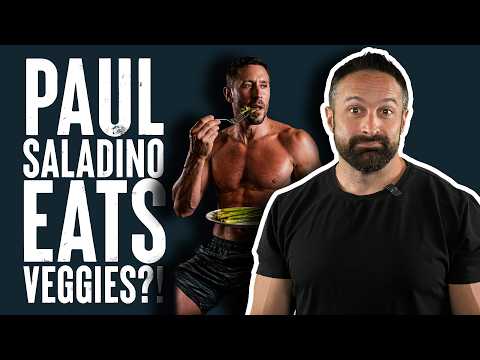
Paul Saladino Eats Vegetables!? | What the Fitness | Biolayne
~6 min
Episode Brief·YouTube

Paul Saladino Eats Vegetables!? | What the Fitness | Biolayne

Layne Norton
Watch on YouTube Add to chat My bookmarks← All sources

TL;DR

The four things you'd lose by not watching

4 items

TL;DR

The four things you'd lose by not watching

4 items
1

Paul Saladino, once a strict carnivore and then an animal-based diet advocate, has now added vegetables like asparagus and starches to his diet, marking yet another shift in his ever-changing 'optimal' nutritional stance.

2

Layne Norton points out that Saladino likely felt unwell on the carnivore diet while writing his book promoting it as optimal, raising ethical questions about selling dietary absolutism without personal honesty.

3

Norton contrasts his own practice of openly admitting when he's wrong (e.g., on LDL cholesterol, BCAAs, fasting) with Saladino's pattern of silently moving to the next diet without acknowledging past mistakes.

4

The core critique: experimenting with diets is fine, but making sweeping claims against scientific consensus that each new diet is 'optimal for human health' undermines trust and responsible science communication.

Protocols

Concrete recipes — what, when, how much, and why

1 item

Publicly admit and correct past dietary errors

WhatWhen you discover that a previous public stance on a nutritional or health topic is incorrect, promptly and explicitly tell your audience you were wrong, detail what changed, and offer the new position.
WhenAs soon as new evidence or personal experience convincingly contradicts your prior claims; before moving on to the next public recommendation.
DoseNo set frequency; every time a major position is reversed.
For whomHealth content creators, nutrition coaches, and anyone who influences public dietary behavior.
WhyMaintains scientific credibility and trust; prevents followers from holding onto outdated advice; models intellectual humility.
CaveatsRequires comfort with embarrassment and potential loss of followers; must be accompanied by clear reasoning, not just a flip-flop.

Norton argues that the way you change your message determines whether people can take you seriously. He points to Saladino's pattern as a cautionary tale: changing diets is fine, but each time he declared it optimal without admitting the previous optimal was wrong. In contrast, Norton describes his own protocol: he explicitly says, 'I said this before. I got it wrong.' This, he says, is not just an ethical obligation but also a trust-building mechanism. By acknowledging error, he invites the audience to follow his learning process, making them more likely to accept his corrected advice. He believes this is the responsible way to handle the evolving nature of nutritional science.

Personal experience

Norton shares firsthand: he has publicly corrected his stances on LDL cholesterol, BCAAs, and fasting, each time saying 'got it wrong, my bad.'

I say, 'Hey guys, got it wrong. My bad, you know, I changed my opinion.'

Also said
“There's not like a hat in my hand, I was wrong, sort of thing here.”— Norton notes what Saladino lacks: a gesture of admission.

What's new

Personal practice updates, fresh positions, predictions

2 items

paul-saladino-vegetable-reintroduction

early in the monologue

After years of avoiding all vegetables and labeling them toxic, Paul Saladino now publicly experiments with asparagus and starches, further deviating from his previous animal-based and carnivore identities.

Why this matters: It demonstrates another pivot without admitting the previous 'optimal' claims were flawed, repeating a pattern of absolutism followed by silent dietary changes.

Background

Saladino's dietary journey includes raw vegan (which he left due to poor health), strict carnivore, addition of honey and fruit, and now vegetables. Each phase was heralded as the optimal human diet.

Norton walks through Saladino's arc: raw vegan to carnivore, then adding honey and fruit to become 'animal-based,' and now asparagus and starches. At every stage, Saladino made strong, absolutist claims that his current diet was optimal for human health, often contradicting the scientific literature. Norton applauds the willingness to experiment but argues the real issue is the lack of intellectual humility. When Saladino felt bad on carnivore, he didn't publicly say 'I was wrong,' he simply pivoted to the next 'optimal' diet. This latest vegetable addition suggests he may have sensed something was missing in his fruit-heavy animal-based approach, yet there's no hat-in-hand admission that his prior anti-vegetable stance was incorrect. The result, according to Norton, is a credibility gap for anyone who bought his book or followed his advice.

At every single diet he's tried, he's made the argument that this is optimal for human health.

Also said
“When he was pure carnivore, he was saying, 'This is the optimal human diet.' And it turns out he wasn't feeling good on carnivore, and he stopped doing it.”— Shows the contradiction between public claims and private reality.
“Now, he claims it was because of an electrolyte reason. No, no, no, no. You started eating carbs. You felt better when you're active. It's not electrolytes.”— Norton disputes Saladino's stated reason for leaving carnivore, attributing the improvement to muscle glycogen, not electrolytes.

saladino-book-written-while-feeling-bad

middle of the monologue

Norton estimates that the timeline of Saladino's book publication means he was experiencing the very symptoms that led him away from carnivore while writing a book promoting it as optimal.

Why this matters: It questions the ethics of selling a dietary system while personally suffering from it, with no subsequent acknowledgment that the advice was built on a flawed personal experience.

Background

Saladino's book 'The Carnivore Code' was published during his carnivore phase; he later admitted the diet made him feel bad, but the publisher timeline suggests those negative symptoms were present during the writing and editing stages.

Norton details that even with a fast publisher, it takes many months from final manuscript to printed book. Saladino's symptoms on carnivore—feeling unwell—would have started well before the book hit shelves. If Saladino was already experiencing those problems while crafting the arguments that carnivore is the optimal human diet, then the book was, in Norton's view, promoting a diet he knew made him feel bad. Norton finds this deeply problematic because consumers of that advice trusted Saladino's personal testimony, which was misaligned with reality. No correction or apology followed, making it a case study in how health influencers can prioritize narrative over truth.

How can you write a book that you're going to sell to people, that you're pitching as the optimal human diet, while you're feeling bad on that diet?

Also said
“I looked at the timeline of when he published his book, and I knowing how long it takes to publish books through a publisher, the symptoms he was describing that he was having on carnivore, where he didn't feel good, he would have been having those symptoms while he was writing that book.”— Lays out the timeline logic that forms the basis of the ethical criticism.

Recommendations

Products, supplements, and tools mentioned in the episode

1 item

Scrutinize diet gurus who repeatedly claim each new diet is 'optimal' without acknowledging past errors

Practice

Norton uses Saladino as an example of why this practice is needed: a person who went from raw vegan to carnivore to animal-based to now vegetables, always calling the current diet optimal, but never admitting the previous one made him feel bad while he promoted it.

Norton's argument is that if someone consistently sells the latest diet as the ultimate truth, yet their personal experience contradicts it (as evidenced by the need to change diets), and they never publicly own up to those contradictions, their advice becomes unreliable. He contrasts this with his own behavior of openly correcting himself. The recommended practice is to view anyone who refuses to say 'I was wrong' with skepticism, because their recommendations may reflect ego or marketing more than genuine science or well-being.

vs alternatives

Unlike credible experts who update their advice and explain why, Saladino merely shifts to a new 'optimal' without looking back.

If you're going to experiment with different diets, that's totally fine. But like, making really big claims against the consensus of the scientific literature that something is the optimal human diet...

Also said
“I think it's pretty hard to take it seriously when every single step, this is the optimal human diet, when he was quite likely feeling bad.”— Emphasizes the credibility gap.
Find Scrutinize

Notable quotes

Lines worth pulling out — contrarian, specific, or perfectly phrased

4 items
This is like a character arc, like Game of Thrones Jeremy Lannister character arc, right? Like, at first, he's like so hated, and then by the end, you're like, 'Oh, I actually really kind of like this guy. I feel bad for him.'
Uses pop culture to colorfully summarize the emotional journey of watching Saladino's diet changes.
How can you write a book that you're going to sell to people, that you're pitching as the optimal human diet, while you're feeling bad on that diet?
Sharp ethical question that cuts to the core of Norton's criticism.
I've gotten things wrong, you know, I've changed my opinion on LDL cholesterol, branched-chain amino acids, fasting. I say, 'Hey guys, got it wrong. My bad, you know, I changed my opinion.'
Norton models the exact behavior he finds missing in Saladino, offering a concrete alternative.
There's not like a hat in my hand, I was wrong, sort of thing here.
Pithy phrase summarizing the absence of humility in Saladino's approach.

Sign in to share feedback

Tell us if this brief hit the mark or missed it — feedback feeds back into the next iteration of the prompt.

Topics covered

paul-saladinocarnivore-dietanimal-based-dietdietary-experimentationoptimal-diet-claimsscience-communicationadmitting-mistakesvegetable-reintroductionbook-ethicslayne-nortonraw-veganmuscle-glycogenelectrolyte-mythldl-cholesterolbranched-chain-amino-acidsfasting
Free account

Make this library yours

Reading is free for everyone. A free account adds the personal layer: save protocols, follow experts, and see how the other experts weigh in on this same topic.

Create a free accountSign in

Where the experts disagree — weekly

One email a week: the sharpest new disagreements and protocols from the library. No spam, unsubscribe anytime.

Educational summary of the cited expert source — not medical advice. Open the source recording linked above and consult a qualified physician before acting on any protocol.