
UNFUCG
DashboardSearchChatBookmarksNotificationsActivityPremiumProfile
?
Home
Search
Chat
Saved
Profile
Episode
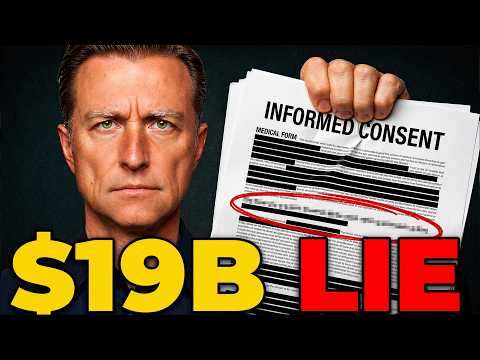
They Call It “Informed Consent.” It Isn’t.
~9 min
Episode Brief·YouTube

They Call It “Informed Consent.” It Isn’t.

Eric Berg
Watch on YouTube Add to chat My bookmarks← All sources

TL;DR

The four things you'd lose by not watching

4 items

TL;DR

The four things you'd lose by not watching

4 items
1

A clinical psychologist's FOIA request on 74 antidepressant trials found that drug companies selectively publish only favorable results, inflating efficacy by 32% and hiding 31% of trials that 'didn't come out right.'

2

On the Hamilton Depression Scale (0–51), SSRIs add only 1.8 points over placebo, while placebo alone yields 9.6 points — meaning 82% of the improvement is the sugar pill, yet the placebo effect is discarded as 'noise.'

3

A good night's sleep lessens depression by 6 points on the same scale, more than three times the drug's added effect, yet informed consent forms omit that comparison.

4

Informed consent forms for antidepressants fail to list emotional blunting (affecting 40–60% of patients) or the severity of discontinuation syndrome, which can require months or years of tapering and cost up to $30,000.

Protocols

Concrete recipes — what, when, how much, and why

2 items

Demand raw trial data before signing informed consent

WhatAsk your doctor for the complete raw data from all trials — not just published studies — to see the true benefit-harm profile of any antidepressant before consenting to the medication.
WhenBefore accepting a prescription, at the point of reviewing the informed consent form.
For whomAny patient being offered an antidepressant and presented with an informed consent form.
WhyWithout access to the raw data, neither patient nor physician can evaluate the real degree of benefit versus harm, because drug companies selectively publish trials and inflate the results.
CaveatsMost doctors do not have the raw data; this protocol highlights the structural barrier and calls for policy change. The speaker acknowledges that the current system does not provide this, making true informed consent impossible.

The speaker argues that the informed consent form is dishonest because it relies on a sanitized subset of evidence. By filing FOIA requests, Irving Kirsch demonstrated that 31% of antidepressant trials were never published and 15% were spun to look positive. If patients demanded to see all the data — including the unpublished trials and the raw numbers from the published ones — they would realize that the drug's added benefit over placebo is a mere 1.8 points on a 0–51 scale, less than the effect of a good night's sleep. This protocol thus becomes a gatekeeping step: refuse to sign until you have the full evidence. The speaker does not provide a practical method for obtaining this data but uses the demand as a rhetorical device to expose the consent process as a sham.

Personal experience

The speaker personally spent 8–9 hours deciphering the consent form and realized it was indecipherable by design. He implies that the average patient, who spends 30 seconds, is set up to consent without understanding.

If we had all the raw data and all the trials that were done, we would be much more informed and then a patient can make the correct decision whether they want to get on a drug that they can never get off of.

Also said
“What I think we should do is create a quick visual of the true data showing the placebo benefit, the benefit from the drug, and all the real side effects as well as including all the published data.”— Suggests a concrete way to present the full picture to patients.

Use lifestyle and supplement alternatives before antidepressants

WhatIncorporate exercise, St. John's Wort, omega-3 fatty acids, and improving sleep as first-line interventions for depression, given their more favorable benefit-to-harm ratio.
WhenWhen considering treatment for depression, ideally before starting medication, or as an adjunct discussion with a doctor.
For whomPeople with depression who are evaluating treatment options and want to avoid the hidden risks of antidepressants.
WhyThese interventions may reduce depressive symptoms without the severe side effects of SSRIs (sexual dysfunction, emotional blunting, discontinuation syndrome) and with a genuinely informed risk-benefit profile.
CaveatsThe speaker explicitly states he is not telling anyone to stop their medication; decisions should be made with a healthcare provider. These alternatives are not guaranteed to work for everyone and may require professional guidance.

The speaker notes that if patients truly knew that antidepressants provide only a tiny additional benefit over placebo and come with a package of severe side effects, they would likely gravitate toward lower-risk options. He lists exercise, St. John's Wort, omega-3 fatty acids, and working on sleep as examples of 'anything that creates a better benefit to harm ratio.' These approaches address the root causes or leverage the body's own healing mechanisms without causing the neurochemical blunting or withdrawal syndrome associated with SSRIs. He does not provide dosing or duration but emphasizes that the placebo effect — the mind's ability to heal the body — is the real heavy lifter and should be nurtured through belief and lifestyle changes rather than dismissed.

If a patient really knew in advance that they're not going to be able to come off this drug very easily … maybe they would try other things like exercise, St. John's Wort, omega-3 fatty acids, working on their sleeping, anything that creates a better benefit to harm ratio.

Also said
“What they should be doing is looking at what does the heavy lifting and start diving into research on this and focus on lifestyle changes and things that don't come with such a massive package of side effects and harms.”— Articulates the positive vision behind the protocol.

What's new

Personal practice updates, fresh positions, predictions

5 items

Suppressed antidepressant trial data

Irving Kirsch used FOIA requests to access raw data from all 74 antidepressant trials and discovered that 31% were never published and another 15% were rewritten to appear positive, inflating efficacy by 32%.

Why this matters: This reveals that the published literature doctors rely on is systematically biased, and the raw data is kept confidential by drug companies, making true informed consent impossible.

Background

Previously, doctors and patients assumed published studies represent the full picture of drug efficacy and safety. The standard 'informed consent' form relies on this curated evidence base.

The speaker argues that the foundation of antidepressant prescribing is built on cherry-picked data. Kirsch's FOIA requests unearthed raw trial data that drug companies had hidden. Out of 74 trials conducted, 31% were never published because the results were unfavorable. An additional 15% were rewritten to spin negative outcomes into positive ones. This manipulation inflated the perceived benefit by 32%. Because physicians only see the published studies, they cannot give patients an honest assessment of a drug's true efficacy. The speaker contends that both doctors and patients are therefore misinformed, rendering the informed consent process fraudulent. He proposes that all raw data and every trial result should be publicly available so patients can make genuinely informed decisions.

Personal experience

The speaker's own encounter with the consent form prompted the deep dive: 'I read every single line and it just didn't make sense to me. It was totally confusing. There was conflicting information. This took me between 8 and 9 hours to wrap my wits around it because I just couldn't understand it.'

31% of these publications were never published because they didn't come out right. Another 15% were rewritten to make them look positive.

Also said
“The drug companies keep the raw data confidential.”— Highlights the structural secrecy that enables data manipulation.
“I really don't think it's okay for taxpayers to indirectly pay for Big Pharma's research and not be able to have access to the raw data to make sure that it's correct.”— Adds a public funding angle and call for transparency.

Hamilton Depression Scale is not diagnostic

The Hamilton Depression Scale, used as the gold standard to 'diagnose' depression in drug trials, was never designed to diagnose depression and relies on subjective doctor observation, not blood tests or objective measures.

Why this matters: The entire $19 billion antidepressant industry rests on a subjective, non-diagnostic scale, undermining claims of clinical validity.

Background

Medical practice commonly uses validated instruments for diagnosis. The Hamilton scale is presented as such, but its developer never intended it for that purpose.

The speaker points out that the Hamilton Depression Scale ranges from 0 to 51 and is scored by the doctor observing the patient, not by the patient's self-report or any objective biomarker. This means that if a person looks depressed, the doctor can check off items accordingly. The scale was originally designed by Max Hamilton to assess severity in already-diagnosed patients, not as a diagnostic tool, yet it has become the standard for measuring depression in clinical trials. The speaker uses this to argue that the entire evidentiary base for antidepressants is built on subjective judgment, not hard science. This subjectivity makes it easier for drug companies to spin minimal differences into 'significant' results, especially when they can exclude unfavorable trials.

This is how they diagnose depression. Not by blood test, not by anything objective, it's this subjective Hamilton Depression Scale. And by the way, Hamilton never designed this scale to diagnose depression, but that's what's used as the gold standard.

Also said
“These are items that are answered by the doctor, not the patient.”— Underscores the subjective nature of the measurement.

Placebo does 82% of the lifting; drug adds only 1.8 points

Meta-analysis of the raw data shows placebo reduces depression by 9.6 points on the Hamilton scale while the drug adds just 1.8 points, meaning 82% of the improvement is the sugar pill.

Why this matters: The drug's actual contribution is so small that in the United Kingdom it wouldn't be considered clinically significant (threshold = 3 points).

Background

Antidepressants are marketed as specifically targeting the neurobiology of depression. The informed consent suggests a meaningful, independent drug effect.

The speaker visualizes the 0–51 scale as 51 feet across a whiteboard. He explains that when you look at the raw data across all 74 trials, the placebo reduced depression scores by 9.6 points, while the drug only brought an additional 1.8-point reduction. That means 82% of the total improvement came from the placebo effect. He contrasts this with the UK's National Institute of Health standard, which requires at least a 3-point difference for clinical significance — a threshold the drug fails to meet. Only in the United States is the tiny 1.8-point bump accepted as enough to support a $19 billion industry. The speaker emphasizes that a simple good night's sleep can reduce depression by 6 points, more than three times the drug's added benefit. He argues that the focus should be on investigating the heavy lifter — the placebo effect — and lifestyle factors, not on drugs with such a poor benefit-to-harm ratio.

The placebo, the sugar pill, reduced depression by just under 10 points, 9.6 points. Now watch this. The drug only added a tiny additional 1.8 points.

Also said
“82% of the improvement is based on this sugar pill placebo.”— Directly quantifies the contribution of placebo.
“What's really wild is a good night's sleep can lessen depression by six points. That's more than three times the effect of the drug.”— Compares the drug's effect to a simple, side-effect-free intervention.
“In the United Kingdom, the National Institute of Health said that you need at least three points for it to be considered clinically significant. Only in America do we allow this tiny number to be significant.”— Shows a regulatory double standard.

Emotional blunting hidden from informed consent

40–60% of patients experience emotional blunting — an inability to feel pleasure or any emotion — yet this side effect is completely absent from the informed consent form.

Why this matters: One of the most common and severe side effects of antidepressants is deliberately omitted from the document meant to list all risks.

Background

Informed consent forms are legally supposed to disclose all significant side effects. Emotional blunting is well-documented in the literature but not in the patient-facing document.

The speaker describes emotional blunting as 'probably the worst side effect of all.' It occurs in 40–60% of patients and involves a state where you cannot feel enjoyment, pleasure, or any emotion — you become numb. While you may be less sad, you also lose the capacity for positive feelings. Despite its prevalence and severity, the informed consent form makes no mention of it. The speaker sees this as a critical omission that undermines the validity of the consent: a patient cannot knowingly accept a treatment if a major risk is concealed. He ties this to the broader pattern of minimizing harms while exaggerating benefits.

Emotional blunting that affects between 40 and 60% of the patients. … It's not in the informed consent.

Also said
“You won't be able to feel enjoyment anymore. You won't be able to feel pleasure. You're basically going to be numb.”— Clarifies the lived experience of emotional blunting.

Discontinuation syndrome severity and cost

Coming off antidepressants often requires a slow, medically supervised taper lasting months or years, and can cost up to $30,000 per year — a burden not adequately conveyed in informed consent.

Why this matters: Patients are not warned that they might become effectively permanently dependent, with severe withdrawal symptoms and high financial cost.

Background

Discontinuation is typically downplayed as a minor, transient issue. The speaker reveals how protracted and expensive it can really be.

The speaker explains that discontinuing antidepressants is not a simple matter. Patients often need to taper off 'very slowly, sometimes over the course of months or even years.' Some incur expenses of $30,000 a year just to get off a drug they are stuck on. Additional withdrawal symptoms can include insomnia, nausea, anxiety, and even depression — the very thing the drug was supposed to treat. The combination of a hidden side effect (emotional blunting), a difficult exit, and high cost makes the risk-to-benefit ratio heavily skewed. The speaker maintains that if patients knew in advance they might not be able to stop the medication without major disruption, they would likely opt for lifestyle-based interventions first.

You can't come off this drug easily. In fact, you have to go to a doctor to taper off the drug very slowly, sometimes over the course of months or even years. And some people at the expense of $30,000 a year just to come off a drug that they're stuck on.

Also said
“If a patient really knew in advance that they're not going to be able to come off this drug very easily and if they did, they would have major side effects, maybe they would try other things like exercise, St. John's Wort, omega-3 fatty acids, working on their sleeping.”— Connects the hidden withdrawal difficulty to the decision-making process.

Recommendations

Products, supplements, and tools mentioned in the episode

4 items

St. John's Wort

Supplement

Mentioned as an alternative to antidepressants with a 'better benefit to harm ratio.' No specific brand, dose, or trial data provided.

The speaker lists St. John's Wort alongside exercise, omega-3, and sleep as a less risky option for depression. However, he does not elaborate on its efficacy, interactions, or dosing. The recommendation is presented as an example of the kind of alternative a patient might choose if fully informed of antidepressant risks.

vs alternatives

Contrasted with SSRIs, which have severe side effects and a small 1.8-point drug effect, St. John's Wort is implied to offer a more favorable risk profile, though no direct data is given.

maybe they would try other things like exercise, St. John's Wort, omega-3 fatty acids, working on their sleeping

Find St.

Omega-3 fatty acids

Supplement

Recommended as part of a suite of alternative interventions for depression, mentioned alongside exercise and sleep. No specifics on EPA/DHA ratios or dosage.

Omega-3s appear in the same list as St. John's Wort, exercise, and sleep. The speaker positions them as natural, non-pharmacologic strategies that do not carry the hidden burdens of antidepressants, appealing to a desire for transparency and lower harm.

vs alternatives

Framed as preferable to SSRIs due to absence of emotional blunting, sexual dysfunction, and difficult withdrawal.

maybe they would try other things like exercise, St. John's Wort, omega-3 fatty acids, working on their sleeping

Find Omega-3

Regular exercise for depression

Practice

Identified as a lifestyle change that can create a better benefit-to-harm ratio than antidepressants.

Exercise is grouped with sleep and supplements as a way to address depression without the severe side effects of medication. The speaker does not specify type, frequency, or intensity, but invokes the idea that if patients were informed of the true 1.8-point drug benefit and the availability of exercise's larger effect, they would choose the physical activity route.

vs alternatives

Implied to be more effective and safer than SSRIs, though no specific trial data is cited; the sleep comparison (6-point reduction) serves as a proxy for lifestyle interventions.

maybe they would try other things like exercise

Find Regular

Improving sleep quality and duration

Practice

A good night's sleep is explicitly cited as reducing depression by 6 points on the Hamilton scale, over three times the drug's effect.

Sleep is the only alternative for which the speaker provides a concrete magnitude of effect, drawing directly on the same Hamilton scale used in drug trials. He contrasts the 6-point improvement from sleep with the 1.8-point drug add-on, framing sleep as a far more potent intervention. The implication is that prioritizing sleep hygiene is a high-impact, zero-side-effect strategy that should be exhausted before considering medication.

vs alternatives

Compared to antidepressants: sleep reduces depression by 6 points vs. drug's 1.8 points, with no black box warning, sexual dysfunction, emotional blunting, or withdrawal syndrome.

A good night's sleep can lessen depression by six points. That's more than three times the effect of the drug.

Find Improving

Notable quotes

Lines worth pulling out — contrarian, specific, or perfectly phrased

6 items
There is a $19 billion lie being told in medicine right now involving 30 million Americans and probably not even one of them knows it's going on.
Sets up the entire episode's thesis with a dramatic and specific financial and population figure.
The placebo, the sugar pill, reduced depression by just under 10 points, 9.6 points. Now watch this. The drug only added a tiny additional 1.8 points.
Encapsulates the core statistical critique in a visual, easy-to-grasp comparison.
82% of the improvement is based on this sugar pill placebo.
A striking quantification that reframes the entire treatment effect as mostly non-pharmacological.
A good night's sleep can lessen depression by six points. That's more than three times the effect of the drug.
Illustrates the triviality of the drug's effect with a relatable, everyday comparison.
They subtract it as noise. It's not nothing, it's something. It's the patient's own mind healing their body and they're subtracting the heavy lifter.
Exposes the deliberate dismissal of the placebo effect, reframing it as a real, positive healing force.
If a patient really knew in advance that they're not going to be able to come off this drug very easily and if they did, they would have major side effects, maybe they would try other things like exercise, St. John's Wort, omega-3 fatty acids, working on their sleeping.
Distills the episode's call to action, directly linking informed consent failure to alternative choices.

Sign in to share feedback

Tell us if this brief hit the mark or missed it — feedback feeds back into the next iteration of the prompt.

Topics covered

informed-consentantidepressant-trialspublication-biashamilton-depression-scaleplacebo-effectantidepressant-side-effectsemotional-bluntingdiscontinuation-syndromefoia-requestsirving-kirschalternative-depression-treatmentsbig-pharmaraw-data-accessclinical-significancesleep-and-depression
Free account

Make this library yours

Reading is free for everyone. A free account adds the personal layer: save protocols, follow experts, and see how the other experts weigh in on this same topic.

Create a free accountSign in

Where the experts disagree — weekly

One email a week: the sharpest new disagreements and protocols from the library. No spam, unsubscribe anytime.

Educational summary of the cited expert source — not medical advice. Open the source recording linked above and consult a qualified physician before acting on any protocol.