UNFUCG
DashboardSearchChatBookmarksNotificationsActivityPremiumProfile
?
Home
Search
Chat
Saved
Profile
Episode
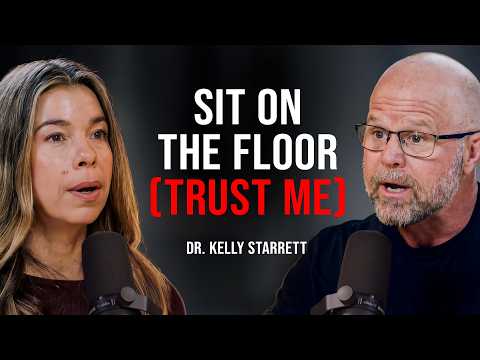
The Scientific Formula for a "Healthy Day" | Dr. Kelly Starrett
~250 min
Episode Brief·YouTube

The Scientific Formula for a "Healthy Day" | Dr. Kelly Starrett

Rhonda Patrick
Watch on YouTube Add to chat My bookmarks← All sources

TL;DR

The four things you'd lose by not watching

4 items

TL;DR

The four things you'd lose by not watching

4 items
1

Pain is a request for change, not always injury; manage it with desensitization tools (foam rolling, isometrics, breath), blood flow, and checking range of motion.

2

Break up sitting with 'movement snacks'—3 minutes of vigorous activity (walking fast, stairs) 3 times a day—linked to 50% lower cardiovascular mortality and 40% lower all-cause mortality, even in non-exercisers.

3

Hang from a bar for 3 minutes total per day to reduce shoulder/neck pain and maintain overhead mobility; simple floor sitting for 20–30 minutes nightly preserves hip range and the ability to get up from the ground.

4

For youth sport, protect sleep (8–10 hours for kids) and avoid early specialization; 10 minutes of game-based play (catching, tumbling, jumping) daily can build durability.

Protocols

Concrete recipes — what, when, how much, and why

6 items

Morning hip spin-up / shoulder spin-up

WhatA floor-based sequence of hip flexion, rotation, and isometrics or arm swings that takes the body through fundamental ranges of motion first thing in the morning.
WhenBefore leaving the house, as a daily movement 'vitamin'.
DoseJust a few minutes, touching end-range positions.
For whomAnyone, especially those who sit a lot or only train a few times a week.
WhyReminds the brain of full movement vocabulary, prevents range-of-motion loss, and provides a daily self-assessment of how the body feels.
CaveatsNo equipment needed; can be scaled. Focus on breathing during holds.

Starrett created the hip spin-up as an alternative to the sun salutation, stripping it of spiritual elements to make it more 'athletic.' It involves fundamental hip positions with some isometric pauses, integrating spine movement. The shoulder spin-up is simple arm swings through full arcs—overhead, behind, rotation—to keep shoulder capsule mobility. He emphasizes that if a busy person does nothing else, doing one of these three 'spin-ups' (hip, shoulder, or breath) before leaving the house ensures they've touched key ranges and reconnected with their body.

Mechanism

Touching joint end ranges signals the brain to maintain those maps, preventing pruning of movement options. Isometric holds improve local muscle control and provide proprioceptive input.

I would like you to do the hip spin-up, the shoulder spin up, or a breath spin up before you leave the house.

Also said
“Because if the day gets away from you and you can't train or you can't exercise, we want to have said, 'Well, what does a physical day look like for a person?'”— Frames it as insurance for non-exercise days.

Soft tissue self-treatment for pain and recovery

WhatUse a foam roller, lacrosse ball, or harder small ball to work above and below the painful area, with controlled breathing and occasional contract-relax.
WhenIn the evening for parasympathetic effect, or after training to reduce DOMS, or as part of a pain management routine.
Dose5 minutes per muscle system; do not exceed tolerance so you can't breathe or contract the muscle.
For whomAnyone with persistent niggles, stiff areas, or post-exercise soreness.
WhyDesensitizes painful tissues, promotes blood flow, helps move congestion and swelling, restores fascial glide, and downregulates the nervous system.
CaveatsIf you can't breathe normally or contract the muscle, the pressure is too much. Avoid if it feels threatening. It is not a standalone cure; must be combined with loading and range-of-motion work.

Starrett acknowledges that foam rolling alone won't 'fix knee rabies'; it's one tool in a system. He recommends working above and below the site of pain, because e.g., tight calves can drive knee pain. The key rules are: breathe (to keep the nervous system from registering threat) and be able to contract the muscle (so you aren't overwhelmed). Doing self-massage in the evening triggers a parasympathetic shift, making it a useful wind-down habit. He cites flexibility researcher on Instagram and the Brookbush Institute for those wanting the science.

Mechanism

Pressure stimulates mechanoreceptors that modulate pain perception (gate control theory). Contract-relax cycles teach the brain that force generation in that position is safe (desensitization). Enhanced blood flow aids clearance of metabolic waste and brings nutrients to the tissue.

Personal experience

Rhonda mentions she has nagging tendon pain in her forearm and shoulder; she asks about foam rolling's effectiveness, but doesn't share her own use beyond that.

One of the things we like to say to people is, 'Hey, let's make sure you can take a breath while you're doing that.'

Also said
“We like to do the soft tissue work in the evening... 10 minutes of soft tissue work, we found that that had a huge parasympathetic input like a massage.”— Specifies optimal timing and autonomic benefit.
“If laying on the ground and rolling back and forth fixed knee cancer, we would have fixed knee rabies already.”— Humorous reminder that it's not a magic bullet.

Hanging for shoulder and neck health

WhatHang from a pull-up bar (or any overhead support) with arms straight, focusing on relaxing and breathing.
WhenDaily, accumulated throughout the day if possible.
Dose3 minutes total per day, broken into segments.
For whomDesk workers, lifters, anyone with shoulder tightness or pain; also beneficial for maintaining overhead mobility in aging.
WhyProvides isometric loading in the overhead position, teaches the brain it's a safe range, decompresses the shoulder joint, and reduces neck and shoulder pain.
CaveatsIf hanging causes sharp pain, ease off. Those with shoulder instability may need to start with assisted hangs.

Starrett emphasizes that hanging is a fundamental human position; we should spend time in end ranges. He references Ido Portal's popularization of hanging. He notes that people who can hang tend to have less shoulder and neck pain, and that hanging is simply an isometric that signals to the brain that these positions are important. It also helps maintain grip strength, a known longevity biomarker.

Mechanism

Hanging mobilizes the shoulder capsule, stretches the lats and pecs, and isometrically strengthens the rotator cuff and grip. The brain receives constant proprioceptive feedback that the overhead position is safe, reducing threat perception and pain.

Personal experience

Rhonda says she does assisted pull-ups and hangs without pain, and intends to do more hanging.

If you can hang three minutes a day... good for your neck, good for your back, good for your shoulders.

Also said
“What we're really doing when we're hanging is an isometric and we're just telling our brain these are really important positions to be in.”— Explains the neuro-motor rationale.

Floor sitting (ground sitting) daily

WhatSpend 20–30 minutes in the evening sitting on the floor in various positions (cross-legged, legs straight, kneeling, side-saddle) while watching TV or reading.
WhenEvening, or any time you would normally sit on a couch.
Dose20–30 minutes per evening.
For whomEveryone, especially older adults and those who sit in chairs all day; also beneficial for athletes to restore joint centration.
WhyExposes hips, knees, and ankles to end-range flexion, rotation, and loading; maintains ability to get up and down from the floor (independently), directly reducing fall risk and nursing home admission.
CaveatsIf uncomfortable, start with short periods and use cushions; gradually increase. If you have acute back pain, consult a professional.

Starrett notes that in cultures where people sit on the floor, hip and knee osteoarthritis and fall risk in the elderly approach zero. He suggests it's a simple behavioral change that accumulates massive benefit over decades. Philip Beach's hypothesis is that the body used to 'tune' itself by spending time in these positions; now we avoid them. Even if the floor is uncomfortable at first, he observed that at a talk, a third of the audience ended up lying down because they couldn't maintain a seated position on the hard floor. Rhonda shares that her mother, who has orthostatic tremor, sits on the floor constantly, and that is why she's more comfortable playing with grandkids on the ground.

Mechanism

Kneeling reapproximates the hip joint into the socket (centration), improving function. Passing through deep hip flexion and internal/external rotation loads articular cartilage and maintains synovial fluid distribution. The act of getting down and up repeatedly preserves neuromuscular patterns critical for independence in aging.

Personal experience

Rhonda relates that her 71-year-old mom sits on the floor out of necessity due to an orthostatic tremor, and that she's one of the few older adults who does so regularly, making her better at getting up from the ground.

The number one reason people end up in nursing homes, can't get up and down off the ground independently.

Also said
“Cultures that toilet on the ground, sleep on the ground, eat on the ground... Fall risk in the elderly drops to almost zero. Osteoarthritis in the hips and low back drops to almost zero.”— Epidemiological support for floor sitting.
“Philip Beach... has this hypothesis that it's one of the ways that the body used to tune itself that we spend time for example loading and kneeling on the hip reapproximates the hip into the socket.”— Proposed biomechanical mechanism.

Warm-up as self-assessment and movement prep (Rhonda's personal protocol)

What2 minutes of light cardio (rowing or jump rope), followed by specific range-of-motion drills (e.g., pass-throughs with a pole for upper body), then bodyweight squats, and finally unweighted barbell work before adding load.
WhenBefore every strength session.
DoseTotal warm-up takes the start of the session, progressively building intensity.
For whomRhonda Patrick (under coach Zia War); applicable to anyone starting a heavy weight training session.
WhyRaises body temperature, primes the nervous system, checks range of motion for that day, and reduces incomplete position loading that may lead to pain or injury.
CaveatsSpecifics may vary; the key is to not jump cold into heavy lifts. The warm-up should be dynamic and mimic movements of the workout.

Rhonda emphasizes that without her coach she wouldn't have known the difference between warming up and stretching. She used to think that spinning on a bike for 10 minutes was enough. Now she sees warm-up as a progression: heart rate, mobility, bodyweight, then the lift with minimal load. Starrett adds that the warm-up is a chance to play, incorporate novel movements, and see 'who am I today?' He sometimes uses different movement challenges each day to keep athletes curious. He also mentions that even 5 slow sets under the bar can be a warm-up when time is short, focusing on skill connection.

Mechanism

Gradually increases blood flow and tissue perfusion, improving viscoelastic properties of tendons and muscles. Neural activation drills (like jump rope) potentiate the motor system. Range-of-motion checks give real-time feedback on joint stiffness.

Personal experience

Rhonda describes her routine in detail, acknowledging she learned it from her coach, Zia War. She says it helps her avoid injury and feel ready, and she now understands the rationale.

I do 2 minutes of just getting my heart rate up first thing… then we kind of get into more range of motion. If I'm doing arms, I'll do pass-throughs with a pole, or we'll do bodyweight squats first if I'm going to be squatting that day and then we go barbell only squats and I eventually gradually get to the weight.

Also said
“I wouldn't have known to do all that if I was just kind of working out on my own.”— Shows that proper warming up is learned, not intuitive.

Sauna (deliberate heat exposure) for recovery and possible tendon health

WhatRegular sauna sessions (dry or wet) at temperatures around 180°F (not extreme 220°F) for 20 minutes or more, or a hot bath at 104°F for 20 minutes if sauna not available.
WhenOn recovery days or in the evening; can be done post-exercise but avoid extreme heat if already dehydrated.
Dose20+ minutes per session, frequency as tolerated; longer and hotter yield greater growth hormone pulse, but caution not to overheat (stay below 200°F).
For whomAnyone looking to enhance recovery or manage chronic pain; especially those who cannot tolerate heavy exercise on a given day.
WhyIncreases blood flow to tissues without mechanical load, may stimulate growth hormone release (which aids tendon and tissue repair), downregulates the nervous system, and provides psychological resilience.
CaveatsAvoid if pregnant or with uncontrolled hypertension; start with lower temperature and duration. Cold exposure close to strength training may blunt hypertrophy adaptations, so time cold plunges away from heavy lifts.

Rhonda cites research that sauna can increase growth hormone significantly, and that combined with exercise it may be synergistic for tendon health. Starrett adds that beyond the physiology, the sauna forces stillness, removes phones, and builds community, which may indirectly improve health. He cautions about using extreme temperatures and notes that after listening to Patrick, he has now lowered his sauna temperature. They agree that a hot bath at 104°F is a accessible alternative.

Mechanism

Heat stress increases core temperature, causing vasodilation and increased blood flow, which may help clear metabolic waste from tissues. The stress of heat also triggers a growth hormone pulse, potentially strengthening tendons. The parasympathetic after-effect promotes sleep. Psychologically, voluntarily enduring heat builds resilience.

Personal experience

Rhonda has discussed sauna frequently on her podcast and uses it herself; in this episode she underscores that she is a fan of deliberate heat exposure and shares that even a hot bath works.

Getting in a hot tub, hot bath... you will have to get a little pool thermometer and make sure you're at 104° Fahrenheit.

Also said
“We know that sauna, deliberate heat exposure does increase growth hormone... that growth hormone does respond to a stressful type of stress.”— Cites mechanism of tendon strengthening.

What's new

Personal practice updates, fresh positions, predictions

1 item

Movement snacks dramatically lower mortality even in non-exercisers

mid-discussion after desk ergonomics

Short bursts of vigorous movement (3 minutes, 3 times a day) such as fast stair climbing or playing tag reduce cardiovascular mortality by 50%, all-cause by 40%, and cancer mortality by 40%, independent of formal exercise.

Why this matters: Rhonda Patrick highlights this newer data as a major public health lever, crediting Starrett for promoting the concept for years before it was mainstream.

Background

Previously, physical activity was largely framed as either structured exercise sessions or inactivity; the idea of accumulating small bouts throughout the day was not widely recognized.

Patrick explains that researchers have studied people living in cities who walk briskly to errands, take stairs vigorously, or play with kids, recording hundreds of accelerometer-measured bursts that add up. She stresses that these are individuals who do not identify as exercisers yet still gain profound longevity benefits. Starrett adds that his philosophy has always been to sneak movement into the day, like walking after dinner or doing a few squats, rather than relying on a single gym hour. He notes that this 'never do nothing' approach can preserve muscle mass and even help with chronic pain by engaging neuroplasticity.

Personal experience

Rhonda shares that she now views chasing her puppy or kicking a ball with her son as part of her daily movement bank, not just leisure, and that it motivates her to stay active.

Individuals that are doing these short bursts of exercise, if they're doing three minutes of it, three minute bouts of it three times a day... 50% lower cardiovascular related mortality, 40% lower all-cause mortality, 40% lower cancer related mortality.

Also said
“Walking 8,000 steps a day reduces all cause mortality by 51%.”— Quantifies the impact of non-exercise walking, which feeds into movement snack philosophy.
“There's so much data that has come out even in the last five years... it's undeniable that even people that are taking advantage of everyday life situations... are getting benefit.”— Reinforces that the evidence is recent and compelling.

Recommendations

Products, supplements, and tools mentioned in the episode

3 items

Rope flow (by David Wex)

Tool

A tool or practice of spinning a rope in patterns to touch a wide variety of shoulder and arm positions, mentioned as a fun, fast warm-up or movement snack.

Starrett mentions rope flow as an example of physical culture ideas that have resurfaced, and that it can be used for shoulder warm-up. It is not deeply explored, but presented as an enjoyable way to incorporate novel movement patterns.

We're starting to see rope flow kind of some of these physical culture ideas... David Wex rope flow which is super fun.

Find Rope

Fitness Marshall (Caleb Marshall) YouTube dance videos

Service

Free dance workout videos on YouTube, recommended as a 3-5 minute movement snack that makes people move in novel ways and have fun.

Starrett uses these for warm-ups and fun movement. He describes how just mirroring the dance moves gets people into shapes and movements they wouldn't otherwise use, and it feels like play. He suggests it as a quick, accessible, and enjoyable form of physical activity.

You could dance if you did a three or five minute dance on YouTube free. Jump on his channel. We use it for warm-ups.

Find Fitness

Emergency (vitamin fizzy drink)

Supplement

Kelly mentions giving his daughter an Emergency fizzy drink as a morning vitamin insurance policy, particularly for micronutrients like vitamin C when eating habits are questionable.

Not a formal recommendation for everyone, but an example of how he ensures his teen athlete gets some vitamins and minerals before school. Presented as a practical, low-barrier way to fill nutritional gaps.

Personal experience

He says his daughter Caroline chugs one before school because at least she gets some vitamin C and other micronutrients.

That emergency fizzy drink, Caroline has been chugging one of those because at the very least I know she has some vitamin C and some micronutrient in her system when she leaves for school.

Find Emergency
Disclosed sponsorships2speaker disclosed

Mobility Coach app (by Kelly Starrett)

Tool Sponsored · disclosed

An app that provides self-assessments and mobility work; includes built to move assessments and professional courses. Allows users to test movement minimums and select routines to restore ranges.

DisclosureCreated by Kelly Starrett, the guest, who mentions it as 'the app that you have.'

Starrett explains that the app contains fundamental range-of-motion tests that anyone can do at home, without needing a professional. It is designed to put advanced self-assessment in the hands of the user, so people can identify missing ranges and address them. It also sells professional courses for more sophisticated assessment.

vs alternatives

Versus generic mobility apps, this one is based on Starrett's extensive clinical and coaching experience and includes the specific assessments from his book Built to Move.

Personal experience

Rhonda asks about the app, and Starrett describes it as the solution for at-home tests.

If only there was an app that had all of these simple movement tests you could do at home. — And that's the app that you you have. What's the name of that app again? It's called the mobility coach.

Find Mobility

Built to Move by Kelly and Juliet Starrett

Book Sponsored · disclosed

A prequel-style book that distills the essentials of movement, mobility, and daily practices for a general audience, offering simple assessments and protocols.

DisclosureWritten by the guest Kelly Starrett and his wife Juliet; he mentions it as his last book, a primer for neighbors and family members.

Starrett notes that many people were doing sophisticated training but missing basic movement habits, so Built to Move was written as a way to bring family and community members into the practice without overwhelming them. He frames it as the entry point into all his other work.

vs alternatives

Compared to Supple Leopard (more technical), this is more accessible and focused on global daily habits rather than Olympic-level optimization.

Our last book, Built to Move, we wrote as kind of a primer... we wanted to bring neighbors and family members... along.

Find Built

Notable quotes

Lines worth pulling out — contrarian, specific, or perfectly phrased

4 items
Pain is a request for change.
Central reframe of pain used throughout the episode; shifts perspective from damage to actionable feedback.
Walking 8,000 steps a day reduces all cause mortality by 51%.
Highly concrete, memorable statistic that underscores the power of simple walking.
Pull-ups are the worst sport there is. It's what a terrible sport pull-ups are.
Provocative statement that challenges the cult of arbitrary strength metrics and redirects attention to sports and real-world movement.
If you want to protect your children so that they are less likely to get injured, sleep would be the number one thing I would lean into.
Powerful, evidence-informed prioritization for youth sports parents, highlighting sleep over complex training interventions.

Sign in to share feedback

Tell us if this brief hit the mark or missed it — feedback feeds back into the next iteration of the prompt.

Topics covered

pain-philosophyfoam-rolling-and-soft-tissuedoms-and-sorenessoverhead-press-neck-painmobility-assessmentwarm-up-strategiesbreath-work-for-performancehanging-for-shouldersdesk-ergonomicsmovement-snacksfloor-sittingsauna-and-cold-exposureyouth-sportssleepnutrition-800-gramsruckingplay-and-free-playhormones-and-frozen-shoulderrecovery-tools
Free account

Make this library yours

Reading is free for everyone. A free account adds the personal layer: save protocols, follow experts, and see how the other experts weigh in on this same topic.

Create a free accountSign in

Where the experts disagree — weekly

One email a week: the sharpest new disagreements and protocols from the library. No spam, unsubscribe anytime.

Educational summary of the cited expert source — not medical advice. Open the source recording linked above and consult a qualified physician before acting on any protocol.