UNFUCG
DashboardSearchChatBookmarksNotificationsActivityPremiumProfile
?
Home
Search
Chat
Saved
Profile
Episode
I'm So Close To F***ing Up
~10 min
Episode Brief·YouTube

I'm So Close To F***ing Up

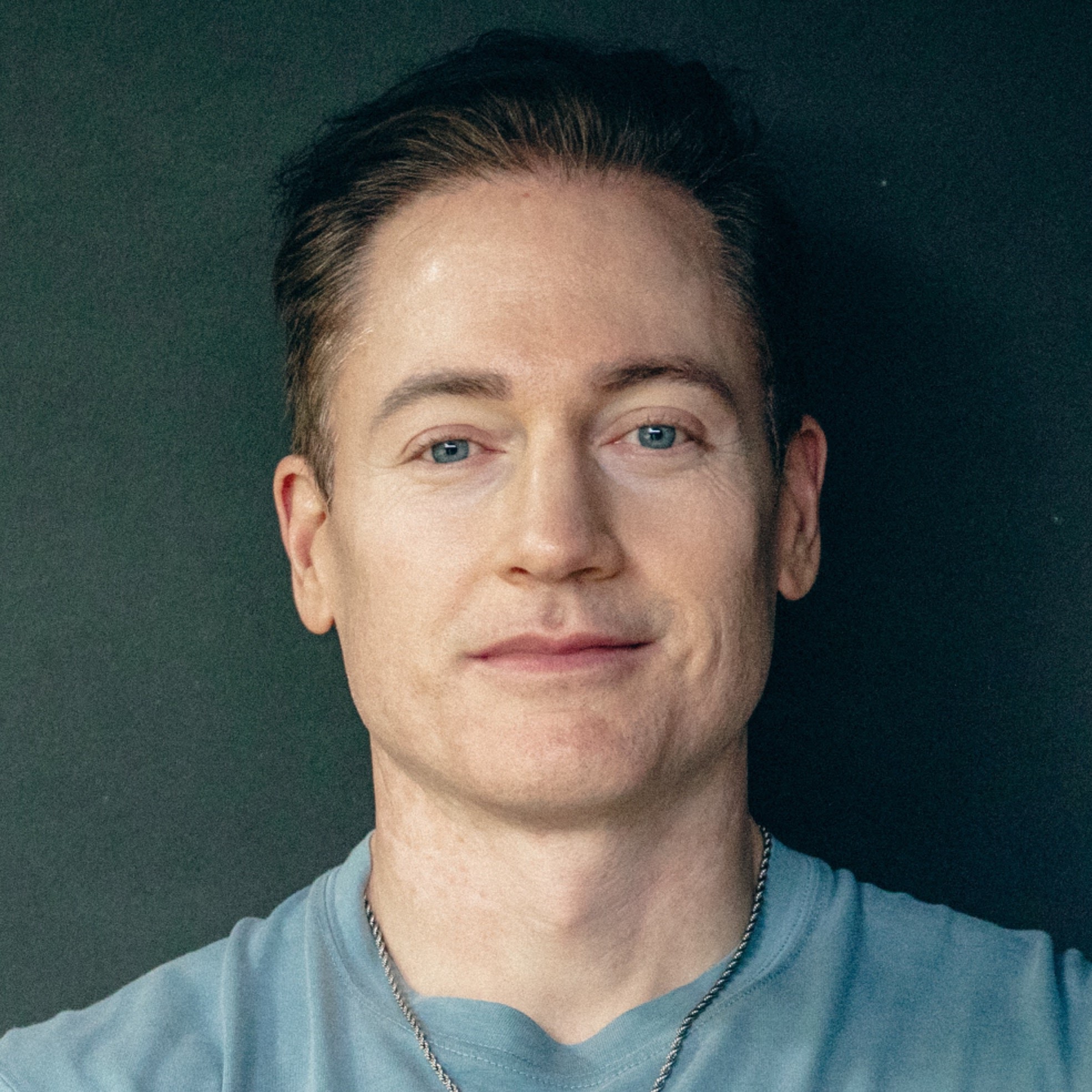
Bryan Johnson
Watch on YouTube Add to chat My bookmarks← All sources

TL;DR

The four things you'd lose by not watching

4 items

TL;DR

The four things you'd lose by not watching

4 items
1

Johnson flew to Stockholm's Brilliant Minds conference without a prepared talk, improvising his Don't Die pitch with a morning-erection joke to gauge the audience.

2

After the talk resonated, he tried to organize an impromptu Don't Die dinner but was blocked by conference organizers, showing the friction in infiltrating elite circles.

3

His personal daily protocol: sleep is the non-negotiable top priority, then upon waking he eats first, then exercises; his last meal is a bowl of hummus, sauerkraut, carrot, and avocado.

4

His entire health regimen has been handed over to an AI model because his data volume exceeds any human doctor's capacity; he frames Don't Die as a global movement to systematically remove all causes of death using AI.

Protocols

Concrete recipes — what, when, how much, and why

5 items

Sleep as Non-Negotiable Priority

WhatMake sleep your number one life priority, especially when adapting to a new environment.
WhenDaily, particularly during travel or circadian disruption.
For whomAnyone, but especially himself while traveling.
WhySleep is foundational for health and performance; without it, everything else fails.
Personal experience

He stated, 'I prioritized my sleep. Uh, sleep is my number one life priority, especially when you're adapting to a new area.'

I prioritized my sleep. Sleep is my number one life priority, especially when you're adapting to a new area.

Eat-First-Then-Exercise Morning Sequence

WhatUpon waking, eat the first meal of the day, then exercise afterwards.
WhenMorning, immediately after waking.
For whomSpeaker's personal routine.
WhyHe does it as a fixed sequence to start his day; suggests fueling before training.
Personal experience

He described his daily start: 'Then I wake up, I eat the first thing I do, then I exercise, and then I begin my day.'

Then I wake up, I eat the first thing I do, then I exercise, and then I begin my day.

Final Meal: Hummus-Sauerkraut-Carrot-Avocado Bowl

WhatEat a bowl of hummus, sauerkraut, carrot, and avocado as the last meal of the day.
WhenEvening (final meal).
For whomSpeaker's personal diet.
WhyPart of his optimized diet; likely for gut health (sauerkraut) and nutrient density.
Personal experience

He stated, 'My final meal of the day is a hummus, sauerkraut, carrot, avocado breakfast.'

My final meal of the day is a hummus, sauerkraut, carrot, avocado breakfast.

AI-Managed Health Algorithm

WhatTurn over all personal health data to an AI model that processes the biomarkers and dictates daily protocols, because the complexity exceeds human doctor capabilities.
WhenOngoing, all the time.
DoseContinuous monitoring and algorithm-driven decisions.
For whomInitially the speaker, eventually a global model for everyone.
WhyHuman doctors cannot process the vast number of variables in high-frequency biomarker data; AI can integrate and optimize in ways humans can't.
CaveatsRequires extensive biomarker tracking and an advanced AI model (currently unique to his project).

Johnson collected so much health data that his physician could no longer make sense of it. The logical step was to hand the reins to a machine learning system that can weigh thousands of correlations and spit out an optimized daily plan. He views this not as a eccentric choice but as the inevitable endpoint of personalized medicine. By serving as the first public case, he wants to demonstrate that AI-delivered health doesn't just match human care—it surpasses it, making health a default, not a luxury. The algorithm, in his vision, will eventually nudge people away from contaminated water, air toxins, and poor sleep in real time, becoming a benevolent, ever-present guardian.

Mechanism

AI models ingest continuous biometric data (blood, sleep, activity, environmental) and use pattern recognition to identify factors that accelerate aging or disease. It then prescribes countermeasures and provides positive reinforcement nudges, overcoming human decision fatigue. The algorithm is adaptive, learning from outcomes.

Personal experience

He stated, 'The data we collect about me exceeds my doctor's abilities to process it. There's there's too many variables and my care transitioned to an AI model. So, I really am following an algorithm.' He follows this algorithm every day for diet, exercise, sleep, and treatments.

The data we collect about me exceeds my doctor's abilities to process it. There's there's too many variables and my care transitioned to an AI model. So, I really am following an algorithm.

Also said
“What if it could inform us and give us a positive nudge to not do those things? That's the kind of world I'm working towards where the algorithm legit is better than any human could in taking care of you.”— Extends the personal algorithm to a universal, nudging AI guardian.
“A way we reframe what is life, where AI becomes better at taking care of you than you can or your doctor can. And health is not a luxury. It's the default.”— Positions AI as the great democratizer of optimal health.

Systematic Elimination of Death Causes

WhatIdentify and remove everything in your environment and lifestyle that contributes to death: contaminated water, air toxins, sleep deprivation, poor nutrition, etc.
WhenContinuously.
For whomEveryone, starting with oneself.
WhyDeath is the enemy in a philosophical and practical war; systematically eliminating its vectors is the only logical strategy for extending life.
CaveatsExtreme vigilance required; current AI assistance is not yet available to the public.

Johnson frames longevity not as a self-improvement goal but as a war fought on multiple fronts. He lists concrete enemies—water quality, air pollution, lack of sleep—and argues that the problem is too big for human willpower alone. That's why he's building an AI that can 'give us a positive nudge' to avoid these stealthy killers. This turns the abstract goal of 'living healthier' into a tangible, engineering-style checklist, making death prevention something that can be systematically optimized.

Mechanism

Death causes generate physiological stress, inflammation, and genetic damage over time. Removing them reduces all-cause mortality risk. The AI nudges act as a behavioral prosthesis, making the healthy choice the easy default.

Personal experience

He says he is 'trying to figure out everything in your life that causes you to die' for himself and is demonstrating the output as performance art.

We are at war with death and its causes. ... You're trying to figure out everything in your life that causes you to die. And so that could mean contaminated water. It could mean toxins in the air. It could mean not getting good sleep.

Also said
“Don't die is basically an endeavor to do for the world what I've done for myself, which is help everybody systematically remove all things that cause death.”— Declares the scalability of the personal war to the global population.

What's new

Personal practice updates, fresh positions, predictions

5 items

Improvising the Brilliant Minds talk without slides

Johnson abandoned his usual meticulous slide preparation for an off-the-cuff performance, feeling that slides trapped him in a 'straight jacket', and used a provocative erection joke to test the room.

Why this matters: It marks a deliberate shift from his hyper-prepared, data-driven persona to a more raw, human, and risk-taking form of communication, accepting potential public failure to reach new audiences.

Background

His hallmark has been extreme measurement and data presentation. In past talks he likely relied heavily on charts.

Johnson arrived at the conference with no script, determined to be spontaneous. He acknowledged being 'probably the most meticulous and prepared person you'll ever meet', but explained that when he does slides he feels like he's in a straightjacket. The risk was significant: if he bombed, it could close doors for future European invitations. Yet he chose to 'get out there and go' and even planned to open with a joke about morning erections to break the ice and gauge audience receptivity. The gamble paid off, with the audience engrossed and many approaching him afterwards, which he interpreted as a sign that his authentic, unpolished delivery resonated more deeply than data-heavy presentations.

Personal experience

He described the internal tension: 'If I lose the audience like a full album up there with nose lines, I'm just going to wing it.' He asked himself 'How'd it go?' after, and noted people were engrossed. The positive reception gave him confidence to push for a Don't Die dinner.

I'm probably the most meticulous and prepared person you'll ever meet. However, when I do slides, I feel like I'm in a straight jacket. So, this time I'm just going to get out there and go. I'm going to improv.

Also said
“Are you gonna talk about erections? Yeah, I'm going to talk about erections. ... If I lose the audience like a full album up there with nose lines, I'm just going to wing it.”— Shows his planned high-stakes icebreaker to connect with the male-dominated audience.
“That went really well. I mean, better than I expected. It really felt like it resonated deeply. People were very engaged.”— Outcome of the risk-taking, validating the unconventional approach.

Unplanned European expansion to spread Don't Die

Johnson decided to travel to Europe with no itinerary, saying 'yes to everything' to bypass media backlash and spread the Don't Die message rapidly, accepting the risk of failure.

Why this matters: It's a strategic pivot from defensive PR battles to aggressive, chaotic outreach, mirroring a 'wartime' mindset against death.

Background

He had been facing constant media backlash, supplier problems, and public skepticism in the US, which distracted from the mission.

Frustrated by institutional friction, he framed the situation as 'we're fumbling' and 'missing the moment' in the new era with AI. To break the stalemate, he chose to go to Europe unscheduled and unscripted, explicitly stating 'I'm not going to plan. I'm not going to script. I'm just going to say yes to everything.' The goal was to get the word out at any cost, even if a poor performance meant not being invited back. This mirrors a startup founder's pivot from polished operations to high-velocity guerilla tactics, driven by a belief that the window for Don't Die is closing.

Personal experience

He described a 'real disaster situation' with his company, then announced 'So, I'm going to Sweden because we have not gone to Europe to share Don't Die.'

The risk is if I bomb, they may not invite me back. But you know what? We have to get the word out. We are at war with death and its causes and the clock is ticking.

Also said
“I created a real disaster situation for myself. I'm building this company and I'm dealing with constant media backlash, supplier problems, public skepticism, things that prevent me from doing the actual work on Don't Die.”— Explains the personal and professional pressure that forced the unplanned tour.

Health as the greatest joy of life, not debauchery

Johnson reframes the cultural narrative that says partying and poor health habits are pleasurable; he asserts that true joy is found in health itself.

Why this matters: Directly challenges the prevalent 'live fast, die young' ethos by redefining pleasure, a core philosophical pillar of Don't Die.

Background

Society often markets excess as fun and health optimization as restrictive or boring.

When confronted with the criticism that he is a guinea pig, he flips the argument: everyone is a guinea pig in their own lifestyle experiment, testing the consequences of sleep deprivation, fast food, alcohol, and smoking. He argues that this lifestyle has been marketed as the pinnacle of living, but in reality it's a destructive experiment. The antidote is to reposition health not as a chore or deprivation but as the deepest source of joy. This reframing is foundational to his message, aiming to make health aspirational rather than punitive.

We have sold this debaucherous lifestyle as a form of pleasure or of living life. And I think really what the answer is, it's health is the greatest joy of life.

Also said
“A lot of people do think I am a guinea pig. And I would just also say that they are too. ... they're testing what happens when you don't sleep well, what happens when you don't exercise, what happens when you eat fast food.”— Lays out the 'everyone is experimenting' argument that undercuts his critics.

Inevitable AI takeover of health and death prevention

Johnson predicts it's inevitable that AI will become better at managing human health than humans or doctors can, and that Don't Die is the natural adoption of that future.

Why this matters: Positions his movement not as a fringe experiment but as the obvious early-adopter stance for an unavoidable technological shift.

Background

Current healthcare relies on human doctors who are overwhelmed by complexity; Johnson's own data already exceeds their processing capacity.

He argues that as we measure more biomarkers, the data will become too complex for any human cognition to manage, making AI the only viable caretaker. This isn't optional—it's 'just going to happen'. The only question is whether you embrace it early or late. He envisions a world where your algorithm gives you positive nudges away from harmful behaviors more effectively than any doctor. This shifts health from a luxury (requiring expensive experts) to a default (the algorithm runs for everyone), creating a new baseline where death is systematically attacked by software.

Personal experience

His own care transitioned to an AI model when his doctor couldn't process the data. He now relies entirely on the algorithm.

Don't die is inevitable. It's just going to happen that we humans will not be able to keep up with the progress of AI.

Also said
“The data we collect about me exceeds my doctor's abilities to process it. There's there's too many variables and my care transitioned to an AI model. So, I really am following an algorithm.”— Shows the personal origin story that proves the inevitability.
“A way we reframe what is life, where AI becomes better at taking care of you than you can or your doctor can. And health is not a luxury. It's the default.”— Spells out the societal vision beyond his own case.

Systematic removal of all death causes through DIY and AI

Don't Die is a practical framework to identify and eliminate every factor that leads to death, from environmental toxins to poor sleep, eventually using AI to automate the process.

Why this matters: Converts a vague philosophy into an actionable, engineering-like approach to longevity, positioning death as an engineering problem solvable by systematic intervention.

Background

Longevity talk often focuses on generic advice; Johnson frames death as an enemy in a war, with specific actionable fronts.

He defines the mission: 'You're trying to figure out everything in your life that causes you to die.' This includes contaminated water, toxins in the air, and bad sleep. He doesn't stop at generic advice—he envisions AI that provides real-time positive nudges to avoid these hazards. This transforms self-care from remembering to 'be healthy' into an external, algorithm-driven safety net. The idea is to make health protective by default, not reliant on human willpower. He's currently living this as a prototype, hoping to scale it to the world.

Personal experience

He's systematically removed many death causes from his own life, as evidenced by his strict dietary, sleep, and exercise protocols, now under AI management.

We are at war with death and its causes. ... You're trying to figure out everything in your life that causes you to die. And so that could mean contaminated water. It could mean toxins in the air. It could mean not getting good sleep. ... What if it could inform us and give us a positive nudge to not do those things?

Also said
“Don't die is basically an endeavor to do for the world what I've done for myself, which is help everybody systematically remove all things that cause death.”— Distills the personal project into a world-scale mission.
Disclosed sponsorships1speaker disclosed

Don't Die Movement / AI Health Algorithm

Service Sponsored · disclosed

Johnson advocates for joining his Don't Die movement, which provides a framework and eventually an AI algorithm to systematically eliminate death causes and make health the default state.

DisclosureFounder and primary subject of the Don't Die project.

The Don't Die movement is his life's work: an ideology and a technology platform. As he explains, his own health is managed by a proprietary AI that he claims outperforms human doctors. He envisions scaling this to everyone, so that health stops being a personal struggle and becomes an automated service. The movement's early-adopter model asks people to align with the goal of existing as long as they choose, reframing death as an enemy to be defeated through systematic, data-driven warfare. He explicitly states that this shift is inevitable given AI progress, so the choice is not whether it will happen but whether you jump in early.

vs alternatives

Traditional healthcare relies on intermittent doctor visits and patient self-discipline; his service proposes 24/7 AI monitoring and real-time nudges that make health the path of least resistance, not a chore.

Personal experience

He's been living the protocol for years, transitioning his entire medical care to the algorithm, and it dictates his daily actions.

Don't die is basically an endeavor to do for the world what I've done for myself, which is help everybody systematically remove all things that cause death.

Also said
“If you want the right to exist as long as you choose and you don't want to be forced into death, then you would join our cause.”— Frames membership as a moral imperative for those who reject forced mortality.
“Right now, it's only a question whether you're an early or late adopter.”— Creates an ultimatum that frames the movement as the inevitable future of health.
Find Don't

Notable quotes

Lines worth pulling out — contrarian, specific, or perfectly phrased

6 items
Health is the greatest joy of life.
Contrarian reframing of pleasure versus self-discipline, summarizing his entire philosophy in one sentence.
We are at war with death and its causes.
Elevates longevity from a wellness trend to an existential battle, setting the stakes and framing his mission as combat.
I don't think I'm going to die.
A provocative, almost religious declaration of the ultimate goal of his project—biological immortality—when asked how old he'll be.
A lot of people do think I am a guinea pig. And I would just also say that they are too.
Cleverly turns the criticism back on the critic, highlighting that everyone's lifestyle is an uncontrolled experiment.
Don't die is inevitable. It's just going to happen that we humans will not be able to keep up with the progress of AI.
Positions his movement as technologically deterministic, removing the choice and framing resistance as futile.
I created a real disaster situation for myself. I'm building this company and I'm dealing with constant media backlash, supplier problems, public skepticism, things that prevent me from doing the actual work on Don't Die.
Candid vulnerability about the operational chaos beneath the polished public persona, revealing the cost of his mission.

Sign in to share feedback

Tell us if this brief hit the mark or missed it — feedback feeds back into the next iteration of the prompt.

Topics covered

don't-die-movementai-health-optimizationsleep-prioritymorning-routinehummus-sauerkraut-mealbrilliant-minds-conferenceimprovisational-speakingeuropean-expansionhealth-as-joyguinea-pig-identityalgorithmic-caredeath-as-enemysystematic-removalmedia-backlashlongevity-performance-art
Free account

Make this library yours

Reading is free for everyone. A free account adds the personal layer: save protocols, follow experts, and see how the other experts weigh in on this same topic.

Create a free accountSign in

Where the experts disagree — weekly

One email a week: the sharpest new disagreements and protocols from the library. No spam, unsubscribe anytime.

Educational summary of the cited expert source — not medical advice. Open the source recording linked above and consult a qualified physician before acting on any protocol.