UNFUCG
DashboardSearchChatBookmarksNotificationsActivityPremiumProfile
?
Home
Search
Chat
Saved
Profile
Episode
Is Sprouts Better Than Whole Foods?
~35 min
Episode Brief·YouTube

Is Sprouts Better Than Whole Foods?

Paul Saladino
Watch on YouTube Add to chat My bookmarks← All sources

TL;DR

The four things you'd lose by not watching

4 items

TL;DR

The four things you'd lose by not watching

4 items
1

Sprouts generally offers better value and quality for grass-fed beef compared to Whole Foods, often at lower prices.

2

Prioritize pasture-raised eggs over cage-free or free-range, and look for organic berries to minimize pesticide exposure.

3

Avoid most seafood due to heavy metal concerns, and opt for raw dairy or A2A2 milk if possible for better digestion and immune response.

4

Heart & Soil desiccated organ supplements are now available in 450 Sprouts locations nationwide, offering a convenient way to consume organ meats.

Protocols

Concrete recipes — what, when, how much, and why

5 items

Prioritizing Grass-Fed Beef

WhatChoose beef explicitly labeled '100% grass-fed' over 'pasture-raised' or conventional options.
For whomAnyone seeking higher quality, more nutritious meat, especially those following an animal-based diet.
WhyGrass-fed beef is more nutritious, has lower levels of toxins (pesticides, mold, PFAS, microplastics), and is free from grain-finishing which can compromise quality.
CaveatsBe wary of 'pasture-raised' labels at stores like Whole Foods, as they often indicate grain-finished beef. Inquire with the butcher about sourcing.

The speaker strongly advocates for consuming 100% grass-fed beef, distinguishing it from 'pasture-raised' which he notes is often grain-finished. He explains that cows fed grains throughout their lives or finished on grains will have a different nutritional profile and potentially higher toxin load compared to those that eat grass exclusively. Grains are often sprayed with pesticides and can have mold contaminants, which then transfer to the meat. Grass-fed beef, in contrast, is described as more vibrant in color, more nutritious, and generally lower in various environmental toxins. He suggests that even if Wagu grass-fed beef isn't available, simply finding 'grass-fed' is a good starting point, and ground beef is a cost-effective option.

Mechanism

Cows eating grass their whole life have higher nutrient density and lower toxin levels because grass is their natural diet, free from the pesticides and mold often found in grains used for finishing.

I just look for very high quality grass-fed beef. If you can find a Wagu grass-fed beef, great. Um, if not, that's okay. But, I'm looking for something that at least says grass-fed.

Also said
“If you look at cows eating grains versus cows eating grass their whole life, grass-fed cows have higher nutrients. They're more nutritious. They have lower levels of toxins across the board.”— Highlights the nutritional and toxicological benefits.
“The grass-fed steak is clearly a different color. When you compare the two, this steak is much redder and the fat is a little different color, but mostly I see it in the color of the meat. This steak just looks more vibrant.”— Describes visual cues for identifying quality grass-fed meat.

Consuming Organ Meats (Liver)

WhatIncorporate liver into your diet, even in small amounts (half ounce or quarter ounce daily), or use desiccated liver capsules.
DoseHalf ounce or quarter ounce daily (fresh liver).
For whomAnyone looking to boost nutrient intake, especially those on an animal-based diet.
WhyLiver is a highly nutrient-dense 'multivitamin' for humans.
CaveatsFresh liver can have a strong smell when cooked, which some find unappealing. Desiccated capsules are an alternative.

The speaker strongly advocates for the consumption of liver, calling it a 'huge thing for humans' and a 'multivitamin.' He suggests that even very small daily amounts, like a quarter or half ounce, can provide significant nutritional benefits. Recognizing that many people dislike the taste or smell of fresh liver, he offers desiccated liver capsules as a convenient and palatable alternative. He specifically mentions the Heart & Soil brand, which he is affiliated with, as a high-quality option now widely available at Sprouts.

This is awesome because I think getting a little bit of liver every day is a huge thing for humans. Even a half ounce or a quarter of an ounce every day is like a little bit of a multivitamin.

Also said
“And if you don't want to eat liver, you don't want to cook this cuz it smells kind of funny, got a huge solution for you cuz hardened soil just came to 450 sprouts all across the country.”— Introduces the alternative of desiccated liver capsules.

Choosing Pasture-Raised Eggs

WhatSelect eggs labeled 'pasture-raised' over 'cage-free' or 'free-range' options.
For whomAnyone seeking the most nutritious and ethically sourced eggs.
WhyPasture-raised chickens have significantly more outdoor space (106 sq ft per chicken), allowing them to eat bugs and worms, which is their natural diet and results in healthier, more nutritious eggs. Cage-free chickens are indoors, and free-range chickens have limited outdoor access.
CaveatsSome pasture-raised eggs might still be vegetarian-fed, which is not ideal. Look for 'semi-carnivorous' or omnivorous chicken eggs if available, or hope that pasture-raised chickens forage enough to supplement their feed.

The speaker emphasizes the importance of choosing 'pasture-raised' eggs, explaining that this designation legally requires chickens to have 106 square feet of outdoor space each. This ample space allows chickens to forage for bugs and worms, which is their natural diet and contributes to healthier eggs. He criticizes 'cage-free' (chickens are always indoors) and 'free-range' (limited outdoor access) as inferior options. He also notes that 'vegetarian-fed' is undesirable for chickens, as they are naturally omnivores. He even mentions finding 'semi-carnivorous' eggs where chickens are fed venison, which he considers ideal. For Sprouts, he recommends organic pasture-raised eggs as the best available option, and advises checking the radical on the back of the package to identify the farm source, as different brands might come from the same producer.

You want pasture-raised over cage-free. Pasture-raised, you get legally they have to have 106 square feet per chicken. So they're outside and there's a higher chance chickens are eating bugs and worms, which is what chickens are meant to eat.

Also said
“The healthiest eggs come from chickens that eat bugs and worms. In fact, I recently came across eggs in a local butcher shop here in Austin that are semi carnivorous. The chickens eat venison tartans, which is amazing.”— Illustrates the ideal diet for chickens producing healthy eggs.
“Cage-free means they're indoors all the time. They're getting zero bugs and worms. So, I would never do cage free. I actually don't really like free range, even if it's organic because they're not outside much.”— Explains why other labels are inferior.

Choosing Raw or A2A2 Dairy

WhatOpt for raw milk/dairy if available and tolerated, or choose A2A2 milk/dairy if raw is not an option or causes issues.
For whomIndividuals with asthma, eczema, allergies, or digestive issues related to dairy, or anyone seeking potentially more beneficial dairy.
WhyRaw milk contains intact exosomes and other beneficial compounds that may be destroyed by pasteurization, potentially leading to better digestion and immune response. A2A2 milk contains a different casein protein isoform that is often better tolerated than A1A2 milk.
CaveatsRaw milk availability is limited and legal in some areas. A2A2 milk is typically from Jersey or Guernsey cows. All goat, buffalo, and camel milk is naturally A2.

The speaker expresses a strong preference for raw milk due to personal experience with better digestion and anecdotal evidence linking raw milk consumption to lower rates of asthma, eczema, and allergies in children. He theorizes that intact exosomes in raw milk, which contain beneficial proteins, peptides, and microRNAs, contribute to these health benefits, and that pasteurization likely destroys them. If raw milk isn't an option, he recommends A2A2 milk, explaining that it contains a different isoform of the casein protein that many people find easier to digest and less likely to trigger immune responses. He notes that all goat, buffalo, and camel milk is naturally A2, and A2 cow's milk typically comes from Jersey or Guernsey breeds. He also points out that conventional milk contains seed oils as carriers for added vitamins A and D.

Mechanism

Raw milk contains intact exosomes, membrane-bound vesicles with proteins, peptides, and microRNAs, which are thought to cross species and contribute to health benefits. A2A2 milk has a different casein protein structure (A2 beta-casein) that is hypothesized to be less inflammatory and easier to digest than A1 beta-casein found in most conventional milk.

Personal experience

The speaker states, "The reason I like raw milk is because it just feels better for me. It digests better for me." He also mentions his own history of asthma, eczema, and allergies.

I would prefer raw. And the reason I like raw milk is because it just feels better for me. It digests better for me.

Also said
“There are actually exoomes. So, these are membranebound vesicles that our cells secrete... And there are exosomes in milk. The value of these proteins and the peptides, the microRNAs in the exosomes appear to cross species.”— Explains the theoretical mechanism behind raw milk's benefits.
“It seems that people tolerate A2 A2 milk the best. This Alexander Farm A2 A2, I would always get a whole milk. The idea here is that that is an isoform of the casein protein and milk.”— Introduces A2A2 milk as an alternative and explains its basis.

Prioritizing Organic Berries

WhatInvest in organic berries, especially strawberries, raspberries, blackberries, cherries, and grapes.
For whomAnyone looking to minimize pesticide intake.
WhyThese fruits are among the most heavily sprayed with pesticides, and choosing organic significantly reduces pesticide exposure.

When it comes to berries, I really feel like it is worthwhile to invest in organic berries, especially strawberries, raspberries, blackberries, cherries. These are some of the most sprayed foods out there, and grapes.

What's new

Personal practice updates, fresh positions, predictions

5 items

Sprouts vs. Whole Foods for Animal-Based Diet

0:00

The speaker generally prefers Sprouts over Whole Foods for grocery shopping, especially for an animal-based diet, citing better value and clearer labeling for certain products.

Why this matters: This is the central theme of the video, offering a direct comparison and preference between two popular grocery chains for a specific dietary approach.

Background

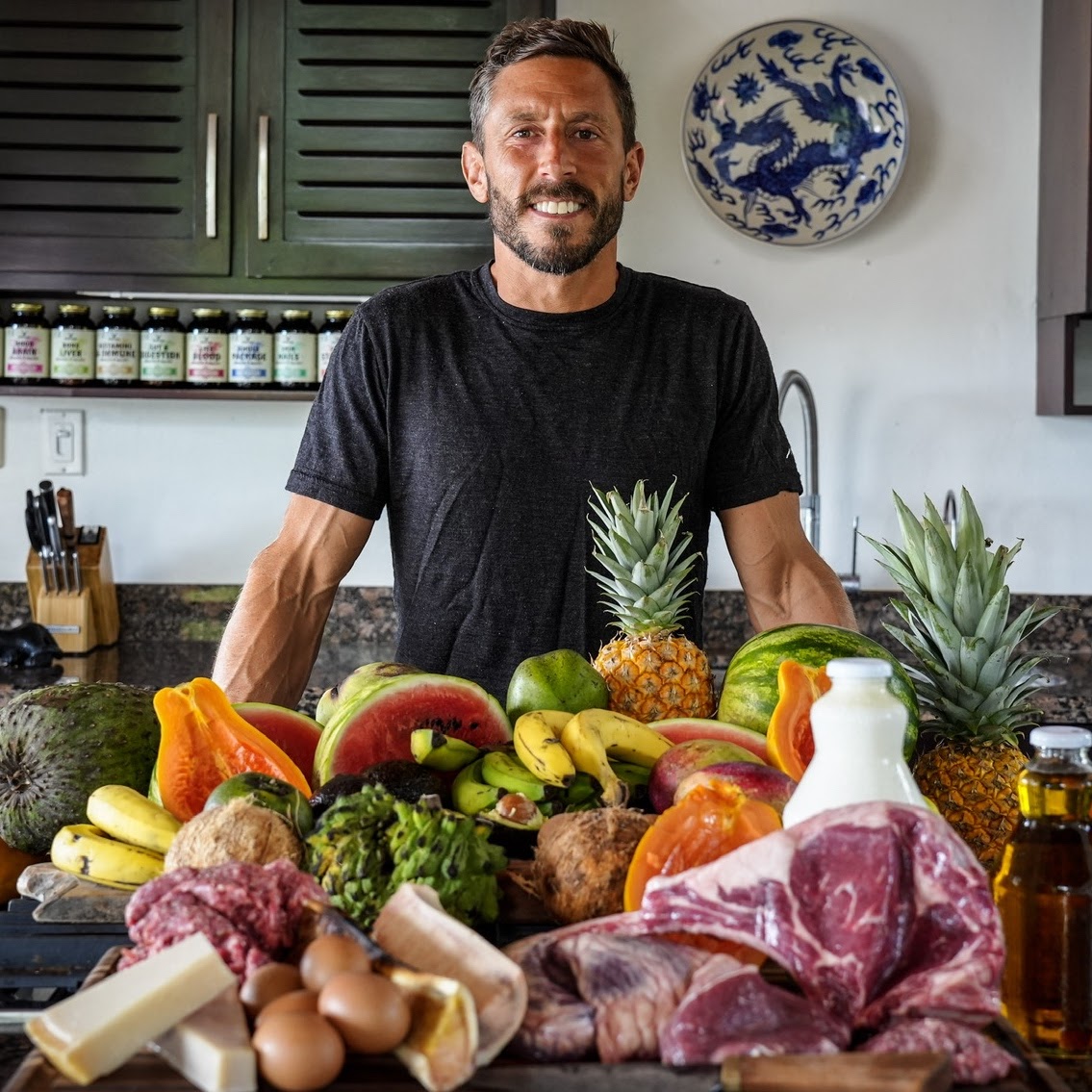
The speaker is demonstrating a grocery haul for an 'animal-based' diet, which emphasizes meat, organs, fruit, honey, and raw dairy, while minimizing or eliminating vegetables and processed foods.

The speaker outlines a detailed comparison between Sprouts and Whole Foods, particularly regarding meat quality and labeling. He finds Sprouts to be superior for grass-fed beef due to clearer '100% grass-fed' labeling and often better prices, contrasting this with Whole Foods' 'pasture-raised' label which can be misleading as it often means grain-finished. While Whole Foods wins for air-chilled chicken, Sprouts is highlighted for its overall value and the availability of specific high-quality items like Force of Nature bison and the newly stocked Heart & Soil supplements. The speaker's preference for Sprouts is also influenced by what he perceives as an 'anti-Amazon bias' regarding Whole Foods.

Personal experience

The speaker states, "Overall, I'm usually choosing Sprouts over Whole Foods. Maybe it's just my Amazon bias or my anti-Amazon bias..."

Overall, I'm usually choosing Sprouts over Whole Foods.

Also said
“At the end of the video, I'll give you a little bit of a verdict where I would go, Sprouts versus Whole Foods. But in general, I think both of them have a lot of good stuff.”— Sets up the premise of the comparison.
“I think Sprouts is a great place. I think Whole Foods is better at some things and Sprouts does some things better.”— Acknowledges that neither store is universally superior.

Misleading 'Pasture-Raised' Labeling at Whole Foods

1:00

The speaker criticizes Whole Foods for using 'pasture-raised' labeling for beef, which he clarifies often means the cattle are grain-finished, unlike 'grass-fed' which implies a lifelong grass diet.

Why this matters: This highlights a common marketing ambiguity that can confuse consumers seeking truly grass-fed products.

The speaker points out a significant distinction in beef labeling between Sprouts and Whole Foods. Sprouts clearly labels '100% grass-fed' beef, which the speaker prefers. In contrast, Whole Foods uses 'pasture-raised' which, while sounding natural, often indicates that the cattle were started on grass but finished on grains. This grain-finishing, according to the speaker, reduces the nutritional quality of the meat, potentially introducing pesticides and mold contaminants from the grains, and altering the meat's color and nutrient profile compared to truly grass-fed beef. He advises consumers to be wary of this distinction and to inquire with butchers about the sourcing.

Whole Foods is a little a little sketchy like this. I don't love that they're a little misleading with their marketing around this. If it's grass-fed, it's grass-fed. But understand that the pasture-raised beef at Whole Foods is finished on grain for sure.

Also said
“When you go to Whole Foods, this is one thing I don't like about Whole Foods, they have pasture-raised and grass-fed. And pasture-raised sounds like it's grass-fed, but it's not. Pasture raised is grain finished.”— Directly explains the misleading nature of the term.
“No surprise that eating processed grains which are filled with pesticides and mold makes the meat less quality.”— Explains the negative impact of grain-finishing on meat quality.

Avoidance of Seafood Due to Heavy Metals

7:30

The speaker has stopped eating most seafood, including shellfish, due to concerns about high levels of heavy metals like mercury, cadmium, and lead.

Why this matters: This is a contrarian stance against common dietary advice that promotes fish consumption for health.

The speaker expresses a strong aversion to most seafood, citing significant concerns about heavy metal contamination. He specifically mentions cadmium in shellfish and mercury in salmon. While acknowledging that wild-caught Alaskan salmon is generally better than farm-raised (which can contain PCBs), he still believes it can elevate mercury levels. He suggests that if one must eat fish, they should regularly check their heavy metal levels. His primary rationale for avoiding fish is that he believes all necessary nutrients, including omega-3s, can be obtained from grass-fed beef, making fish consumption unnecessary and potentially risky.

Personal experience

The speaker recounts his childhood love for shrimp and how he no longer eats it or any shellfish. He also mentions that he doesn't eat fish, stating, "I don't eat any shellfish anymore. In fact, I don't eat seafood anymore."

I don't eat any shellfish anymore. In fact, I don't eat seafood anymore. And I know some of you guys will lose your mind. It's just very high in heavy metals.

Also said
“If you're going to eat seafood, you must check your heavy metals. You must check lead, mercury, cadmium, arsenic. And I think you're going to be disappointed in what you find.”— Emphasizes the importance of testing if consuming seafood.
“I feel like there are no nutrients in fish that I can't get in grass-fed beef, including omega-3s.”— Provides his rationale for not needing fish in his diet.

Vegetables and Immune System Sensitivity

10:00

The speaker, having a sensitive immune system, avoids most vegetables due to their defense chemicals, which he believes trigger his eczema and other immune responses.

Why this matters: This is a highly contrarian view to conventional health advice that promotes high vegetable intake.

The speaker explains his personal rationale for minimizing or eliminating most vegetables from his diet. He categorizes many commonly perceived vegetables (like tomatoes, squash, avocados, cucumbers) as fruits, which he considers to have lower levels of defense chemicals. For true vegetables, he asserts that their defense chemicals can be problematic for individuals with sensitive immune systems, like himself. He links consumption of nightshades (tomatoes, eggplant, peppers, white potatoes) to worsening eczema and suggests that eliminating these can improve gut issues, IBS, and even IBD for some people. He emphasizes that while not everyone is sensitive, some individuals are uniquely affected by these plant compounds.

Personal experience

The speaker shares his lifelong struggle with eczema and asthma, attributing flare-ups to certain vegetables. He explicitly states, "When I eat things like tomatoes, which are a fruit, I get eczema. And I don't want to trigger my immune system. When I eat chocolate, eczema. Too much broccoli. Maximum. I feel better without vegetables."

A lot of these vegetables bother my immune system. When I eat things like tomatoes, which are a fruit, I get eczema. And I don't want to trigger my immune system.

Also said
“Vegetables definitely have more defense chemicals than fruit. As fruit ripens, the defense chemicals go down.”— Explains the biological difference he perceives between fruits and vegetables.
“I know that when I eat foods that are night shades, my eczema gets worse.”— Provides a specific example of his immune reaction.

Seed Oils in Fortified Milk

21:00

The speaker points out that vitamins A and D added to conventional milk are often carried in seed oils, subtly introducing these oils into the diet.

Why this matters: This reveals a hidden source of seed oils in a common food product, aligning with the speaker's broader anti-seed oil stance.

The speaker highlights a less-known fact about conventional milk: the fortification with vitamins A and D often involves using seed oils as carrier agents for these fat-soluble vitamins. While he acknowledges that the quantity of seed oils introduced this way might not be substantial, he emphasizes that it's another example of how seed oils 'sneak into everything.' This observation reinforces his general caution against seed oils, which he views as problematic for health, and encourages consumers to be aware of such hidden ingredients even in seemingly innocuous products like milk.

mainstream milk actually contains a little bit of seed oils. The vitamins A and D that are added to milk are packaged in seed oils.

Also said
“It's not a ton, but it's something to be aware of that um let's see here. Right there, that vitamin A, palmitate, vitamin D3 that you'll see on regular milks, they use a seed oil as the carrier for that.”— Identifies the specific vitamins and their carrier.
“It's not a ton, but seed oils are sneaking into everything. Don't fall for it, guys.”— Reinforces his general concern about pervasive seed oils.

Recommendations

Products, supplements, and tools mentioned in the episode

5 items

Force of Nature Bison Ribeye/Tenderloin

Product

Found in the freezer section at Sprouts, offering high-quality, lean, 100% grass-fed bison meat.

The speaker highlights Force of Nature as a company he loves, specifically praising their 100% grass-fed bison ribeye and tenderloin found in the freezer section of Sprouts. He notes that bison is very lean but offers 'insane' quality and is a good way to diversify meat intake. He points out the vibrant color of the bison tenderloin and its high protein content (38g in 6 ounces), recommending it as a 'gem' in the freezer section for those looking to mix up their meat choices.

Force of Nature. I love this company. 100% grass-fed bison ribeye. So, it's very lean, but the quality of that meat is insane.

Also said
“Look at this bison tenderloin. Look at the color of that. 38 g of protein in 6 ounces of meat. It's a very lean piece of meat. It's very high protein and it's kind of cool to mix up your meat every once in a while.”— Details the nutritional and aesthetic qualities of the product.
Find Force

Ice Cream for Bears

Product

A brand of ice cream sweetened only with raw honey, which the speaker considers a 'health food' due to its ingredients.

The speaker enthusiastically recommends 'Ice Cream for Bears,' calling it the 'best ice cream I've ever seen in a grocery store.' His primary reason for this high praise is its unique sweetener: raw honey, as opposed to processed sugar. He believes that processed sugar negatively impacts gut flora, leading to dysbiosis and increased lipopolysaccharide, whereas raw honey does not. He highlights the simple, high-quality ingredients: milk, cream, raw honey, skim milk, and egg yolk. He even states he would feel comfortable feeding this ice cream to his niece and nephew, unlike conventional ice cream with processed sugar, positioning it as a significantly healthier alternative for those who enjoy ice cream.

vs alternatives

Compared to all other ice creams, which typically use processed sugar. The speaker believes processed sugar negatively impacts gut flora, while raw honey does not.

I really appreciate ice cream for bears. I mean, like, I have no affiliation with these guys, but that's the best ice cream I've ever seen in a grocery store. Sweetened only with raw honey.

Also said
“I think there's a big difference in the way that processed sugar and raw honey affect the human gut. I think the reason that processed sugar is bad for us is not necessarily because it raises our blood sugar, but because it messes with our gut flora.”— Explains the rationale for preferring raw honey over processed sugar.
“Look at the ingredients here, guys. Milk, cream, raw honey, skim milk, and egg yolk. These guys are doing a great job.”— Highlights the clean ingredient list.
Find Ice

Parmigiano Reggiano Cheese

Product

A raw, aged cheese that is high in protein and can be considered a 'protein bar'.

The speaker identifies Parmigiano Reggiano as a 'hack' for a protein source, noting its high protein content (9g per ounce). He explains that any Parmigiano Reggiano is inherently a raw cheese due to its aging process, and he specifically looks for organic, grass-fed versions. He also mentions that it's a good option for those seeking raw cheese, which can be difficult to find in younger forms due to regulations.

Any parmesano reo is going to be a raw cheese. And this one says it's organic grass-fed. Parmesano reaniano is kind of a hack, guys. It's also like a protein bar.

Also said
“Look at this. 9 g of protein in 1 oz of cheese. That much cheese right there. There's n g of protein in that.”— Quantifies the protein content.
Find Parmigiano

Kabocha Squash

Product

A preferred source of complex carbohydrates and fiber, especially for those who don't tolerate sweet potatoes or white potatoes.

The speaker identifies Kabocha squash as his favorite type of squash, which he can only find in the United States. He uses it as his primary source for complex carbohydrates, especially since he doesn't tolerate sweet potatoes or white potatoes (which he notes are nightshades and can trigger immune responses for him). He describes his preparation method: baking it at 400-450°F for 30-40 minutes, then scooping out the inside and mixing it with salt and organic grass-fed butter. He also mentions that while he doesn't focus heavily on fiber, he feels better with a little in his diet, and Kabocha squash provides this.

vs alternatives

Preferred over sweet potatoes and white potatoes, which are nightshades and trigger his immune system.

Personal experience

The speaker states, "This is my favorite type of squash. I can only get it in the United States. This is a kabotaa squash. And this is the best way that I found to get sort of more complex carbohydrates."

This is my favorite type of squash. I can only get it in the United States. This is a kabotaa squash. And this is the best way that I found to get sort of more complex carbohydrates.

Also said
“If you guys do well with sweet potato or potato, great. I don't do well with those. You know, white potato is a night shade, just like tomato, eggplant, peppers, and those definitely tend to trigger people's immune systems.”— Explains why he avoids common alternatives.
“I cook it in the oven for about 30 to 40 minutes, depending on the size of the squash, 400 450°. Then I scoop the inside of the squash out. I mix it with salt and some butter, preferably organic grass-fed, maybe raw butter.”— Provides a specific preparation method.
Find Kabocha

Checking Egg Radical for Farm Source

Practice

A method to identify the actual farm producer of eggs, as many different brands might source from the same few farms.

The speaker advises consumers to 'drill down even further into the egg radical on the back of the package' to find the Texas license number or similar identifier. He explains that despite the variety of egg brands on shelves, often only a few producers supply most of them. Knowing the farm source allows consumers to compare prices for eggs from the exact same farm, ensuring they get the best value for their preferred quality (e.g., organic pasture-raised).

You want to drill down even further into the egg radical on the back of the package. And you can see where the eggs come from.

Also said
“What you'll find is that even though it looks like there's lots of different types of eggs here, there's only a few different producers of eggs. You're going to find the same producer for a lot of these different eggs.”— Explains the rationale for checking the radical.
“So those are the two different farms. That's important because a lot of them are from the same farm and they can be different prices from the exact same farm.”— Highlights the practical benefit of this practice for price comparison.
Find Checking
Disclosed sponsorships2speaker disclosed

Heart & Soil Supplements

Product Sponsored · disclosed

Desiccated organ meat capsules (e.g., Histamine & Immune, Pure American Liver, Grass-Fed Colostrum, Beef Organs) are now available in 450 Sprouts locations.

DisclosureThe speaker is the founder of Heart & Soil.

The speaker proudly announces that his company, Heart & Soil, has expanded its retail presence to 450 Sprouts stores nationwide. He highlights several of their products, including 'Histamine & Immune' (which he personally uses for allergies), 'Pure American Liver' (made from 100% grass-fed liver from US regenerative farms), 'Grass-Fed Colostrum' (tested for high immunoglobulin content, distinguishing it from lower quality products), and 'Beef Organs' (described as the 'ultimate multivitamin' containing heart, liver, kidney, spleen, and pancreas). He positions these capsules as a convenient and palatable alternative for those who want to consume organ meats but dislike the taste or preparation of fresh organs.

vs alternatives

Presented as an easier alternative to cooking and eating fresh organ meats, especially for liver. Colostrum is compared favorably to other products on the market, which he claims are often just dried powdered milk.

Personal experience

The speaker mentions needing 'Histamine & Immune' in Texas due to sneezing and expresses pride in the quality and availability of 'Pure American Liver' and 'Grass-Fed Colostrum'.

Heart and Soil is now in Sprouts. 450 locations of Sprouts across the country. You can get histamine and immune... You get pure American liver... Grass-fed colostrum... Beef organs is the standby. It is the ultimate multivitamin.

Also said
“We tested this for imunoglobulins, and this had the highest amount back to imunogloabbulins. Anything we tested 43% plus or minus by Eliza. So, our grass-fed colostrum is incredibly high quality.”— Provides specific quality metrics for their colostrum product.
“I'm so stoked that our organs at Harden Soil, which are the highest quality we could find on the planet in capsule form, are available everywhere.”— Emphasizes the quality and accessibility of the products.
Find Heart

Reading Newsletter for Unbiased Health Information

Practice Sponsored · disclosed

A free weekly newsletter offering deep dives into health topics, including controversial ones, with an 'unbiased, uncensored take'.

DisclosureThe speaker writes the newsletter.

The speaker promotes his free weekly Sunday newsletter as a valuable resource for in-depth health information. He states that the newsletter allows him to conduct extensive research and provide his 'real unbiased, uncensored take' on various topics, including controversial ones like cholesterol and Tylenol/autism. He positions it as a way for readers to 'level up your health and get you really dialed in' with information that goes beyond what can be covered in a video.

If content like that on A2 milk and A2 cheese, what type of dairy you can eat is helpful, check out my newsletter, guys. I do a free newsletter every week on Sundays.

Also said
“I've done newsletters on cholesterol, why you don't have to fear that. Done newsletters on controversial topics like Tylenol and autism where I can give you my real unbiased, uncensored take.”— Gives examples of topics covered and the nature of the content.
Find Reading

Notable quotes

Lines worth pulling out — contrarian, specific, or perfectly phrased

6 items
Pasture raised is grain finished. Grain finished tastes better, Paul. Well, maybe. I'll give you that. But what are the grains that the cow's eating adding to the cow's diet?
Challenges a common justification for grain-finished beef and immediately pivots to the nutritional implications.
I think that grass-fed beef, especially reasonably fatty grass-fed beef, has all the omega-3s you need in your diet.
A contrarian statement suggesting that fish is not necessary for omega-3s if consuming grass-fed beef.
All of your favorite vegetables are probably fruit.
A provocative statement that redefines common food categories based on botanical definitions and defense chemical content.
Even foods that might qualify as food for humans are not great for everyone. We're all individual in terms of our immune systems.
Emphasizes individual variability in dietary tolerance, even within a 'human appropriate' framework.
I think the reason that processed sugar is bad for us is not necessarily because it raises our blood sugar, but because it messes with our gut flora. It causes overgrowth of the wrong bacteria, causes dispiosis, which leads to increased lipopolyaccharide in the human body.
Offers a specific, less commonly discussed mechanism for the negative health effects of processed sugar, focusing on gut health rather than just blood sugar.
Food for humans, single ingredient foods, foods with labels your great grandmother would recognize. That's what matters.
A concise summary of his philosophy for healthy eating, emphasizing simplicity and traditional whole foods.

Sign in to share feedback

Tell us if this brief hit the mark or missed it — feedback feeds back into the next iteration of the prompt.

Topics covered

sprouts vs whole foodsgrocery haulanimal-based dietgrass-fed beefpasture-raised beefgrain-finished beefmeat qualitypesticides in grainsnutrient densitycostco comparisonair-chilled chickenchlorine in chickenfreezer section gemsforce of naturebison meatorgan meatsbeef liverdesiccated liver capsulesheart & soilshellfish heavy metals
Free account

Make this library yours

Reading is free for everyone. A free account adds the personal layer: save protocols, follow experts, and see how the other experts weigh in on this same topic.

Create a free accountSign in

Where the experts disagree — weekly

One email a week: the sharpest new disagreements and protocols from the library. No spam, unsubscribe anytime.

Educational summary of the cited expert source — not medical advice. Open the source recording linked above and consult a qualified physician before acting on any protocol.