
UNFUCG
DashboardSearchChatBookmarksNotificationsActivityPremiumProfile
?
Home
Search
Chat
Saved
Profile
Episode
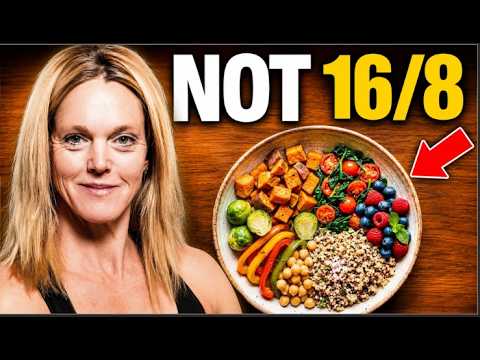
Why Active Women Should Break Their Fast at Breakfast (Not Noon)
~7 min
Episode Brief·YouTube

Why Active Women Should Break Their Fast at Breakfast (Not Noon)

Stacy Sims
Watch on YouTube Add to chat My bookmarks← All sources

TL;DR

The four things you'd lose by not watching

4 items

TL;DR

The four things you'd lose by not watching

4 items
1

Over 50% of recreationally active women are in low energy availability due to diet trends like intermittent fasting and 'calories in, calories out' — not clinically overt, but causing subclinical issues like altered blood lipids and iron status.

2

Stacy Sims argues active women should fuel according to circadian rhythm with a 12–13 hour overnight fast (stop eating after dinner, eat breakfast) rather than extending the fast until noon or later, which disrupts sleep, appetite hormones, and body composition.

3

Extended multi-day fasting downregulates thyroid function within 3 days and eats up lean mass — the 'better sleep' people report is actually the body shutting down from fuel deprivation, not a health benefit.

4

The ancestral argument that 'our ancestors went days without food' ignores the fact that populations didn't boom during famine — women's fertility requires adequate energy availability, and famine periods produced no viable pregnancies.

Protocols

Concrete recipes — what, when, how much, and why

3 items

12-to-13-hour-overnight-fast

WhatStop eating when you finish dinner, then eat breakfast upon waking — creating a 12 to 13-hour overnight fasting window aligned with natural circadian rhythm.
WhenDaily — every night from dinner completion until breakfast the next morning.
Dose12 to 13 hours overnight (e.g., finish dinner by 7 PM, eat breakfast at 7–8 AM).
For whomActive women and women in general who want the benefits of fasting without endocrine disruption.
WhySupports sleep quality, parasympathetic nervous system activation, body composition, blood glucose regulation, and circadian rhythm — without triggering the low energy availability cascade seen in longer fasts.
CaveatsThis is distinct from popular intermittent fasting protocols (16:8, 18:6) that delay the first meal until noon or later — those are what Sims warns against for active women.

Sims frames this protocol as the natural human fasting rhythm — the one our bodies are actually adapted for. By finishing food intake after dinner and not eating again until breakfast, the body completes digestion before sleep onset, allowing the parasympathetic nervous system to dominate overnight. This enables restorative sleep architecture, proper overnight blood glucose regulation, and the natural circadian hormonal cascade. In contrast, when fasting is extended into the late morning or afternoon, the circadian rhythm is disrupted, appetite hormones like ghrelin surge, spontaneous physical activity drops due to low energy, and calories get compressed into a late-day window — forcing the body to digest during the sleep phase. This overnight fast protocol is presented as the healthy middle ground that gives women the benefits of fasting without the costs.

Mechanism

A 12–13 hour overnight fast aligns with the natural circadian drop in insulin sensitivity and digestive activity that occurs during the dark phase. Completing digestion before sleep allows the parasympathetic nervous system to dominate, which is necessary for deep sleep onset and overnight metabolic restoration. Extending the fast further — particularly into the active daytime hours — forces the body to rely on stress-axis activation (cortisol) for energy mobilization rather than the circadian feeding-fasting rhythm.

If you want to fast, then do a normal overnight fast where you stop eating when you finish dinner and you wake up and have breakfast. And then you have a 12 to 13-hour overnight fast.

Also said
“Actually that's helps with sleep, it helps with circadian rhythm. Helps with parasympathetic. It helps with body composition. It helps with blood glucose regulation because you're able to get into really good solid sleep.”— Lists the five specific benefits of this protocol in one compact statement.

fuel-according-to-circadian-rhythm

WhatEat in alignment with the body's natural circadian rhythm — consuming food during daylight active hours and ceasing intake well before sleep, rather than compressing calories into a late-day window.
WhenDaily — eat breakfast, lunch, and dinner during daylight/active hours; stop eating after dinner.
DoseOngoing daily pattern; key is front-loading calories earlier in the day rather than bookending them at night.
For whomAll women, particularly active women and those currently practicing intermittent fasting with late eating windows.
WhyPrevents circadian misalignment, appetite hormone disruption, afternoon energy crashes, and sleep-interfering nighttime digestion.
CaveatsRequires shifting eating patterns for those accustomed to skipping breakfast and consuming most calories in the evening. May initially feel unnatural for long-time intermittent fasters.

Sims positions circadian-aligned fueling as the foundational principle that should guide all eating patterns for women. The modern trend of delaying the first meal and loading calories at the end of the day is, in her view, a direct driver of the low energy availability problem. When women skip breakfast, they experience reduced incidental movement throughout the morning, hit an energy wall in the afternoon, and then become ravenously hungry at night — precisely when the digestive system should be winding down. This pattern also disrupts sleep quality, creating a feedback loop of fatigue and hormonal dysregulation. Her solution is simple but countercultural: eat breakfast, eat during the day when the body is active and metabolically primed for intake, and stop eating after the evening meal. This realigns behavior with biology.

Mechanism

The circadian clock regulates insulin sensitivity, digestive enzyme secretion, and metabolic rate across the 24-hour cycle. Insulin sensitivity is highest during the active (daylight) phase and drops during the biological night. Eating late forces the body to process nutrients when insulin sensitivity is low and melatonin is rising, which impairs glucose tolerance and disrupts sleep onset. Front-loading calories to earlier in the day works with, rather than against, the circadian metabolic rhythm.

We want to fuel according to circadian rhythm.

Also said
“If we're holding a fast or we're not fueling appropriately, we start to see a misstep in circadian rhythm, appetite hormones. We have less incidental movement. We have the afternoon wall lean cuz we're too tired.”— Describes the cascade of dysfunction caused by circadian misalignment of eating.

assess-fueling-before-investigating-infertility

WhatWhen a woman presents with infertility, clinicians and the woman herself should first examine fueling patterns, energy availability, and inflammation before pursuing other interventions.
WhenAs a first-line investigation for unexplained infertility or menstrual irregularities.
For whomWomen experiencing unexplained infertility or irregular cycles.
WhyLow energy availability directly suppresses ovulation and endocrine function — correcting fueling often restores fertility without further medical intervention.
CaveatsNot all infertility is caused by low energy availability, but Sims argues it should be ruled out first given its prevalence and reversibility.

Sims draws a direct line from the current diet culture — intermittent fasting, calorie restriction, 'eat less, move more' — to the rising rates of infertility and anovulatory cycles. She explains that many women experiencing infertility are still having monthly bleeds, which creates the false impression that they are ovulating. In reality, these are anovulatory bleeds where estrogen builds the endometrial lining but ovulation never occurs, so there is no progesterone opposition and no viable egg. The bleeding is just the shedding of unopposed endometrial tissue. When clinicians and patients look at fueling — increasing energy availability, reducing fasting windows, reducing systemic inflammation — ovulation often resumes. This protocol is as much for self-assessment as for clinical practice.

Mechanism

The hypothalamic-pituitary-ovarian axis is exquisitely sensitive to energy availability. When the hypothalamus detects insufficient fuel, it downregulates gonadotropin-releasing hormone (GnRH) pulsatility, which in turn reduces luteinizing hormone (LH) and follicle-stimulating hormone (FSH) output from the pituitary. Without adequate LH surge, ovulation does not occur. Estrogen production continues from the ovarian follicles and adipose tissue (via aromatization), but without progesterone from a corpus luteum, the cycle is anovulatory. Restoring energy availability reactivates GnRH pulsatility and restores ovulatory cycles.

When we see all this infertility and stuff that's occurring, it's like, 'Okay, well, let's look at how you're fueling. Let's look at inflammation. Let's look at the trends.' When we correct it, we start to see an increase in fertility.

Also said
“You might still have a bleed, but that's an anovulatory bleed because estrogen isn't opposed by progesterone. So, you'll still have endometrial tissue that gets released, but it's not ovulatory.”— Explains the clinical subtlety — bleeding doesn't equal ovulation — that makes this easy to miss.

What's new

Personal practice updates, fresh positions, predictions

4 items

circadian-rhythm-fueling-over-extended-fasting

Sims advocates a 12–13 hour overnight fast aligned with circadian rhythm as the only form of fasting active women should practice, rejecting the popular trend of fasting until noon or later.

Why this matters: This directly contradicts the widespread intermittent fasting advice popularized by longevity influencers, especially for active women who are being told to skip breakfast.

Background

Intermittent fasting — particularly 16:8 protocols where eating is delayed until noon or later — has become a dominant dietary trend promoted by major podcasts, longevity doctors, and celebrity figures. Many active women have adopted this, believing it supports metabolic health. Sims argues this trend is causing widespread subclinical low energy availability in the recreationally active female population.

Sims explains that when women extend their fast beyond the natural overnight window, the consequences cascade through multiple systems. Bookending calories to the end of the day means the body is still digesting during sleep onset, preventing the parasympathetic activation necessary for restorative sleep. This disrupts circadian rhythm, appetite hormones, and reduces incidental movement during the day due to fatigue — people hit an 'afternoon wall.' The result is a vicious cycle: fasting all day leads to overconsumption at night, poor sleep, and next-day exhaustion. She emphasizes that a 12–13 hour overnight fast — stopping after dinner and eating breakfast — actually helps sleep, circadian rhythm, parasympathetic tone, body composition, and blood glucose regulation because the body can enter solid sleep without active digestion. This is the natural human rhythm she argues we should follow, not the prolonged daily fasts promoted in popular media.

I really want women to understand that we want to fuel according to circadian rhythm, and if you want to fast, then do a normal overnight fast where you stop eating when you finish dinner and you wake up and have breakfast. And then you have a 12 to 13-hour overnight fast.

Also said
“If we're holding a fast or we're not fueling appropriately, we start to see a misstep in circadian rhythm, appetite hormones. We have less incidental movement. We have the afternoon wall lean cuz we're too tired. And we have interruption of sleep because then at night you're so hungry and it's in your eating window that you end up bookending your calories to the end of the day.”— Describes the full cascade of negative effects from extended daily fasting.
“Actually that's helps with sleep, it helps with circadian rhythm. Helps with parasympathetic. It helps with body composition. It helps with blood glucose regulation because you're able to get into really good solid sleep.”— Enumerates the specific benefits of the 12–13 hour overnight fast she recommends instead.

low-energy-availability-in-recreationally-active-women

Over 50% of recreationally active women are in a state of low energy availability, but it goes undetected because clinical reference ranges have shifted downward alongside an increasingly sedentary general population.

Why this matters: This is a hidden epidemic — these women don't present with overt menstrual dysfunction, so clinicians miss the subclinical damage to blood lipids, iron status, and endocrine function.

Background

Traditional clinical markers for low energy availability have relied on overt signs like amenorrhea or significant menstrual cycle dysfunction. But Sims points out that most women in this state still menstruate, creating a false sense of metabolic health. Meanwhile, population reference ranges for markers like ferritin have shifted downward because they're calibrated against a largely sedentary, metabolically unhealthy population.

Sims describes a clinical blind spot: active women walk into their doctor's office with a ferritin of 50 ng/mL — a level that five years ago would have triggered intervention and supplementation protocols — and are now told '50, wow, that's amazing.' The threshold for concern has drifted down to 20 because the population mean has been dragged lower by widespread sedentary behavior and poor metabolic health. This means active women with genuinely inadequate iron status are being reassured and sent home. The same dynamic plays out across other markers like blood lipids. Sims frames this as a statistical problem rooted in the bell curve: when the population shifts unhealthier, the 'normal' range expands downward, and the active minority becomes invisible within it. The consequence is that over half of recreationally active women are unknowingly underfueling, accumulating subtle but real physiological costs that never reach the threshold for clinical intervention.

There's over 50% of recreationally active women because of diet trends and and other conversations that they're actually in low energy availability. So, they're not eating enough to support their lifestyle and all the stress that happens as well as their exercise.

Also said
“5 years ago a ferritin of 50 would have gotten you on to, okay, we need really need to look at this and try to boost your ferritin, but now they're like, 50, wow, that's amazing. Get down to 20, and then that's when we start to talk about something. It's like, 20's way too low.”— Concrete example of how reference ranges have shifted to miss pathology in active women.
“Everything is shifted to a lower end of normal because of the generally sedentary unhealthy population against which it's measured.”— Explains the mechanism behind the reference range shift in plain terms.

multi-day-fasting-thyroid-downregulation

Within 3 days of low energy availability, a woman's thyroid begins to downregulate, initiating a longer-term endocrine disruption — the subjective 'better sleep' reported during extended fasts is actually systemic downregulation from fuel deprivation.

Why this matters: Reframes the popular narrative that extended fasting produces clarity and better sleep as a misinterpretation of the body's starvation response.

Background

Extended fasting — including week-long fasts — has been promoted by longevity-focused media personalities and doctors as a way to trigger autophagy, 'clean up cellular garbage,' and improve sleep and wellbeing. Proponents describe feeling euphoric or clear-headed after the first few difficult days.

Sims counters this narrative by explaining what is actually happening physiologically during a multi-day fast in women. The 'better sleep' and feelings of improvement that fasters report after day 3 or 4 are not signs of enhanced health — they are signs that the body is conserving energy by downregulating systems. Thyroid function takes a measurable hit within 72 hours of low energy availability, which cascades into reduced metabolic rate, lower body temperature, and decreased energy expenditure. Lean mass is catabolized for fuel. The entire endocrine system dials back. Sims is particularly critical of male-led fasting advice ('bro science'), noting that men can tolerate these protocols somewhat longer because they don't have the additional energy demands of a menstrual cycle and the greater endocrine load that female reproductive function requires. For women, the cost of extended fasting is paid in endocrine disruption that can persist well beyond the fast itself.

We see after 3 days of low energy availability, which this is, your thyroid starts to downturn and be down regulated. So, it's like if you want to really cause a longer-term effect on your endocrine system, try that fast.

Also said
“It eats up your lean mass and your muscle and then you sleep better because your body is so tired because it doesn't have fuel to actually do what it needs to do.”— Reframes subjective 'better sleep' during extended fasts as pathological, not beneficial.
“Probably the longevity doc and the actor were probably bro science. Men can hold on to that for a little bit longer because their bodies are different than women's. They don't have to support a menstrual cycle and a greater drain on endocrine system.”— Calls out the male-centric nature of popular fasting advice and explains the sex-based physiological difference.

ancestral-fasting-fertility-rebuttal

The argument that ancestral humans regularly endured prolonged fasts ignores the historical record: during famine, women's fertility collapsed — populations didn't boom until food was abundant enough to support endocrine function and viable pregnancies.

Why this matters: Uses population-level historical evidence to dismantle a common evolutionary argument for extended fasting, especially as it applies to women.

Background

A common defense of intermittent and extended fasting invokes evolutionary history — the idea that our hunter-gatherer ancestors routinely went days or weeks between meals, and that our bodies are therefore adapted to thrive under fasting conditions. This narrative is used to legitimize modern fasting protocols as 'natural.'

Sims responds to this argument by pointing to what actually happened to populations during periods of food scarcity. Famine times were not periods of thriving — they were periods of reproductive shutdown. Women's bodies, when faced with insufficient energy, downregulate endocrine function, cease ovulation (or produce anovulatory cycles where bleeding occurs without egg release), increase fat storage as a protective mechanism, and become effectively infertile. Population booms didn't occur during lean times; they occurred during feast periods when food was abundant enough to sustain female reproductive function. Tribes that had greater food availability survived and reproduced; those that didn't either died out or migrated. She ties this directly to modern fertility issues — when clinicians see unexplained infertility, the first investigation should be into fueling patterns, inflammation, and diet trends, because correcting energy availability often restores fertility. The ancestral precedent, she argues, actually supports the opposite conclusion from what fasting proponents claim: food abundance, not scarcity, enables female health and species continuation.

There were no babies being born during that time frame. Cuz we look at what happens when women don't have a lot of food and fuel, their endocrine system takes a big hit.

Also said
“When a woman's body doesn't have enough food, what happens is you have this down regulation of endocrine function. You have an increased storage of body fat. You have a cessation of ovulation. You might still have a bleed, but that's an anovulatory bleed because estrogen isn't opposed by progesterone.”— Details the specific physiological cascade of reproductive suppression during energy deficit.
“There wasn't a population boom until there was a feast session. And then, you were able to say there's enough food to support endocrine function, then I can have a viable pregnancy.”— Directly ties food abundance to reproductive viability using historical population patterns.

Recommendations

Products, supplements, and tools mentioned in the episode

2 items

Overnight-only fasting (12–13 hours)

Practice

Sims recommends this as the only form of fasting appropriate for active women, in direct opposition to popular 16:8 or longer intermittent fasting protocols promoted by longevity influencers.

This practice is positioned as the evidence-based alternative to the extended daily fasts that have become mainstream through podcasts, television shows, and celebrity endorsements. Sims frames the 12–13 hour overnight fast as what human bodies — especially female bodies — are actually adapted for. It provides fasting benefits (improved insulin sensitivity, cellular cleanup during sleep, circadian alignment) without the costs of extended daytime fasting (thyroid downregulation, lean mass loss, sleep disruption, appetite hormone dysregulation). She explicitly contrasts this with the week-long fasts and 16:8 daily fasts promoted by 'a well-known doctor of longevity with some very well-known actor.' For women who have been told that longer fasts are always better, this is a significant course correction.

vs alternatives

Compared to 16:8 or longer intermittent fasting: overnight fasting preserves circadian rhythm, avoids afternoon energy crashes, prevents nighttime calorie bookending, supports sleep quality, and does not trigger the thyroid downregulation seen after 3 days of extended low energy availability. Compared to week-long fasts: entirely avoids lean mass catabolism and the endocrine suppression that multi-day fasting induces in women.

If you want to fast, then do a normal overnight fast where you stop eating when you finish dinner and you wake up and have breakfast.

Also said
“If we're holding a fast or we're not fueling appropriately, we start to see a misstep in circadian rhythm, appetite hormones.”— Reinforces why the alternative (extended fasting) is harmful.
Find Overnight-only

Eat breakfast (break the overnight fast in the morning)

Practice

Sims strongly advocates eating breakfast upon waking rather than extending the overnight fast until noon or later — this is framed as essential for circadian alignment, energy availability, and metabolic health in active women.

The recommendation to eat breakfast is not trivial dietary advice — it's a direct counter to one of the most pervasive diet culture messages active women receive: that skipping breakfast is virtuous, will reduce total calorie intake, and supports metabolic health. Sims argues the opposite for active women: skipping breakfast sets off a chain reaction of low daytime energy, reduced spontaneous movement, afternoon crashes, and compensatory nighttime overeating that ultimately undermines body composition, sleep, and endocrine function. Breakfast is the circuit-breaker that realigns eating with the circadian active phase and prevents the accumulation of low energy availability across the day. This is especially critical for women who exercise in the morning, who need to replenish after training rather than extending the fast further.

vs alternatives

Versus skipping breakfast/intermittent fasting until noon: eating breakfast prevents circadian misalignment, supports morning energy and incidental movement, avoids the afternoon energy wall, and prevents the nighttime calorie bookending that disrupts sleep. The 'calories saved' by skipping breakfast are typically overcompensated later in the day, often with poorer food choices driven by extreme hunger.

You wake up and have breakfast.

Also said
“You end up bookending your calories to the end of the day, which means that you're still trying to digest instead of being able to relax and get into good sleep.”— Explains the downstream consequence of skipping breakfast that most women don't connect.
Find Eat

Notable quotes

Lines worth pulling out — contrarian, specific, or perfectly phrased

6 items
There's over 50% of recreationally active women because of diet trends and and other conversations that they're actually in low energy availability.
A striking statistic that reframes intermittent fasting and diet culture as a widespread public health problem for active women, not a wellness trend.
It eats up your lean mass and your muscle and then you sleep better because your body is so tired because it doesn't have fuel to actually do what it needs to do.
Brutally reframes the 'mental clarity and better sleep' that extended fasting proponents celebrate as pathological — the body shutting down from starvation, not thriving.
If you want to really cause a longer-term effect on your endocrine system, try that fast.
Sarcastic and devastating — inverts the promised longevity benefit of extended fasting into a warning about lasting endocrine damage, delivered with clinical authority.
There were no babies being born during that time frame. Cuz we look at what happens when women don't have a lot of food and fuel, their endocrine system takes a big hit.
A concise, evidence-based rebuttal to the evolutionary fasting argument — if ancestral fasting was so natural, why did populations only grow during feast periods?
Probably the longevity doc and the actor were probably bro science. Men can hold on to that for a little bit longer because their bodies are different than women's.
Calls out the gender bias in mainstream health advice directly and unapologetically — names the problem as male-centric protocols being universalized to women.
Everything is shifted to a lower end of normal because of the generally sedentary unhealthy population against which it's measured.
Exposes a structural flaw in clinical medicine — that the 'normal ranges' women are measured against are calibrated to an unhealthy population, making pathology invisible.

Sign in to share feedback

Tell us if this brief hit the mark or missed it — feedback feeds back into the next iteration of the prompt.

Topics covered

low-energy-availabilitycircadian-rhythm-fastingintermittent-fasting-critiquefemale-endocrine-functionthyroid-downregulationfertility-and-fuelinganovulatory-bleedingclinical-reference-rangesferritin-and-iron-statusbro-science-gender-biasancestral-fasting-mythlean-mass-catabolismsleep-and-digestionmenstrual-cycle-dysfunction
Free account

Make this library yours

Reading is free for everyone. A free account adds the personal layer: save protocols, follow experts, and see how the other experts weigh in on this same topic.

Create a free accountSign in

Where the experts disagree — weekly

One email a week: the sharpest new disagreements and protocols from the library. No spam, unsubscribe anytime.

Educational summary of the cited expert source — not medical advice. Open the source recording linked above and consult a qualified physician before acting on any protocol.