
UNFUCG
DashboardSearchChatBookmarksNotificationsActivityPremiumProfile
?
Home
Search
Chat
Saved
Profile
Episode
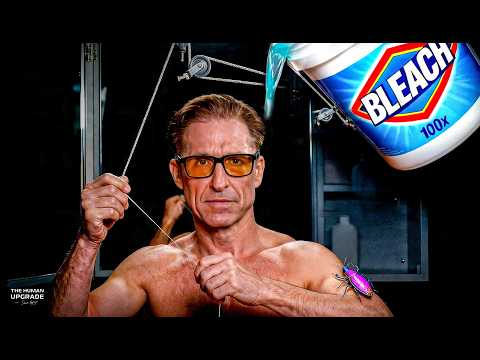
Why I'm Putting 100x Bleach on My Face
~51 min
Episode Brief·YouTube

Why I'm Putting 100x Bleach on My Face

Dave Asprey
Watch on YouTube Add to chat My bookmarks← All sources

TL;DR

The four things you'd lose by not watching

4 items

TL;DR

The four things you'd lose by not watching

4 items
1

Dave Asprey used hypochlorous acid (HOCl) from Active Skin Repair to heal a blister caused by an acidic beetle, speeding wound closure without harming healing tissue.

2

HOCl is a molecule naturally made by white blood cells; applied topically it kills 99.9% of bacteria, viruses, and fungi in 15 seconds, reduces inflammation, and accelerates healing, yet it is as safe as saline.

3

Unlike Neosporin or hydrogen peroxide, which can stall healing and damage the skin microbiome, HOCl selectively targets pathogens while preserving healthy growth factors and restoring microbial balance.

4

Stabilization is critical: many cosmetic HOCl products lose potency within months because of pH drift and poor formulation; Active Skin Repair uses the same medical‑grade, lot‑tested, pH‑controlled, 2‑year shelf‑stable formulation used in hospitals.

Protocols

Concrete recipes — what, when, how much, and why

6 items

Apply medical‑grade hypochlorous acid (Active Skin Repair) for any skin injury or irritation

WhatSpray or apply the gel directly onto cuts, scrapes, burns, bug bites, sunburns, post‑procedure incisions, or chronic skin flare‑ups. Let it sit for at least 15 seconds before applying any other product.
WhenImmediately after injury or at first sign of irritation; reapply as needed throughout the day.
DoseEnough to cover the area; let it air‑dry for 15 seconds; no upper limit on frequency. The product is stable for 2 years in the bottle.
For whomAll ages—including infants for diaper rash, sensitive skin, athletes, post‑surgical patients; safe around eyes, ears, mouth, and open wounds.
WhyKills 99.9% of bacteria, viruses, and fungi in 15 seconds, reduces local inflammation, and accelerates re‑epithelialization without damaging healthy cells or the skin microbiome.
CaveatsOnly use properly stabilized medical‑grade HOCl (e.g., Active Skin Repair). Avoid cosmetic versions that mix HOCl with fragrances or have unknown pH/ppm; those may be inactive or irritating.

Justin Gardner, who spent 20 years developing hospital products, explains that when skin breaks, white blood cells rush to the site and release HOCl to fight infection and trigger repair. Applying it topically mimics that internal response. Unlike hydrogen peroxide, which oxidizes everything—including fibroblasts and growth factors—HOCl is selective. It also addresses biofilm‑protected bacteria by disrupting the extracellular matrix that shields them. For chronic conditions like eczema, HOCl selectively targets Staphylococcus aureus that colonizes flares, helping rebuild the skin’s healthy microbiome. Dave notes that he used it on his tattoo blister, and Justin emphasizes that the same medical‑grade formulation is used in operating rooms, so the home user gets equivalent performance.

Mechanism

HOCl is the identical molecule produced by neutrophil myeloperoxidase during the oxidative burst. It rapidly oxidizes multiple targets on microbial cell membranes, causing lysis, while mammalian cells resist it through endogenous antioxidants. It also downregulates pro‑inflammatory cytokines and preserves endogenous growth factors.

Personal experience

“I had this mystery [blister]… I’m a little traumatized by that. But sometimes wounds won’t heal for months… I used Active Skin Repair and it cleared up.” Dave’s surgeon changed his postoperative protocols after seeing biohacking speed healing; Dave says he would add HOCl to that stack now.

“apply it, let it sit for that 15 seconds. So, it’s usually that first step, and the molecule’s gone to work, and then you can stack it with whatever you want on top of that.”

Also said
““It’s a hundred times more powerful than bleach. So, you’re getting something that’s going to kill 99.9% of bacteria, viruses, and fungi in 15 seconds.””— Quantifies the antimicrobial potency and speed.
““You’re killing the bacteria with hypochlorous acid, you’re not killing any of those healthy growth factors. You’re actually helping facilitate that healing process.””— Clarifies the selectivity versus hydrogen peroxide.
““hypochlorous works really well on biofilms. So, where biofilms may be present, people tend to find uses for hypochlorous.””— Adds biofilm disruption to the mechanism.

Stack red light / infrared photobiomodulation after hypochlorous acid application

WhatApply HOCl (spray or gel), let it dry, then expose the area to red or near‑infrared light from a quality LED panel or wearable device.
WhenDuring daily wound‑care sessions; for acute injuries, start as soon as possible and continue until healed.
DoseFollow the light device’s recommended session time (typically 10–20 minutes). Ensure skin is clean and dry before light exposure.
For whomAnyone with skin injuries, surgical incisions, or chronic wounds who already uses light therapy.
WhyBoth HOCl and red/infrared light independently shorten wound‑closure time and reduce inflammation; combining them is likely synergistic because HOCl clears microbial burden while light stimulates mitochondrial function and circulation.
CaveatsNone noted; keep the area clean and avoid direct light into eyes.

Dave, an early adopter of red‑light therapy, asks whether Active Skin Repair can stand alone or should be stacked. Justin confirms that HOCl by itself speeds healing, and then the addition of red/infrared light “can stack really nicely because those are well documented to speed healing.” Dave built a renowned post‑surgical recovery protocol that (without HOCl) doubled his foot‑surgery healing speed; adding HOCl would be the logical next iteration. The conversation positions this as a practical, multi‑modal biohack that leverages both chemical and photonic interventions to compress recovery time.

Personal experience

“I’m a biohacker, I could use red infrared light, things like that on top of it.” — Dave

“Active Skin Repair by itself going to speed healing… and then if we do that with the red light infrared, they can stack really nicely because those are well documented to speed healing there.”

Also said
““I’ve always been interested in how can humans heal faster than we’re supposed to? You might have seen my documentary on post‑surgical recovery.””— Establishes Dave’s long‑standing credibility in combining modalities.

Combine ivermectin cream (prescription) with hypochlorous acid for rosacea

WhatApply prescription ivermectin cream daily for long‑term management, and use Active Skin Repair spray on flare‑ups to reduce acute inflammation and bacterial burden.
WhenIvermectin as directed by a physician (typically once daily); HOCl as needed during redness, itching, or pustule flares.
DoseNo additional specifics; follow ivermectin prescription. HOCl can be used multiple times a day on affected areas.
For whomIndividuals diagnosed with rosacea, particularly those who get recurrent pustular flares.
WhyRosacea has an autoimmune component and often involves Demodex and bacterial triggers. Ivermectin addresses multiple non‑parasitic pathways, while HOCl immediately cuts inflammation and bacterial colonization, giving a short‑term/long‑term overlay.
CaveatsIvermectin requires a prescription. HOCl is an adjunct, not a replacement. Consult a dermatologist.

Dave shares that he suffered from rosacea in his late teens/early 20s and it resolved when he reduced systemic inflammation. He notes that ivermectin cream is having “incredible results” and speculates that this is not because of “evil little worms” but due to other pathways. Justin agrees that complex chronic conditions need multi‑modal approaches and that HOCl fits into such protocols because it is safe, non‑irritating, and targets the microbial component without steroids. Dave suggests using ivermectin as the systemic/long‑term layer and HOCl as the rapid‑response layer.

Mechanism

Ivermectin’s anti‑inflammatory properties are not fully understood but go beyond its anti‑parasitic action. HOCl reduces neutrophil‑driven oxidative stress and kills Staphylococcus associated with rosacea flares.

Personal experience

“I used to have substantial problems with that [rosacea] like in my late teens, early 20s. … if I had rosacea going on right now, I’d be doing ivermectin cream, and I’d be doing Active Skin Repair.” — Dave

“If I had rosacea going on right now, I’d be doing ivermectin cream, and I’d be doing Active Skin Repair. So, you’re doing like a long‑term thing and a short‑term thing.”

Also said
““Rosacea is interesting because there’s an autoimmune component to it. And so, people reduce systemic inflammation, and the rosacea gets better, and you can treat it topically. But the strange thing is ivermectin cream is having incredible results on that.””— Explains the rationale for a dual therapy.

Leverage AI (Claude / Grok / Perplexity) to research and validate health interventions

WhatOpen Claude, Grok, or Perplexity; ask: “I want to use [intervention] for [condition]. Tell me pros, cons, side effects, mechanisms, and rank by importance. Act as a functional medicine biohacker.” Also ask it to scan Amazon reviews for real‑world evidence.
WhenWhenever you’re considering a new supplement, device, or off‑label application, especially before a doctor’s appointment.
DoseN/A
For whomHealth optimizers who are comfortable with technology and want to be informed co‑pilots in their care.
WhyAI aggregates PubMed, user reviews, and mechanistic reasoning faster and often more thoroughly than an over‑burdened physician. It can be prompted to give both conventional and functional‑medicine perspectives.
CaveatsVerify findings with a qualified practitioner. Do not substitute AI output for professional medical diagnosis. Avoid Google’s AI, which Dave says censors alternative medicine.

Dave walks through his exact query sequence: first a neutral prompt, then one that forces the AI to role‑play as a functional medicine biohacker. He notes that the two answers differ substantially, with the second providing deeper mechanistic pathways and PubMed references. Justin adds that this approach has uncovered articles on hypochlorous acid that his own R&D team hadn’t seen. Dave also advocates using AI to parse thousands of Amazon reviews, effectively creating a rapid meta‑analysis of user experiences. He posits that an AI‑powered physician—one who combines clinical experience with real‑time AI querying—will be the future of medicine.

Personal experience

Dave used Claude to correctly diagnose his beetle blister and to research HOCl; he reports that it gave him more accurate, actionable information than the specialists he consulted.

“You can literally say, ‘I’m interested in using hypochlorous for this. Tell me all the pathways by which it might benefit me in order from most important to least important.’ And it’ll do that.”

Also said
““It’s more right than you’re going to get from most doctors… simply because they haven’t read the papers. And if they did read the papers, that means they didn’t read some other papers cuz we can only hold so much in our heads.””— Justifies the AI advantage in breadth of knowledge.
““They’re also going in and taking a look at all the reviews out there… if you get to like 5,000 reviews, it’s pretty tough to be faking that. Either it works or it doesn’t work.””— Shows how AI leverages crowd‑sourced clinical evidence.

Use hypochlorous acid as a mouth rinse for oral biofilm (off‑label)

WhatSwish or spray HOCl in the mouth for 30 seconds, then spit. Target areas of gum inflammation or suspected biofilm.
WhenDaily, preferably after brushing or when gums feel inflamed.
DoseNo specific dose; swish as you would a mouthwash. The product is not approved for oral use, so proceed at your own risk.
For whomAdults with gingivitis, frequent cavities, or biofilm‑related oral issues (off‑label).
WhyHOCl disrupts biofilms, which are responsible for cavities and gingivitis, and is safe for mucous membranes.
CaveatsThe manufacturer cannot recommend this; it is an off‑label application. Do not swallow large amounts; the product is sterile but intended for topical use. Discuss with your dentist.

Though the official indication is topical, the conversation openly speculates about oral use. Justin notes that people already use it in sinuses and on biofilms, and that in hospitals it is used to disrupt biofilm in chronic wounds. Dave explicitly ties this to dental caries: “cavities are biofilms.” He underscores the regulatory absurdity: a company cannot claim it stops cavities without a $100M trial. He encourages listeners to search PubMed, noting that the mechanism supports it. Dave says he would personally use it on inflamed gums.

Mechanism

HOCl penetrates the polysaccharide matrix of oral biofilms and kills the embedded bacteria; it is non‑cytotoxic to epithelial cells, unlike alcohol‑based mouthwashes.

Personal experience

“Would I smear it on my gums if I had inflamed gums? I probably would. But I know you can’t tell me I should or shouldn’t.” — Dave

“It’d be kind of interesting to just like swish your mouth with that stuff, wouldn’t it? Yeah. You can.”

Also said
““hypochlorous acid works really well on biofilms. So, where biofilms may be present, people tend to find uses for hypochlorous.””— Underpins the biological plausibility.

Use hypochlorous acid as the first step for eczema and chronic skin flare‑ups

WhatSpray HOCl onto eczematous or inflamed skin, let it sit for 15 seconds to kill colonized bacteria, then apply moisturizers or prescription creams.
WhenDuring flare‑ups or as a daily maintenance step.
DoseSpray to cover the area; no limit on frequency. For babies, apply before diaper rash cream.
For whomInfants, children, and adults with eczema, psoriasis, or similar inflammatory dermatoses.
WhyEczema flares are often worsened by Staphylococcus aureus colonization and inflammation; HOCl quickly reduces bacterial load and calms the inflammatory response without damaging the already compromised skin barrier.
CaveatsNot a cure; manages symptoms. Use only stabilized medical‑grade HOCl.

Justin explains that in chronic skin conditions, the skin’s microbiome is disrupted and staph often colonizes the lesions, stalling healing. By applying HOCl first, you clear that bacterial burden and reduce inflammation without introducing steroids or antibiotics. He highlights pediatric use, including diaper rash, where parents can spray HOCl and then apply a barrier cream. Dave connects this to the broader biohacking shift away from indiscriminate antimicrobials toward microbiome‑sparing interventions.

Mechanism

HOCl down‑regulates pro‑inflammatory cytokines and disrupts Gram‑positive staph cell walls. It also helps rebalance the skin microbiome by selectively reducing pathogenic bacteria while sparing commensals.

“when you’re dealing with let’s say eczema, right? You’re going to have a lot of times with flare‑ups, a colonization of staff. And so what you’re able to do what hypochlorous is able to do is go in and target that bad bacteria, helping build back up that skin microbiome and the healthy bacteria.”

Also said
““our product gets used a lot with chronic skin conditions, also in pediatric skin conditions… apply it, let it sit for that 15 seconds… and then you can stack it with whatever you want.””— Confirms pediatric safety and the stacking principle.
““when you’re dealing with the skin issues that come from eczema and these chronic skin diseases, that’s where hypochlorous really comes in, and it’s helping two big ways… there’s some bacterial issues probably going on with the skin issue from eczema with the flare‑up. But there’s also an inflammatory response.””— Details the dual action on bacteria and inflammation.

What's new

Personal practice updates, fresh positions, predictions

4 items

Adopting hypochlorous acid (Active Skin Repair) as a primary wound antiseptic

0:01:00–0:07:00

Dave replaced Neosporin and hydrogen peroxide with HOCl for wound care, starting with an acidic beetle blister on his caffeine tattoo; he argues HOCl mimics the body’s own immune response, killing pathogens without harming healing tissue.

Why this matters: Marks a shift away from the dominant over‑the‑counter antiseptics that are known to cause allergic reactions, damage growth factors, and stall healing.

Background

Conventional first‑aid relied on synthetic antibiotics (Neosporin, up to 20% allergic reaction rate) and hydrogen peroxide, which indiscriminately oxidizes wound tissue. Dave had long sought ways to accelerate healing beyond standard protocols, including a documented postsurgical recovery regimen that doubled his bone‑healing speed.

Dave’s bicep tattoo, which features a caffeine molecule, was blistered by an acid‑forming beetle during an Amazon retreat. While he had previously used biohacking stacks for surgical recovery, he had not yet tried hypochlorous acid (HOCl). Guest Justin Gardner explains that HOCl is the same molecule produced by neutrophils during the oxidative burst; it works as an antimicrobial, an anti‑inflammatory, and a healing accelerator. Dave contrasts this with Neosporin, which merely sits in petroleum jelly with no pro‑healing effect, and with hydrogen peroxide, which “nukes” the wound including the good cells. Because HOCl is selective—it breaches bacterial cell membranes at multiple points but spares human cells—it avoids antibiotic resistance and microbiome damage. The product available over‑the‑counter uses the exact medical‑grade formulation found in operating rooms, so the listener is getting hospital‑grade care at home.

Personal experience

“I had to treat this wound… there’s a new player in town that mimics what the body actually makes inside itself as part of our own wound care thing. So, of course, this is exactly the kind of thing that I’d want to treat it with. Right now, I just have a little bit of silicone scar gel on there cuz that’s the stage of healing.”

“You’re killing the bacteria with hypochlorous acid, you’re not killing any of those healthy growth factors. You’re actually helping facilitate that healing process.”

Also said
““It works as a really powerful antimicrobial. It helps reduce that inflammatory response from that injury. And it helps speed up the natural healing process.””— Summarizes the triple action that makes HOCl superior.
““With like a Neosporin, one, they’re synthetic antibiotics. Um it’s has a high rate of allergic reactions… up to 20% of people… and the efficacy on it, it just isn’t that great. With hypochlorous, you get all that antimicrobial power, you’re able to help facilitate the healing process, but no synthetic antibiotics.””— Quantifies the downside of the standard alternative and highlights the lack of synthetic antibiotics.

Diagnosing and researching skin conditions with AI (Claude, Grok, Perplexity) instead of relying only on physicians

0:23:00–0:32:00

Dave used Claude AI to correctly identify his Amazon beetle blister when multiple doctors couldn’t, then used AI to research HOCl; he now routinely queries AI for treatment pros, cons, and mechanisms, and recommends Claude, Grok, and Perplexity over Google’s censored results.

Why this matters: Puts a powerful, evidence‑synthesizing tool directly into patients’ hands, bypassing outdated medical gatekeeping and giving them detailed, source‑backed rationales for off‑label use.

Background

Traditional search engines (especially Google) often suppress alternative‑health information. Doctors are time‑limited and may not have read the latest papers on compounds like HOCl. AI changes the balance, aggregating PubMed studies and even Amazon user reviews.

Dave recounts that after returning from the Amazon, stem‑cell clinic physicians couldn’t identify the blister. He first tried ChatGPT but found it had become “dumb,” so he turned to Claude, supplying the geographic region and a photo. Claude listed the standard medical differentials and then concluded an acid‑forming beetle was the likely cause—matching his experience. From there, Dave began using AI to evaluate HOCl: “I’m looking at using Active Skin Repair and HOCL… Give me a take on that,” then prompt a second time as “a functional medicine practitioner, biohacker, and expert in physiology.” The two answers differed dramatically, and the second provided mechanistic pathways and citations. Dave also suggests using AI to mine Amazon reviews, turning thousands of user experiences into evidence. He calls out Google’s AI as anti‑alternative medicine and names Claude, Grok, and Perplexity as the top picks for health research. Justin adds that AI can surface PubMed articles even he as a manufacturer hadn’t seen.

Personal experience

“I went to my friend AI. And I would say ChatGPT, but they’ve apparently gotten really dumb… I went to Claude, and it said, oh, well, here’s the five things doctors will say it is… you actually were exposed to an acid‑forming beetle that probably landed on your arm and caused skin irritation. Like classic thing where I’d want to use Active Skin Repair.”

“Go to your favorite AI and say, ‘Hey, I’m looking at using Active Skin Repair and HOCL to do whatever it is you’re trying to do… Give me a take on that.’ And you’re going to get an answer. And then go back in and say, ‘Act like a functional medicine practitioner, biohacker, and expert in physiology and explain why Active Skin Repair might work…’ And you’ll get an entirely different answer.”

Also said
““It’s more right than you’re going to get from most doctors… simply because they haven’t read the papers.””— Stakes the claim that AI‑assisted self‑research can outperform a typical physician visit.
““They’re also going in and taking a look at all the reviews out there… if you get to like 5,000 reviews, it’s pretty tough to be faking that. Either it works or it doesn’t work.””— Shows how AI leverages large‑scale real‑world evidence beyond clinical trials.

Warning about cosmetic hypochlorous acid products – most lack stable, active ingredient

0:15:00–0:20:00

Justin and Dave expose that the vast majority of cosmetic HOCl sprays on the market contain no active hypochlorous acid because manufacturers fail to stabilize the molecule and often mix it with incompatible ingredients.

Why this matters: Prevents consumers from wasting money on dead products and then concluding that HOCl itself doesn’t work, much like the MCT oil category was damaged by cheap, ineffective formulations.

Background

HOCl became a trendy facial spray ingredient because it kills P. acnes and works well post‑workout. Contract manufacturers who don’t understand the science simply replicate the molecule without the proprietary stabilization that keeps it at pH 5‑7 and the correct parts per million.

Justin explains that hypochlorous acid is notoriously finicky: it must be packaged in a specific bottle–liquid ratio, held at a narrow pH window, and cannot be combined with fragrances or other additives. Even switching to a 1 oz bottle would disrupt the plastic‑to‑liquid balance and kill shelf life. His team has spent two years just stability‑testing bottle changes. When they test competitors’ products that mix HOCl with other ingredients, “there is no active hypochlorous in these bottles.” Others may start with the right pH and ppm, but within three to four months the pH drops and the HOCl degrades, making the product potentially irritating. Dave draws a parallel to the MCT oil market: when Onnit sold cheap MCT forms that caused digestive distress and no cognitive benefit, consumers concluded MCT didn’t work, hurting the entire category. He stresses that integrity in formulation is a fiduciary duty to the user.

Personal experience

“I’ve seen companies putting HOCL and fragrances and a bunch of other stuff in products… I would say if it’s mixed in with other stuff, it’s probably not going to work.” — Dave

“We bring it back to our research facility and we test it. And it’s crazy. There is no active hypochlorous in these bottles. So, it’s you’re just not even getting any active ingredient.”

Also said
““The molecule is so finicky and it… has to be in the right bottle. It has to be in the right ratio and all these things. So far, nobody’s been able to recipe hypochlorous acid with another ingredient.””— Emphasizes why mixing HOCl with anything renders it inert.
““It’s just one of those really frustrating molecules that it unfortunately is really tough to stabilize. And um kind of limits what you can can kind of concoct in recipes.””— Explains why even the manufacturer is constrained in product format.

Off‑label biofilm applications of hypochlorous acid beyond wound care

0:10:00–0:15:00

Dave and Justin discuss that because HOCl disrupts biofilms, it can be used off‑label in the mouth, sinuses, and for chronic infected wounds, even though the company cannot legally recommend those uses.

Why this matters: Opens preventive dental and sinus applications based on mechanism, despite regulatory constraints designed to protect pharmaceutical profits.

Background

In hospitals, HOCl is used in chronic wound centers to break down biofilm colonies. Biofilms also underlie cavities, sinus infections, and gum disease. Regulatory agencies only allow the manufacturer to discuss the approved topical indication.

Dave describes a company whose device was approved for wrinkles but in research prevented heart transplants—yet they couldn’t talk about it. He frames the system as one that blocks progress. For HOCl, the mechanism of biofilm disruption is well documented: HOCl penetrates the biofilm matrix and kills the planktonic bacteria within. When he suggests swishing it in the mouth, Justin confirms people do it but the product is only FDA‑cleared for topical use. Dave states he would personally smear it on inflamed gums, and he explicitly tells listeners to search PubMed for hypochlorous acid, implying that the research supports broader application. He also mentions that cavities are a biofilm disease, so HOCl has a theoretical role in oral care, though he cannot make that claim without a $100 million trial.

Personal experience

“Would I smear it on my gums if I had inflamed gums? I probably would. But I know you can’t tell me I should or shouldn’t.” — Dave

“In the hospital… chronic wound care centers where… the bacteria will become colonized on that and create a biofilm. And hypochlorous can actually disrupt that biofilm and go attack that planktonic bacteria.”

Also said
““It’d be kind of interesting to just like swish your mouth with that stuff, wouldn’t it? Yeah. You can.””— Casual confirmation of oral off‑label use.
““If it stops biofilms and it’s exceptionally safe, and cavities are biofilms. Now, you would never say it stops cavities unless you spend a hundred million dollars on some kind of cavity trial, but would I smear it on my gums if I had inflamed gums? I probably would.””— Spells out the regulatory reality and his personal action.

Recommendations

Products, supplements, and tools mentioned in the episode

2 items

Ivermectin cream (off‑label for rosacea)

Product

Prescription topical cream typically used for rosacea and demodicosis. Dave recommends it as part of a rosacea regimen, noting its surprising efficacy beyond its anti‑parasitic reputation.

Dave acknowledges that ivermectin’s mechanism in rosacea involves multiple pathways, not just demodex mites. He suggests pairing it with HOCl for the best outcome. This is a physician‑prescribed item; Dave is not selling it.

vs alternatives

Compared to standard rosacea treatments (metronidazole, azelaic acid) that act more narrowly, ivermectin appears to have broader action but requires a prescription.

Personal experience

Dave had rosacea in his youth; he states he would use ivermectin cream if he had it again.

“The strange thing is ivermectin cream is having incredible results on that [rosacea]… there’s many other pathways that ivermectin will hit that can be viral and other things.”

Find Ivermectin

Claude / Grok / Perplexity AI for health research

Service

AI platforms that Dave recommends for querying medical research, off‑label uses, and synthesizing user reviews. He explicitly advises against Google’s AI, which he believes censors alternative medicine.

Dave walks through his method of querying general and then functional‑medicine‑practitioner personas to get layered answers. He notes that these AIs provide PubMed citations and can even mine Amazon reviews for real‑world data. Justin confirms that AI has uncovered research articles he hadn’t seen.

vs alternatives

Compared to a Google search or a single physician’s memory, these AIs deliver a far wider and more current synthesis of evidence.

Personal experience

Dave used Claude to diagnose his beetle blister and research HOCl, finding it more accurate than his doctors.

“Go to your favorite AI and say, ‘Hey, I’m looking at using Active Skin Repair and HOCL to do whatever it is you’re trying to do… Give me a take on that.’ And you’re going to get an answer… then go back in and say, ‘Act like a functional medicine practitioner, biohacker, and expert in physiology and explain why Active Skin Repair might work…’ And you’ll get an entirely different answer.”

Also said
““It’s been really cool to even figure out there’s articles that I didn’t even know exist by going in and asking a lot of those kind of more complex questions.””— Shows even a product expert is surprised by what AI finds.
Find Claude
Disclosed sponsorships3speaker disclosed

Active Skin Repair (spray and gel)

Product Sponsored · disclosed

Medical‑grade hypochlorous acid topical solution, the same formulation used in hospital operating rooms but sold over the counter. Kills 99.9% of pathogens in 15 seconds, reduces inflammation, and accelerates healing. Safe for all ages and open wounds.

DisclosureSponsor of the episode; discount code ‘Dave’ gives 25% off at activeskinrepair.com. Dave Asprey is an affiliate.

Active Skin Repair is manufactured in California in an FDA‑registered facility. Every lot is tested for pH (5–7), parts per million, and stability to guarantee a 2‑year shelf life. It uses a proprietary stabilization process that prevents the HOCl from degrading, unlike most cosmetic HOCl sprays which lose activity within months or never had any active ingredient to begin with. Justin Gardner, the co‑founder, led the hospital launch a decade ago and worked for 20 years developing wound‑care products. The product is available as a liquid spray and a gel; both deliver the same HOCl concentration. Dave recommends keeping a bottle in the medicine cabinet and in the car.

vs alternatives

Unlike Neosporin (petroleum‑based synthetic antibiotic with 20% allergic‑reaction rate) or hydrogen peroxide (cytotoxic, stalls healing), Active Skin Repair selectively kills pathogens while preserving healthy tissue and the skin microbiome. It also outperforms cosmetic HOCl products that lack active ingredient.

Personal experience

Dave used the spray on an acidic beetle blister on his caffeine tattoo and reports it healed rapidly. He also states he would now add it to any surgical recovery stack.

“We’re using the same medical grade formulation that’s used in hospitals, but available over the counter.”

Also said
““It’s such a powerful molecule, but it has the same safety profile as saline solution. So, no real risk of adverse events or reactions and no allergic reactions.””— Highlights the safety margin.
““I would say if it’s mixed in with other stuff, it’s probably not going to work.””— Differentiates from inferior cosmetic HOCl.
Find Active

Stem Regen

Supplement Sponsored · disclosed

A supplement that triggers the release of approximately 10 million of your own stem cells per dose and supports circulation to deliver those cells where needed. Designed to support the body’s natural renewal and recovery processes.

DisclosureSponsor; discount code DAVE30 at stemregen.co/dave30 for 30% off.

Dave explains that stem cell function declines with age, impairing repair of muscles, joints, skin, and even slowing hangover recovery. Stem Regen promotes the mobilization of endogenous stem cells, which is a smarter strategy than trying to force healing with pharmaceuticals. It also supports vascular flow so that stem cells can reach damaged tissues. He cites personal use and visible results.

vs alternatives

Contrasts with the notion that recovery deficits are just aging and can’t be helped; offers a non‑invasive stem‑cell boosting alternative to expensive clinic treatments.

Personal experience

“Stem Regen supports your body’s natural renewal process… I use it all the time.”

“it triggers the release of about 10 million of your own stem cells every single time you take it.”

Also said
““It also supports circulation, so those cells can actually get to where they need to be.””— Shows dual action of mobilization and delivery.
Find Stem

The One device (wearable light and sound frequency support)

Tool Sponsored · disclosed

A wearable device that combines light and sound frequencies to support the nervous system. Does not use Bluetooth or EMFs. Users report deeper sleep, more calm, focus, and energy.

DisclosureSponsor; more information at theonedevice.com/dave.

Dave frames the One device as a response to a nervous system kept in overdrive by modern life. Instead of trying to change brain chemistry, it uses electrical rhythms and sensory‑band frequencies. The device sends gentle signals that the body can respond to during work, meditation, or relaxation. Most wearables only track stress, whereas this actively supports the nervous system.

vs alternatives

Compared to standard stress‑tracking wearables (which only measure), this device is said to directly intervene.

“Most wearables just track stress. The One device supports your nervous system directly without any Bluetooth or EMFs.”

Also said
““People who wear it report sleeping more deeply and feeling calmer, more focused, energized, and grounded.””— Provides the experiential outcome claim.
Find The

Notable quotes

Lines worth pulling out — contrarian, specific, or perfectly phrased

6 items
“hypochlorous acid is a hundred times more powerful than bleach. So, you’re getting something that’s going to kill 99.9% of bacteria, viruses, and fungi in 15 seconds.”
Stark, counter‑intuitive comparison that communicates potency while asserting safety.
“You’re killing the bacteria with hypochlorous acid, you’re not killing any of those healthy growth factors. You’re actually helping facilitate that healing process.”
Distills the key advantage over conventional antiseptics: selective action that aids healing rather than hindering it.
“There is no active hypochlorous in these bottles. So, it’s you’re just not even getting any active ingredient.”
A brutally honest indictment of the cosmetic HOCl market, underscoring why brand integrity matters.
“The standard of care here should be the basic floor, not the ceiling for what you want to do.”
Succinctly states Dave’s philosophy that patients must exceed fear‑based, insurance‑driven protocols.
“It’s more right than you’re going to get from most doctors… simply because they haven’t read the papers.”
Bold claim about AI versus physicians, highlighting the information asymmetry that AI can collapse.
“Would I smear it on my gums if I had inflamed gums? I probably would. But I know you can’t tell me I should or shouldn’t.”
Captures the tension between off‑label plausibility and regulatory handcuffs in a humorous, relatable way.

Sign in to share feedback

Tell us if this brief hit the mark or missed it — feedback feeds back into the next iteration of the prompt.

Topics covered

hypochlorous-acidwound-healingneosporin-alternativesskin-microbiomebiofilm-disruptionactive-skin-repairoff-label-therapyai-health-researchpatient-empowermentcosmetic-industry-regulationrosaceaeczemared-light-therapypost-surgical-recoverystabilization-shelf-lifemedical-grade-formulationantibiotic-resistancesystemic-antibiotic-side-effectsdave-asprey-personal-practicecritique-of-standard-of-care
Free account

Make this library yours

Reading is free for everyone. A free account adds the personal layer: save protocols, follow experts, and see how the other experts weigh in on this same topic.

Create a free accountSign in

Where the experts disagree — weekly

One email a week: the sharpest new disagreements and protocols from the library. No spam, unsubscribe anytime.

Educational summary of the cited expert source — not medical advice. Open the source recording linked above and consult a qualified physician before acting on any protocol.