
UNFUCG
DashboardSearchChatBookmarksNotificationsActivityPremiumProfile
?
Home
Search
Chat
Saved
Profile
Episode
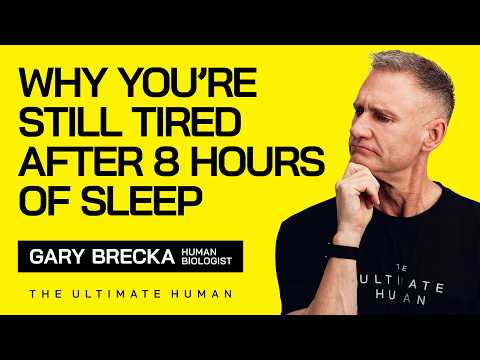
Does Catching Up on Sleep Actually Work? The Science Explained | TUH #258
~10 min
Episode Brief·YouTube

Does Catching Up on Sleep Actually Work? The Science Explained | TUH #258

Gary Brecka
Watch on YouTube Add to chat My bookmarks← All sources

TL;DR

The four things you'd lose by not watching

4 items

TL;DR

The four things you'd lose by not watching

4 items
1

Sleep regularity (going to bed and waking at consistent times) is a stronger predictor of cardiovascular events and mortality than total sleep hours alone — a 2025 study of 72,000 adults using wearables showed significantly higher heart disease rates among irregular sleepers even when they got 7–8 hours.

2

Weekend catch-up sleep does not reverse cognitive impairments from weekday sleep restriction; a 6-week study in the journal Sleep found deficits persisted and sleep debt continued to accumulate, creating a weekly circadian disruption akin to jet lag.

3

Electromagnetic fields from phones kept on nightstands and Wi-Fi routers in the bedroom measurably alter EEG architecture and subjective sleep quality, demonstrated in a 2024 double‑blind, placebo‑controlled crossover trial.

4

Gary Brecka’s free 2‑day sleep challenge (April 29–30) and an optional VIP guide offer a complete protocol to implement consistent, environment‑optimized sleep — the resources emphasize that fixing only one aspect of sleep won’t make the whole system work.

Protocols

Concrete recipes — what, when, how much, and why

5 items

consistent-sleep-schedule

WhatGo to bed and wake up at exactly the same time every single day, including weekends.
WhenEvery night/morning, no exceptions.
DoseWithin that consistent window, still aim for 7–8 hours of sleep; the primary emphasis is on timing regularity.
For whomEveryone, especially those with variable weekday-weekend schedules.
WhyAligns the body’s circadian clock so that all organ systems (heart, liver, hormones, brain clearance) operate in synchrony and can anticipate restorative processes.

The 2025 Journal of Epidemiology and Community Health study on 72,000 adults and the separate analysis of 73 million nights both point to irregularity as a stronger health risk than short duration. The body’s master clock in the brain coordinates peripheral clocks in every organ. When sleep/wake times are steady, melatonin rises predictably, cortisol drops, blood pressure dips at night, and the glymphatic system clears brain waste on schedule. When timing shifts, these events drift apart—the organs are out of phase, glucose metabolism is disrupted, blood pressure fails to fall appropriately, and hormone cascades misfire. Brecka says sleep optimization is comprehensive; consistency is the variable that changes everything long-term.

Mechanism

The suprachiasmatic nucleus (master clock) entrains to light and behavior. Consistent sleep timing reinforces robust circadian rhythms. In a stable rhythm, the pineal gland secrets melatonin in the evening, priming sleep onset, while cortisol drops to minimal levels during deep sleep. Blood pressure naturally dips by 10–20% at night, giving the cardiovascular system a break. The glymphatic system, the brain’s waste‑clearance pathway, activates primarily during slow‑wave sleep and is timed to the circadian night. Without regularity, these processes are desynchronized: melatonin may still be high in the morning, cortisol peaks may be blunted or mistimed, and glymphatic clearance loses efficiency.

the consistency with when you sleep matters just as much as how long you sleep.

Also said
“Your body runs on a 24-hour internal clock called the circadian rhythm. Every major organ system in your body … operates on this clock.”— Explains why timing matters physiologically.
“When your sleep timing shifts from night to night, you're essentially forcing your body to operate out of phase with itself. The organs aren't synchronized.”— Adds the mechanism of desynchronization.

avoid-weekend-catch-up-sleep

WhatDo not extend sleep on weekends to compensate for shorter weeknight sleep; keep the same sleep-wake times all week.
WhenWeekends and days off.
DoseMaintain your weekday sleep schedule; any extra time should be minimal and not alter the wake‑up time significantly.
For whomPeople who sleep less on weekdays and sleep in on weekends.
WhyCatch‑up sleep fails to restore cognitive performance, lets sleep debt accumulate, and creates a circadian disruption that acts like weekly jet lag.
CaveatsIf you feel better after sleeping longer on weekends, understand the relief is temporary and does not reverse the week’s accumulated harm; the pattern itself is damaging.

A study in the journal Sleep followed participants for 6 weeks of weekday sleep restriction to 6 hours with full weekend recovery allowed. Cognitive deficits persisted, and sleep debt continued to rise. The irregularity of shifting from short weekday sleep to long weekend sleep prevents the circadian clock from stabilizing. Brecka compares it to giving yourself jet lag weekly—by the time your body adjusts after the weekend, the next cycle starts. The analysis of 73 million nights labeled weekend catch‑up as ‘circadian disruptive, not restorative.’ The better approach is to prioritize a consistent sleep window every night, even if total sleep falls slightly below 8 hours, rather than oscillating between deprivation and oversleeping.

Mechanism

The circadian system requires a stable daily rhythm to align peripheral clocks. Large shifts in sleep timing, like sleeping in 2–3 hours later on weekends, mimic eastward jet lag. This phase delay confuses the master clock and downstream hormonal rhythms, including cortisol awakening response, melatonin offset, and insulin sensitivity timing. Cognitive deficits from sleep loss occur partly because of disrupted synaptic homeostasis and insufficient glymphatic clearance; those processes need consistent deep‑sleep windows, not just extra hours of light sleep after a late start.

The irregular timing created by sleeping short on weekdays and trying to catch up on weekends is basically giving yourself jet lag every single week.

Also said
“Even with weekend recovery, cognitive deficits persisted. They didn't bounce back.”— Direct evidence that recovery sleep didn’t restore function.
“sleep debt … kept building across the weeks despite these little recovery periods.”— Shows that debt accumulates regardless of weekend oversleep.

remove-phone-from-bedroom

WhatKeep your phone across the room or out of the bedroom entirely at night; do not keep it on the nightstand.
WhenDuring sleep hours.
DoseEntire night.
For whomAnyone who charges or keeps a phone within arm’s reach while sleeping.
WhyRadio‑frequency electromagnetic fields from the phone have been shown in a controlled trial to alter EEG architecture and disrupt sleep quality.

The 2024 Frontiers in Public Health double‑blind crossover study demonstrated that RF‑EMF exposure during sleep changes brain‑wave patterns and worsens subjective sleep quality. Brecka frames this as a free, simple adjustment that solid research now supports. The phone is an active transmitter even when idle, communicating with towers and Wi‑Fi, so moving it across the room drastically reduces exposure. He suggests combining this with turning off the router or using a timer.

Mechanism

RF‑EMF can interact with neural tissue, potentially altering cortical excitability and sleep spindle activity. The study showed measurable EEG changes, indicating that the electrical activity of the sleeping brain is sensitive to ambient EMF levels. Reduced sleep quality may stem from subtle arousals or shifts toward lighter sleep stages.

Put the phone across the room or entirely in a different room altogether.

turn-off-wifi-at-night

WhatSwitch off the Wi‑Fi router at night or put it on a timer so it is off while you sleep.
WhenAt bedtime, every night.
DoseTurn off for the entire sleep period.
For whomAnyone with a Wi‑Fi router in or near the bedroom.
WhyThe same source of RF‑EMF that the 2024 trial implicated; eliminating it during sleep may improve EEG architecture and subjective rest.

Brecka cites the 2024 study and recommends removing both phone and router from the sleep environment. Routers continuously emit pulsed signals, and while walls reduce exposure, outright switching off is a zero‑cost intervention. He notes that a simple plug‑in timer can automate this daily, making it effortless.

Mechanism

Like phone emissions, Wi‑Fi signals are RF‑EMF. The trial found alterations in EEG and subjective sleep quality, suggesting the brain’s sleep architecture is sensitive to this electromagnetic background. Removing the source allows a lower‑EMF sleep environment, which may facilitate deeper, more restorative sleep stages.

Turn the router off. Put it on a timer. These are simple, free interventions that research now backs up.

cool-dark-bedroom

WhatKeep the bedroom cool and completely dark during sleep.
WhenEvery night.
For whomEveryone.
WhyFacilitates the body’s natural temperature drop and melatonin release for sleep onset and maintenance.

We've talked before about keeping your room cool and dark

What's new

Personal practice updates, fresh positions, predictions

3 items

sleep-regularity-trumps-duration

New device-based research (2025, 72K adults, plus 73 million nights of data) reveals that sleep regularity—keeping bed and wake times consistent—is an independent and stronger predictor of cardiovascular disease and mortality than total sleep duration alone.

Why this matters: Moves the conversation beyond ‘how many hours’ to ‘when you sleep,’ showing that irregular schedules erase the benefits of sufficient total sleep.

Background

Sleep hygiene discussions have historically centered on duration and basic environment (cool, dark). The new evidence adds a second pillar that many overlook.

In 2025 a study in the Journal of Epidemiology and Community Health used objective wearable measurements from 72,000 UK adults and found that sleep irregularity predicted cardiovascular events and death more strongly than short sleep duration alone. That same year a separate research group analyzed 73 million nights of wearable data across all ages and confirmed the pattern: irregular sleep-wake timing was independently associated with worse health outcomes. The implication is seismic—someone who sleeps 8 hours but at wildly different times each night carries significantly elevated cardiovascular risk. This is not just correlation; the mechanism is built into the body’s 24-hour internal clock. Every organ—heart, liver, immune system, hormone axes—runs on a circadian schedule. When sleep timing shifts night to night, the organs are forced out of phase, hormones like melatonin and cortisol fire at the wrong times, blood pressure does not dip as expected, and glymphatic clearance in the brain loses its scheduled window. The body cannot anticipate and prepare for those restorative processes, so even adequate total sleep hours cannot fully compensate. In short, you can no longer consider your sleep adequate solely by counting hours; you must also check the clock.

you could be sleeping 8 hours a night and still be dramatically increasing your cardiovascular risk simply because you're sleeping those 8 hours at different times each day.

Also said
“sleep regularity was a stronger predictor of cardiovascular events and mortality than sleep duration alone.”— Crystallizes the study’s main finding—regularity beat duration in predictive power.
“people with irregular sleep patterns showed significantly higher rates of cardiovascular disease even when they were hitting adequate total sleep.”— Clarifies that the risk is independent of hours slept.
“a 2025 review published in Circulation Research found that this kind of circadian misalignment directly disrupts glucose metabolism, blood pressure regulation, and hormonal balance completely independent of how many total hours you slept.”— Adds the mechanism evidence from a major cardiology journal.

catch-up-sleep-ineffective

Weekend recovery sleep does not reverse cognitive deficits, sleep debt continues to accumulate, and the irregular pattern gives you a weekly dose of circadian disruption.

Why this matters: Many people assume sleeping in on weekends pays back sleep debt; this research shows it doesn’t restore function and creates jet‑lag‑like harm.

Background

The common strategy is to restrict sleep on weekdays and ‘catch up’ on Saturday and Sunday, believing it balances the health ledger.

A study published in Sleep followed participants through six weeks of chronic weeknight restriction to 6 hours per night while allowing full weekend recovery sleep. Even with that weekend catch‑up, cognitive impairments persisted—they didn't bounce back. And when the researchers tracked cumulative sleep debt, it kept growing across the weeks despite the recovery periods. The irregular timing—short sleep on five nights then extended sleep on two—prevents the body from establishing a stable circadian rhythm. Each Monday you effectively start with a misaligned clock, and by the time it adjusts the weekend shift hits again. The wearable analysis of 73 million nights specifically labeled this catch‑up pattern as ‘circadian disruptive, not restorative.’ So the feeling of relief you get is real but temporary; the underlying costs, both cognitive and metabolic, are not being erased. For anyone who lives this schedule, the science says: the best intervention is to maintain a consistent window every day, even if total sleep is slightly shorter, rather than oscillating between deprivation and weekend oversleep.

Even with weekend recovery, cognitive deficits persisted. They didn't bounce back.

Also said
“The irregular timing created by sleeping short on weekdays and trying to catch up on weekends is basically giving yourself jet lag every single week.”— Memorable analogy that sums up the circadian harm.
“the research group that analyzed 73 million nights of wearable data specifically called out this catch-up sleep pattern as circadian disruptive, not restorative.”— Adds that large‑scale data explicitly rejects catch‑up sleep as restorative.

emf-disrupts-sleep

A 2024 controlled trial found that radio‑frequency EMF from devices like phones and Wi‑Fi routers alters sleep EEG architecture and reduces subjective sleep quality.

Why this matters: Many people keep their phone on the nightstand and the Wi‑Fi on, assuming no effect; rigorous data now shows measurable brain‑wave changes.

Background

Common advice stops at ‘keep the room cool and dark.’ This study introduces the bedroom’s electromagnetic environment as an active player in sleep quality.

A 2024 double‑blind, randomized, placebo‑controlled crossover study published in Frontiers in Public Health isolated RF‑EMF as the variable. Subjects exposed to EMF from devices like mobile phones and Wi‑Fi routers during the night showed altered EEG architecture and reported worse subjective sleep quality. This was not a vague survey; it was a controlled trial that could distinguish EMF from other factors. The implication is that your phone on the nightstand and your router humming in the bedroom are not neutral background elements. Even if you don’t consciously perceive them, they appear to interfere with the brain’s sleep rhythms. Brecka’s suggestion—move the phone across the room or out, turn off the router or put it on a timer—are free, simple tweaks that the research now supports. For the listener who does everything else right yet still feels unrested, this variable is worth testing.

Your phone on your nightstand, your Wi-Fi router in the bedroom, they are not neutral.

Also said
“A 2024 double-blind, randomized, placebo-controlled crossover study published in Frontiers in Public Health found that RF EMF exposure from devices like mobile phones and Wi-Fi routers during sleep measurably altered EEG architecture and disrupted subjective sleep quality.”— Directly cites the study design and results.
Disclosed sponsorships3speaker disclosed

Ultimate Human 2-Day Sleep Challenge (April 29–30)

Service Sponsored · disclosed

Free 2‑day challenge that provides a complete daily protocol from sunrise to sunset, stacking every habit and environmental adjustment. Designed so participants can feel the difference in two days and see why consistency matters long‑term. Sign up via the link in show notes.

DisclosureHost’s own free event.

Brecka presents the challenge as the practical application of the research he just reviewed. It bundles consistent sleep timing, bedroom environment optimization, and full circadian alignment into a step‑by‑step 2‑day plan. He argues that people often only fix one piece of sleep, but comprehensive optimization requires addressing all variables—from timing to EMF exposure—simultaneously. The challenge is free and open to listeners.

vs alternatives

Unlike stand‑alone sleep tips that target only one variable (e.g., earplugs, blackout curtains, or magnesium), this challenge integrates multiple elements into a single protocol.

2 days is enough to feel the difference, and once you feel it, you'll understand why consistency is the variable that changes everything long-term.

Also said
“It's a complete daily protocol from sunrise to sunset. Every decision, every habit, every environmental adjustment stacked together the way research says that it should be.”— Describes the comprehensive design of the challenge.
Find Ultimate

VIP Sleep Challenge Guide

Product Sponsored · disclosed

A step‑by‑step digital guide that includes a structured daily sleep tracker, a pre‑bed checklist, tools to downshift the nervous system, guidance on building the optimal sleep environment, and a weekly sleep review. It supports running the challenge for up to 4 weeks to dial in personalized routines.

DisclosureResource for VIP members of the host’s community.

For listeners who want to go beyond the free 2‑day challenge, the VIP guide offers a longer framework. It helps identify patterns, adjust the environment over time, and measure progress. The weekly review component encourages iterative refinement of sleep habits. Brecka positions it as a tool for those ready to commit to a 4‑week optimization cycle.

vs alternatives

Over-the‑counter sleep tracking apps and generic sleep hygiene checklists provide data or tips, but this guide integrates tracking with a structured protocol and weekly review tailored to a specific program.

the guide is designed so you can run the challenge for up to 4 weeks as you dial in the specific routines and the environment that work best for your body.

Find VIP

Ultimate Human podcast episode on EMFs with Josh Bruning (Aries Tech)

Service Sponsored · disclosed

A deeper dive into the impact of electromagnetic fields, referenced in the episode. Available for listeners wanting more detail beyond the brief summary.

DisclosureHost’s own podcast. No paid affiliation with Aries Tech mentioned.

click here to check out an episode we put on with Josh Bruning from Aries Tech.

Find Ultimate

Notable quotes

Lines worth pulling out — contrarian, specific, or perfectly phrased

5 items
You could be sleeping 8 hours a night and still be dramatically increasing your cardiovascular risk simply because you're sleeping those 8 hours at different times each day.
Shatters the comforting belief that total sleep hours alone protect heart health; it’s a stark, personal wake‑up call.
The irregular timing created by sleeping short on weekdays and trying to catch up on weekends is basically giving yourself jet lag every single week.
A vivid, easy‑to‑grasp analogy that reframes weekend oversleeping as a stressor rather than a recovery.
Even with weekend recovery, cognitive deficits persisted. They didn't bounce back.
Crisp, evidence‑based counter to the widespread belief that a weekend lie‑in erases the week’s brain fog.
Your phone on your nightstand, your Wi-Fi router in the bedroom, they are not neutral.
Plain language that challenges common bedroom habits and frames everyday devices as active participants in sleep quality.
Sleep optimization is comprehensive. Fixing one piece of it won't make the whole system function the way it should.
Encapsulates the episode’s thesis—isolated fixes fail; only a full‑stack approach yields full benefits.

Sign in to share feedback

Tell us if this brief hit the mark or missed it — feedback feeds back into the next iteration of the prompt.

Topics covered

sleep-regularitycardiovascular-riskcircadian-rhythmcatch-up-sleepsleep-debtcognitive-deficitsemf-exposuresleep-environmentglymphatic-systemmelatonin-cortisolwearable-datasleep-challenge
Free account

Make this library yours

Reading is free for everyone. A free account adds the personal layer: save protocols, follow experts, and see how the other experts weigh in on this same topic.

Create a free accountSign in

Where the experts disagree — weekly

One email a week: the sharpest new disagreements and protocols from the library. No spam, unsubscribe anytime.

Educational summary of the cited expert source — not medical advice. Open the source recording linked above and consult a qualified physician before acting on any protocol.