
UNFUCG
DashboardSearchChatBookmarksNotificationsActivityPremiumProfile
?
Home
Search
Chat
Saved
Profile
Episode
Marcus & Amber Capone: On Ibogaine, Veteran Suicide, PTSD Treatment & Brain Health | TUH #259
~106 min
Episode Brief·YouTube

Marcus & Amber Capone: On Ibogaine, Veteran Suicide, PTSD Treatment & Brain Health | TUH #259

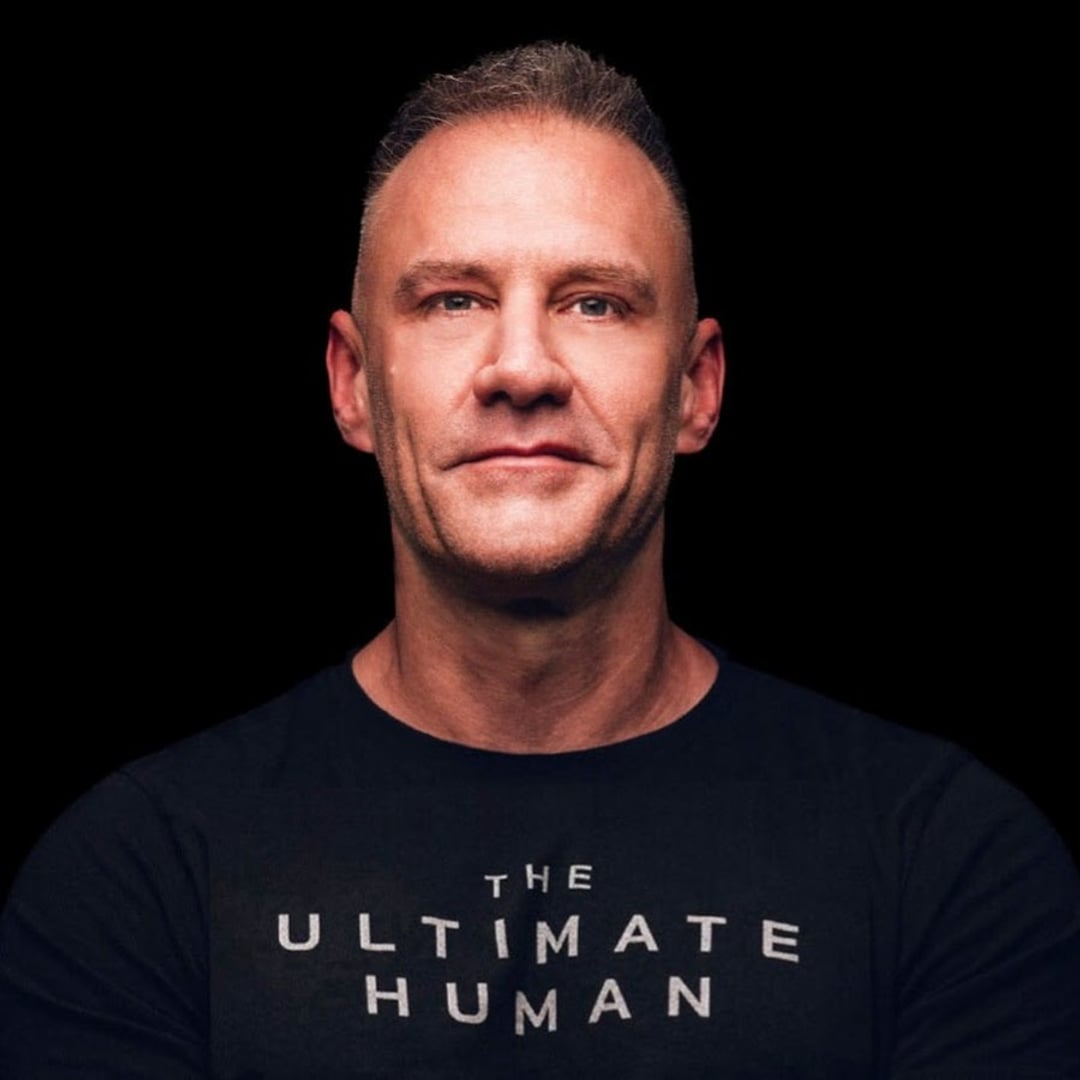
Gary Brecka
Watch on YouTube Add to chat My bookmarks← All sources

TL;DR

The four things you'd lose by not watching

4 items

TL;DR

The four things you'd lose by not watching

4 items
1

Marcus Capone, a former Navy SEAL, struggled with severe depression, anxiety, and suicidal ideation after his service, finding no relief from years of antidepressants and talk therapy, which he and his wife Amber now frame as a brain health issue rooted in repeated head trauma and blast exposure.

2

After a friend's success, Marcus tried ibogaine in Mexico—a single, 6–8 hour psychedelic journey that allowed him to reframe childhood and combat traumas from new perspectives, resulting in an immediate and lasting transformation that both he and Amber describe as 'getting his life back'.

3

The Capones founded VETS Solutions to sponsor other veterans for ibogaine treatment (5–6 per week) and later launched the commercial venture Tar Mind, delivering FDA-approved advanced brain health treatments like TMS, SAINT protocol, and IV ketamine to private-sector employees through data-driven benefit plans.

4

Gary Brecka outlines a simple, free migraine intervention: adding mineral-rich salt (like Baja Gold) to water to correct the sodium gradient across the dura, backed by the Wiley Journal of Headaches, and stresses that even small acts like filtering airplane tap water can reduce toxic exposure.

Protocols

Concrete recipes — what, when, how much, and why

5 items

Mineral salt in water for migraine relief

WhatAdd a pinch of mineral-rich sea salt (like Baja Gold) to a glass of water and drink it, especially at the first sign of a migraine.
WhenAt migraine onset or as a daily preventive measure if migraines are frequent; also after travel or exercise when electrolyte loss is high.
DoseNo strict dose mentioned, but a small amount (pinch) in water. Gary says to do it regularly if you get migraines.
For whomAnyone who suffers from migraines, especially those who notice them after dehydration or long flights.
WhyMigraine pain originates from the dura, the covering of the brain, which is rich in pain receptors. The dura hates being stretched or contracted, and those states are driven by the sodium osmotic gradient. Correcting a sodium deficiency with mineral salt can often prevent or stop migraines quickly.
CaveatsGary cites a study in the Wiley Journal of Headaches showing an inverse correlation between sodium intake and migraines, but this is not medical advice; those with hypertension or sodium-sensitive conditions should consult a doctor.

Gary explains that many people are actually mineral deficient, not just electrolyte deficient in potassium and magnesium, because soils are depleted. He stresses that a good mineral salt contains 91 trace minerals, not just sodium chloride. He ties this to his broader health philosophy: give the body the raw materials it needs and let it do its job, rather than immediately reaching for pharmaceuticals. He mentions that he personally uses Baja Gold and often carries it while traveling.

Mechanism

The brain itself has no pain receptors; all headache pain comes from the dura. The dura is sensitive to stretch and contraction, which are controlled by osmotic balance—the movement of water across membranes driven largely by sodium concentration. Low sodium can cause the dura to contract or stretch abnormally, triggering pain. Adding mineral salt restores the proper osmotic gradient, relieving the mechanical stress on the dura.

Personal experience

Gary mentions that he gets migraines himself and uses this protocol when they come on throughout the day.

The dura hates two things. It hates being stretched and it hates being contracted. And what determines whether or not it's doing that is the sodium gradient, the osmotic gradient.

Also said
“Great study in the Wiley Journal of Headaches for anybody that wants to doubt that just by adding mineral salt to your water you can very often fix migraines. Go read that study.”— Provides a specific scientific reference for the claim.

Filter or avoid aircraft tap water for coffee/tea/ice

WhatNever consume coffee, tea, ice, or plain water poured from airplane tanks; instead, carry an empty aluminum bottle through security, fill it at an airport filtered water station, and consider using bottled water from glass containers if available.
WhenEvery time you fly commercially.
DoseThroughout the flight.
For whomAnyone who flies, especially frequent travelers.
WhyAircraft tap water is unfiltered and often contains chlorine, fluoride, PFAs (polyfluoroalkyl substances), trace pharmaceuticals, and microplastics—a chronic toxic load that undermines health.
CaveatsTSA limits on liquids, so you must bring an empty bottle and fill it after security. Glass-bottled water is still rare at many airports.

Gary emphasizes that water filtration is the first thing anyone should invest in once they have disposable income, because the body is 65% water and chronic low-level toxicity from tap water is a silent driver of disease. He lists fluoride (which he categorizes as a neurotoxin), chlorine, PFAs, pharmaceuticals, and microplastics. He recommends putting a high-quality filter at home and, while traveling, using refillable stations that are increasingly available in airports. He notes that the coffee and ice on planes are made from the same tap water, so avoiding those is equally important. This advice is presented as a simple, high-leverage biohack that costs almost nothing.

Mechanism

The water on planes comes from tanks that are rarely cleaned, and it is not filtered. The contaminants—particularly PFAs and endocrine disruptors—accumulate in the body over time and contribute to inflammation, hormonal disruption, and overall toxic burden. By avoiding it, you reduce your exposure to a concentrated dose of these substances every time you fly.

Personal experience

Gary says he tells clients this constantly and follows it himself, carrying an aluminum bottle and filling it with filtered water before boarding.

I tell people if you know a few things that you can do to sort of biohack your life. But the first moment that you have any kind of disposable income, the first thing you should do is water filtration.

Also said
“If you actually knew what they made that out of... it's all just straight tap water... all of this stuff in something that is not immediately toxic doesn't mean that it's not necessarily harmful.”— Adds context on why even 'clean-looking' water can be problematic.

Open field steering mental technique for breaking negative thought loops

WhatWhen fixated on a problem or fear (the 'lone tree in the field'), consciously shift your focus to the wide open space of positive possibilities and make a single, calm correction in that direction instead of overcompensating toward the fear.
WhenWhenever you catch yourself obsessing, panicking, or feeling stuck in a cycle of negative thinking.
DoseA momentary mental reframe, repeated as needed.
For whomAnyone stuck in anxiety, depression, or life crises; particularly useful for high-achievers who tend to overcorrect.
WhyRuminating on the problem magnifies it and causes you to metaphorically steer into it; focusing on the desired outcome opens up viable paths forward.
CaveatsRequires practice to notice when you're fixating; not a substitute for professional treatment when needed.

Amber explains that during their worst period, she became fixated on the 'tree' of Marcus's potential suicide and the failure of all treatments. Adopting this metaphor let her see that there were countless other avenues—including the unconventional ibogaine route—that she was ignoring because she was so locked on the threat. The technique is a cornerstone of their upcoming podcast and book. Marcus ties it to the SEAL mindset of troubleshooting: if plan A doesn't work, you don't keep smashing into it; you scan the field for another way.

Mechanism

The metaphor draws on a real driving principle (target fixation): a driver tends to steer toward what they're staring at. Cognitively, attention amplifies whatever it rests on, so redirecting attention to the open field breaks the loop and engages the brain's problem-solving network instead of its threat-detection loop.

Personal experience

Amber: 'I realized during our spiral that I was becoming so focused on the proverbial tree that I didn't realize I was surrounded by an open field of possibility.'

You overcompensate two or three times to steer towards the pole when you have so much open room to just make one adjustment and you pass the pole and now maybe you're safe.

Also said
“We focus too much on the problem. The loop is just you keep thinking about the bad thing... instead of driving to the open place to say, 'Hey, let's get out of this loop.'”— Marcus directly connects the driving metaphor to mental health loops.

Daily supplement stack for a traveling high-performer

WhatA travel supplement kit including grass-fed whey protein, creatine (for cognitive function), omega-3s, D3 with K2 in fat-soluble form, berberine, CoQ10 (ubiquinone form), milk thistle, collagen, fiber, digestive enzymes, rhodiola, and electrolytes.
WhenDaily, especially on travel days when diet may be suboptimal.
DoseNot specified, but Marcus takes them each morning and whenever needed.
For whomMarcus Capone (anecdotal), a frequent traveler and former SEAL managing past high liver enzymes and overall health.
WhyMaintains brain and body function, supports liver health (due to elevated liver enzymes), and compensates for poor food options on the road.
CaveatsGary reviewed the brands and generally approved, but noted that one collagen brand had dairy and might need to be swapped, and that a bone broth powder looked old. Some supplements (like the fiber) caused Marcus some belly ache, so individual tolerance varies.

The segment is a lighthearted bag dump where Marcus pulls out dozens of supplements he travels with. Gary gives rapid thumbs-up or -down, noting that the approach is disciplined and generally on point. He suggests replacing the basic electrolyte with a mineral salt like Baja Gold for trace minerals and adding therapeutic phlebotomy for high liver enzymes if needed. The exchange illustrates how even a well-informed person can refine their stack.

Mechanism

No detailed mechanism given for each, but Gary highlights: creatine's cognitive benefits, berberine outperforming metformin in some glucose studies, CoQ10 for mitochondrial support, D3/K2 for bone and cardiovascular health, milk thistle for liver detoxification, and mineral electrolytes for hydration.

Personal experience

Marcus: 'I have to have creatine because you know creatine we're finding out is really good for you, cognitive function... I've had some high liver enzymes come back over the couple of years and so I've got some stuff that I can just kind of clean out the liver.'

Actually outperforms metformin as a glucophage in some studies. Great for blood sugar control.

Also said
“I take all this stuff for my liver. I've had some high liver enzymes come back... Milk thistle is great for the liver.”— Explains the liver-focused supplements and Gary's endorsement of milk thistle.

Therapeutic phlebotomy for high liver enzymes

WhatRegular blood donation or therapeutic phlebotomy (prescribed blood draws) to manage elevated liver enzymes and iron overload.
WhenRegularly, as advised by a physician, when liver enzymes remain high despite dietary and supplement interventions.
DoseNot specified; periodic blood draws.
For whomMarcus had high liver enzymes and Gary suggested this as an addition to milk thistle and diet.
WhyHelps reduce iron overload and lower liver stress markers.
CaveatsMust be done under medical supervision; not appropriate for everyone.

Gary drops this advice casually while reviewing Marcus's supplement bag, noting that milk thistle and other liver support supplements are good, but regular blood dumps are 'very good for that.' It's presented as a straightforward biohack that is underutilized.

Mechanism

Excess iron can contribute to liver inflammation and oxidative stress. Phlebotomy reduces total body iron, which can improve liver enzyme levels and overall metabolic health.

Regular therapeutic phlebotomy is really good for that, too. Just regular regular blood dumps. Very good for that.

What's new

Personal practice updates, fresh positions, predictions

4 items

The staggering military suicide statistic

Over 150,000 veterans and service members have died by suicide in the same two decades that saw just over 7,000 combat deaths, making a service member statistically far more likely to die by suicide than in battle.

Why this matters: This number reframes the veteran mental health crisis as an epidemic of hidden wounds, far outstripping battlefield losses, yet it remains largely unknown to the public.

Background

Conventional reporting often cites roughly 20 veterans per day. The Capones synthesize multiple independent reports suggesting the actual number could be double, because deaths from despair—overdoses, liver failure, etc.—and those outside VA care are frequently uncounted.

Marcus and Amber emphasize that this statistic strips away the illusion that combat is the primary danger. They argue that the military's approach to mental health has been to prescribe antidepressants and talk therapy that work for only 30–50% of people, leaving the rest with no real solution. Marcus draws a parallel to a military mission where a 50% failure rate would be unacceptable, yet that's exactly the success rate we accept in treating brain health. Amber points out that this crisis isn't limited to combat trauma; many veterans struggle with childhood trauma, TBIs, and the loss of identity after transitioning out, all compounded by a culture that teaches them to suck it up and isolate. The number '150,000 versus 7,000' is intended as a wake-up call to demand better options.

Personal experience

Amber says she knew Marcus was grappling with suicide and felt Western medicine had no more options. Marcus describes being one of those statistics waiting to happen, getting no real improvement from years of standard care.

We've lost individuals that died by suicide over 150,000 compared to just over 7,000 that were lost on the battlefield. So, that number's just staggering.

Also said
“If we went out on a mission, they said, 'Hey, 50% of you are not going to come back.' That's not a good number. But we're doing that with our current approaches to mental health care.”— Marcus uses his SEAL mindset to highlight the absurdity of accepting a 50% treatment failure rate.

Ibogaine as a root-cause intervention, not a coping mechanism

Unlike antidepressants and talk therapy that reduce symptoms or teach coping, ibogaine allows individuals to confront and reframe the root causes of their suffering—whether childhood trauma, combat experience, or self-judgment—in a matter of hours.

Why this matters: It represents a paradigm shift from managing mental illness to resolving it, using the brain's own intelligence in a psychedelic state.

Background

The Capones had tried multiple antidepressants, mood stabilizers, five brain clinics, hyperbaric oxygen, and magnetic therapy without lasting benefit. Amber started noticing neurological red flags (Marcus couldn't string Christmas lights or pack a suitcase) that pointed to a brain injury rather than a mood disorder, yet he was only offered talk therapy and medication.

The couple explains that ibogaine provides a subjective experience where the person can witness traumatic events from multiple perspectives—first person, second person, or even feeling the pain they've caused others. Marcus describes a judgment loop where he was harshly judging his family, then the perspective flipped and he felt the pain of being judged himself, leading to an immediate vow to never make them feel that way again. This isn't just insight; it's a visceral reprogramming. Amber notes that conventional therapy tries to get to the root cause over 5–10 years, but ibogaine compresses that into a single 6–8 hour session. The results, they say, are visible: a countenance change, a 'glow,' and a return to the person's pre-trauma self. They emphasize this isn't about escaping the past but integrating it without being controlled by it.

Personal experience

Marcus: 'I had a judgment experience during my experience... I was judging Amber and the kids, and then all of a sudden the perspective completely shifted. And I was judging myself... I was feeling the pain of my rage... I came out saying, I'll never do that again.'

Some doctors say this is what therapy is trying to get to, right? Talk therapy, different cognitive behavioral therapy is trying to get to the root cause... Ibigaine does that in a few hours.

Also said
“He said, 'Man, I haven't done this in 15 years.' He's like, 'I haven't just stopped and looked and just been present and realized how awesome life is.'”— Illustrates the post-ibogaine awakening to everyday beauty, even in a hard-charging SEAL like Shawn Ryan.

From nonprofit to commercial brain health data platform

The Capones took their success with veterans and founded Tar Mind, a company that uses AI and fragmented data sets to identify employees with treatment-resistant depression and route them to FDA-approved advanced treatments like TMS, SAINT protocol, and IV ketamine.

Why this matters: It demonstrates a scalable, data-driven model for bringing breakthrough mental health interventions to the private workforce, not just veterans.

Background

VETS Solutions successfully sent thousands of veterans for ibogaine treatment pro bono. An entrepreneur, Grant Verstandig, approached Marcus to commercialize the model for corporate benefit plans.

Tar Mind works by analyzing longitudinal structured data across employee populations to find individuals who have been on antidepressants for years without improvement—the 'treatment resistant' group. These individuals are then offered coverage for advanced, FDA-approved treatments that many plans don't include. Marcus frames it as both a cost-saving measure for employers (avoiding ER visits and disability claims) and a lifeline for employees who are otherwise stuck. Their long-term vision includes using biomarkers to match the right treatment to the right person at the right time, moving toward precision mental health. The company is already selling to major firms like J.P. Morgan, Google, and Walmart.

We're showing these companies like, 'Hey, you have all these individuals that have been on antidepressants for years. They're not getting better. You're wasting money. Let's focus on these individuals. Let's get them to the right treatment.'

Also said
“Eventually our vision is like on the monitor we'll get into biomarkers, what's the right treatment for the right person at the right time.”— Highlights the future precision-medicine direction of their commercial work.

The 'open field' mental reframing to break obsessive loops

Marcus and Amber use the metaphor of a driver who fixates on the lone tree in a field and steers into it, teaching that obsessing on a problem makes it inescapable, while the open field of possibilities is always available if you shift your focus.

Why this matters: It's a simple, powerful reframe that anyone can apply immediately to break rumination and desperation.

Background

Marcus learned this lesson in a defensive driving course as a young SEAL and shared it with Amber during their darkest times. Amber adopted it and now uses it as a cornerstone of their message.

When things were spiraling, Amber realized she had become so focused on the 'proverbial tree'—Marcus's illness, the failing treatments, the hopelessness—that she couldn't see the entire open field of other paths they could take. The metaphor flips the script: instead of overcorrecting toward the thing you fear, you make one small adjustment and move past it into safety. This isn't just positive thinking; it's a tactical mental maneuver born from high-stakes driving that translates directly to mental health. They plan to build their podcast and book around the idea that you can steer toward healing rather than staying locked onto the problem.

Personal experience

Amber: 'I realized during our spiral that I was becoming so focused on the proverbial tree that I didn't realize I was surrounded by an open field of possibility.'

A person overcompensates two or three times to steer towards the pole when they have so much open room to just make one adjustment and you pass the pole and now maybe you're safe.

Also said
“We focus too much on the problem. The loop is just you keep thinking about the bad thing... instead of driving to the open place to say, 'Hey, let's get out of this loop.'”— Marcus applies the driving metaphor directly to mental health rumination.

Recommendations

Products, supplements, and tools mentioned in the episode

4 items

Documentary 'In Waves and War'

Product

The film follows Marcus and Amber Capone, DJ Shipley, and other Navy SEALs undergoing ibogaine treatment for PTSD and TBI. It visually animates brain mechanisms and shows personal transformations.

Gary Brecka watched it before the podcast and calls it 'incredibly impactful,' emphasizing that it is not just for military families but for anyone struggling with mental illness or addiction. The documentary uses voiceovers and animation to illustrate how ibogaine allows people to revisit childhood and combat traumas from new perspectives. Both Gary and his wife were moved by it. He highlights how it ties directly to his earlier interview with DJ Shipley and regrets not having seen it beforehand.

vs alternatives

Unlike typical military documentaries, this one focuses on the inner psychological and biological transformation rather than combat footage, making it broadly relatable.

Personal experience

Gary: 'I watched it. Incredibly impactful podcast... My wife watched it. I watched it.'

In Waves and War, you have to watch it. I'm going to put a link in the show notes below.

Also said
“The film does really, really well is it takes the context of what you're saying and it puts it in a visual way. Your animators did an incredible job.”— Praises the film's ability to visualize internal experiences.
Find Documentary

Rocket Fuel by Gino Wickman and Mark C. Winters

Book

Gary recommends this book to any couple or business partners who clash over visionary vs. integrator roles. It helped him and his wife Sage reframe their differences as complementary strengths.

Gary credits the book with saving his marriage and skyrocketing his business by teaching the synergistic value of the visionary (who creates ideas and brings in business) and the integrator (who organizes, executes, and pays the bills). He explains that before reading it, he and Sage oversimplified each other's contributions and kept score. The book showed them that without the integrator, the visionary would go broke; without the visionary, the integrator would have nothing to organize. This reframe ended their push-pull dynamic and allowed them to make decisions together, celebrating wins jointly and putting losses 'outside the castle walls.'

vs alternatives

Unlike more generic marriage advice books, this one specifically addresses the business-partner dynamic and provides a framework that many entrepreneurial couples can apply immediately.

Personal experience

Gary: 'We read a great book called Rocket Fuel... it literally reframed the way we looked at each other.'

If your marriage is at nine, it just took it to a ten. Rocket Fuel.

Also said
“I saw so much value in what she was providing, and she saw so much value in what I was providing, cuz she was like, 'You know what? I can't make the phone ring.' And I was like, 'I can't pay the bills, we would be absolutely broke.'”— Illustrates how the book shifted their appreciation of each other's roles.
Find Rocket

Baja Gold mineral salt

Supplement

Gary recommends switching from standard electrolyte powders to a mineral-rich sea salt like Baja Gold, which contains 91 trace minerals, for hydration and migraine prevention.

During Marcus's supplement bag review, Gary critiques his electrolyte product for being too focused on potassium, magnesium, and sodium without the full spectrum of trace minerals. He suggests that many health complaints—migraines, brittle bones, osteopenia—stem from mineral deficiencies caused by depleted soils. He specifically mentions Baja Gold as a brand he uses personally and often recommends, noting that adding it to water throughout the day can fix migraines and improve overall hydration.

vs alternatives

Compared to standard electrolyte mixes that only replace major electrolytes, Baja Gold provides a full spectrum of trace minerals, which Gary argues is the real root of many issues.

Personal experience

Gary: 'The first thing I'm going to do is take... I get them (migraines) throughout the day. I get them pretty regularly.'

I might even the only thing I might add to that would be some like a mineral salt, like a Baja Gold.

Also said
“Those electrolytes are heavily focused on the big ones... but you really need 91 trace minerals. Our soil has been so depleted. A lot of the challenges that we have are mineral deficiencies.”— Explains why a full mineral salt is superior to standard electrolytes.
Find Baja

Momentus supplements

Product

Marcus uses Momentus products (given by the CEO) and Gary calls it a 'great brand' during the supplement bag review.

Marcus mentions he has some Momentus products in his bag because the CEO gave them to him. Gary gives an immediate positive response: 'Cool. Great brand.' No further detail, but the endorsement suggests it meets his quality standards.

The CEO that I found of Momentus gave me some stuff so I have to take some of that. — Cool. Great brand.

Find Momentus
Disclosed sponsorships2speaker disclosed

Perfect Amino (by BodyHealth)

Supplement Sponsored · disclosed

Pure essential amino acids in a form and ratio that allows near 100% utilization for building lean muscle with no caloric impact, as an alternative to whey protein during cutting phases.

DisclosureGary Brecka's own product, mentioned during an ad break. He states he only recommends things he's personally tested.

In a sponsored message, Gary explains that his Perfect Amino supplement delivers the exact essential amino acids needed for protein synthesis without the extra calories or digestive burden of whole proteins. He claims it builds protein six times as efficiently as whey without adding body fat, making it ideal for those who want lean muscle without bulking. This is positioned as the 'new era of protein supplementation.'

vs alternatives

Compared to whey protein, Perfect Amino is claimed to have no caloric impact and much higher utilization, making it better for maintaining leanness while building muscle.

Personal experience

Gary: 'I've been on the road my entire career... I'm constantly testing what actually works in my own body... I tested it. I felt it. And it's been in my bag ever since.'

We build protein six times as much as whey, but without the excess body fat we normally get during bulking.

Also said
“If you know me, you know I don't recommend anything I haven't personally tested. That's not a marketing line, that's just how I operate.”— Establishes his personal testing standard to build trust in the recommendation.
Find Perfect

VETS Solutions (vetsolutions.org)

Service Sponsored · disclosed

The Capones' nonprofit sends 5–6 veterans per week to receive ibogaine treatment in Mexico at no cost to them. The organization funded Marcus's treatment and has since helped thousands.

DisclosureMarcus is chairman of the board, Amber is CEO. They invite donations and partnerships to sponsor veterans for ibogaine treatment.

VETS Solutions is presented as the lifeblood of the Capones' mission. They emphasize that the treatments cost $8,500–10,000 out-of-pocket, which is out of reach for most veterans, so the nonprofit exists to remove that barrier. They work with leading research institutions like Stanford, Ohio State, and Johns Hopkins on studies and policy work. Amber states that the organization relies on donations and partnerships to continue its work, and they are seeing 'tremendous success' in transforming lives.

vs alternatives

Compared to standard VA care that offers antidepressants and talk therapy, VETS provides access to a single-session treatment that has shown high efficacy where other methods have failed.

Personal experience

Marcus: 'Someone paid for my treatment. And I knew that these are expensive treatments... I wanted to pay for somebody. I wanted to get somebody that opportunity to heal like I did.'

The organization really is the lifeblood of the film and of our lives. So vetsolutions.org.

Also said
“We are sponsoring veterans five or six per week every week who are going to Mexico to receive the same opportunity that Marcus did.”— Quantifies the scale of their ongoing work.
Find VETS

Notable quotes

Lines worth pulling out — contrarian, specific, or perfectly phrased

5 items
We've lost individuals that died by suicide over 150,000 compared to just over 7,000 that were lost on the battlefield. So, that number's just staggering.
The core statistic that reframes the entire conversation around veteran mental health, delivered with stark simplicity.
If we went out on a mission, they said, 'Hey, 50% of you are not going to come back.' That's not a good number. But we're doing that with our current approaches to mental health care.
Marcus uses his SEAL logic to expose the unacceptable failure rate of conventional mental health treatments.
I realized during our spiral that I was becoming so focused on the proverbial tree that I didn't realize I was surrounded by an open field of possibility.
Amber's crystallizing metaphor for moving from crisis fixation to hopeful action.
The dura hates two things. It hates being stretched and it hates being contracted. And what determines whether or not it's doing that is the sodium gradient, the osmotic gradient.
Gary's clear, mechanistic explanation for a simple migraine fix that most people have never heard.
We think that we're human beings in search of spiritual experiences, but we're really spiritual beings having human experiences.
Amber's philosophical answer to what it means to be an ultimate human, tying the entire journey back to love and vulnerability.

Sign in to share feedback

Tell us if this brief hit the mark or missed it — feedback feeds back into the next iteration of the prompt.

Topics covered

veteran-suicideibogainepsychedelic-therapytreatment-resistant-depressionptsdtraumatic-brain-injurybrain-health-vs-mental-healthneuroplasticitypsychedelic-experienceveteran-nonprofitdata-driven-healthcarecorporate-mental-healthspouse-entrepreneurshipvisionary-integratormigraine-remedymineral-deficiencytravel-biohackingsupplement-stackwater-filtrationtarget-fixation-psychology
Free account

Make this library yours

Reading is free for everyone. A free account adds the personal layer: save protocols, follow experts, and see how the other experts weigh in on this same topic.

Create a free accountSign in

Where the experts disagree — weekly

One email a week: the sharpest new disagreements and protocols from the library. No spam, unsubscribe anytime.

Educational summary of the cited expert source — not medical advice. Open the source recording linked above and consult a qualified physician before acting on any protocol.