UNFUCG
DashboardSearchChatBookmarksNotificationsActivityPremiumProfile
?
Home
Search
Chat
Saved
Profile
Episode
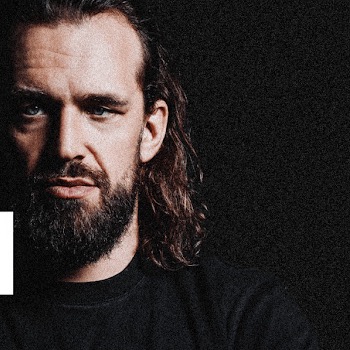
Beyond music, I don't exist. Why has the world gone crazy for a Pole with a guitar? Marcin Patrzałek
~117 min
Episode Brief·YouTube

Beyond music, I don't exist. Why has the world gone crazy for a Pole with a guitar? Marcin Patrzałek

Cyprian Majcher
Watch on YouTube Add to chat My bookmarks← All sources

TL;DR

The four things you'd lose by not watching

4 items

TL;DR

The four things you'd lose by not watching

4 items
1

Marcin Patrzałek (Marcin Music) built a global career as an instrumental guitarist by abandoning classical purity and creating percussive, dramatic arrangements—his Beethoven's 5th on one guitar went viral and marked his break from tradition.

2

His largest and most engaged audiences are in East Asia (Japan, Korea, Taiwan, China), where virtuosic instrumental showmanship is culturally expected, unlike Poland where he had to educate listeners. He's currently testing a headline Polish tour in December after a disastrous 2022 tour with unpaid fees.

3

He maintains a strict pre-show protocol: zero caffeine on tour except a triple espresso 60 minutes before going on stage, followed by a brutal emotional crash after returning to an empty hotel room—a loneliness he says most touring musicians share.

4

His father's vision—enforcing English fluency from childhood by memorizing full dialogue scripts and speaking only English at 8 PM—was the foundation for his international career; his father still works with him daily.

Protocols

Concrete recipes — what, when, how much, and why

2 items

Pre-show caffeine protocol: zero caffeine except triple espresso 1 hour before concert

WhatOn tour, Marcin avoids all caffeine (coffee, cola, energy drinks) entirely, but precisely one hour before going on stage he drinks a triple espresso to achieve hyper-focus.
When1 hour before concert start time.
DoseTriple espresso.
For whomSpeaker (anecdotal).
WhyCaffeine gives him immediate, intense focus and readiness for the performance, while avoiding it the rest of the time prevents sleep disruption from jet lag and maintains baseline energy. The one-hour window ensures the peak hits during the show, not after.
CaveatsHe initially experienced a crash after the concert when the caffeine wore off combined with the adrenaline drop, leaving him feeling suddenly sad and empty upon returning to the hotel. He later reduced the dose slightly (not always a triple) to mitigate this. He still crashes but it's part of the trade-off.

Marcin explains that his rider explicitly states no caffeine throughout the entire tour except this one pre-show dose. He compares it to the host's experience with multiple espressos before sports matches—the crash is real. The feeling after the show is a massive emotional and physical comedown: the high of performance, the audience's love, then the solitary hotel room. The caffeine withdrawal amplifies this. He still uses the protocol because the performance benefit is worth the crash. He notes that this is separate from the alcohol that is always present backstage; he never drinks before playing.

Mechanism

Caffeine blocks adenosine receptors, increasing alertness and reducing perceived fatigue. By staying caffeine-naive the rest of the tour, sensitivity is maximized, so the triple espresso produces a pronounced stimulant effect precisely when needed.

Personal experience

Marcin: 'I drink that triple espresso and suddenly something opens up in me, that I am this hyper-focused and ready for action.' He initially crashed hard: 'I would return to the hotel and I just felt suddenly that I was sinking into a mega low, I was simply sad.'

Until recently I had it written in my rider that I don't drink anything with caffeine on the entire tour. Zero, zero coffee, zero any cola or whatever. But before the concert, for example an hour before the concert, I get a triple espresso.

Also said
“I would return to the hotel and I just felt suddenly that I was sinking into a mega low, I was simply sad, I'm not saying I was depressed because I wasn't, but suddenly everything just faded away.”— Highlights the psychological cost of the protocol.

Father's English immersion method

WhatMarcin's father had him memorize multi-page English dialogue scripts every few days and enforced speaking only English during nightly sessions, starting from a very young age.
WhenFrom early childhood, around 3 years old, through adolescence. Sessions typically at 8 PM before bed.
DoseSeveral pages of A4 dialogue memorized every 2-3 days; daily English-only conversation sessions lasting until bedtime.
For whomChildren whose parents are willing to invest daily time and consistency.
WhyThe father foresaw in the early 2000s that Poland's market transformation would open global opportunities, and English would be a critical foundation. The goal was to make Marcin fluent enough that language never limited his career.
CaveatsThis required immense parental time investment; the father sat with him every single day after long work hours. Marcin acknowledges this as a huge privilege and not a scalable method for everyone.

Marcin describes sitting at a desk with his father, who would pull out a stack of printed English dialogues. He had to learn the entire dialogue by heart, every word, and then they would converse in English only during those sessions, even if he needed help with something. His older brother underwent the same regimen with sports and English. The father's philosophy was that working hard without shortcuts could open the whole world—a mindset Marcin still carries. The father never pushed him musically; he just sat and observed Marcin's guitar practice, providing presence and support.

Mechanism

Forced output combined with script memorization builds inherent language structures (chunking) and pronunciation patterns, leading to near-native fluency through constant oral repetition and lack of fallback to Polish.

Personal experience

Marcin: 'We would sit at a table like that at 8:00 PM, for example, before I went to sleep, and we would talk exclusively in English.' He notes his father did this while also working long hours.

My dad simply knew that there would be potential to do things for the whole world and that to do that you need the language, for example. Yes, that's what he decided and that's what he instilled in us.

Also said
“For example, I would sit with my dad, just like I'm sitting with you now, we would sit at the desk in my room, my dad would pull out a stack of A4 sheets of English dialogues. (...) I had to learn the entire dialogue from memory, every single word.”— Details the exact method: script memorization, not casual conversation.

What's new

Personal practice updates, fresh positions, predictions

2 items

Beethoven's 5th Symphony arrangement as turning point

mid-discussion: 14-16 year timeline

At 16-17, Marcin arranged Beethoven's 5th for a single guitar instead of covering existing guitar pieces, because a symphony orchestra's complexity can't be copied 1-to-1; he had to invent how to convey epicness and drama on one instrument. The video went viral, introduced his name globally, and deliberately provoked classical purists, which he enjoyed.

Why this matters: This was the moment he consciously abandoned the classical 'cover' mindset and embraced arrangement as his signature—creating something that was impossible to replicate literally, thereby forcing his own artistic voice into every note.

Background

At that time, he was still known as a classical prodigy playing Paganini and other fast pieces in competitions, but he felt that copying other artists' performances exactly added nothing of his own soul. He wasn't confident enough yet to compose original music, so arrangement became the bridge.

Marcin explains that a cover aims to recreate the original as faithfully as possible, while an arrangement must reconstruct the emotional and structural core of a piece when a direct translation is physically impossible. Beethoven's 5th has dozens of musicians across sections; a single guitar cannot reproduce that. The challenge was to make the listener feel the same monumentalism and drama. He says this forced him to invent a language on the instrument. When he released it online, no one knew him yet, and it spread internationally. The classical world reacted with some disdain—calling it disrespectful to the tradition—but Marcin found the controversy invigorating. From that point, he leaned further into pushing boundaries, later adding speaking during performances (Music Works format), which became his most successful content yet. He sees this as a continuous evolution, not a one-time event.

Personal experience

He recalls that at the time he wasn't hyper-confident, but the decision to arrange instead of cover felt necessary. The online blow-up surprised him, and the mild backlash from purists gave him energy rather than discouragement.

There is a huge difference between a cover and an arrangement, because a cover in theory is one-to-one and I have also played many covers. (...) But I decided, why would I copy one-to-one or as close as I can get one-to-one what another artist has already done, which has nothing of me, my soul, and my own style.

Also said
“You have to figure out how to convey to the listener that epicness and that drama, because it is simply a huge drama in that music. How to convey it so that when I perform it live, someone thinks: 'Damn, that's one guitar.'”— Clarifies the artistic problem he was solving: delivering the epic feel of a full orchestra on a solo instrument.
“It was also slightly controversial in that purist classical world, which I really liked. That was the first time I felt that I was doing something a bit against the grain.”— Shows his contrarian streak and enjoyment of pushing back against tradition.

Music Works format: speaking while playing

mid conversation, after Beethoven story

His latest innovation is a content format where he talks and explains what he's creating while performing, breaking down the song in real time—this has become his most viewed content ever.

Why this matters: Represents a further evolution beyond pure instrumental showmanship, blending education and performance to reach audiences that never sought out guitar music.

He describes this as the best idea he's had in the last year or two. The viral video 'How Music Works' gained millions of views and likes on Instagram. He notes that his track 'Art of Guitar'—a completely wordless original composition—didn't make a splash in the guitar world but exploded among teenagers making video edits on TikTok and YouTube, accumulating 400,000 YouTube shorts, 15 million Spotify streams. This shows his ability to reach demographics far outside the traditional guitar audience. He sees the speaking-while-playing format as a natural progression from arranging to composing to explaining, constantly pushing the boundaries of what a solo guitarist can be.

This whole idea of talking while playing and describing the creation of tracks, how it happens, that is probably the best thing I've come up with in the last year or two, because how that went out into the world is a shock and it is also very different.

Also said
“Art of Guitar, which totally didn't resonate in the guitar community at all, but resonated among teenagers who make edits on TikTok.”— Illustrates how his music bypasses traditional gatekeepers to connect with a completely different audience.

Recommendations

Products, supplements, and tools mentioned in the episode

1 item

UV-cured nail gel (unspecified brand)

Tool

Marcin uses gel overlay on his natural nails to strengthen them for percussive guitar playing. He does not name a brand.

Personal experience

He describes the process: gel applied on top of natural nails, cured under a lamp (UV/LED), which makes them extremely hard to withstand hitting the guitar body. He mentions it stings a little during curing.

These are gel ones already. (...) But they are gel on top, so you just put them under the lamp, it stings a little and they become mega hard.

Find UV-cured

Notable quotes

Lines worth pulling out — contrarian, specific, or perfectly phrased

4 items
Guitar was the first thing in my life where I was good.
Succinct and vulnerable admission that his identity as a guitarist came from finally finding something he was good at after not excelling at anything else.
I'll just crouch down next to her and I'll play for her for a while. Later she'll see that there's some guy standing behind her and I'll nod my head at him. Or in the distance I see Tomek Kamel standing on a balcony, because it was Paris, and I suddenly nod to him and it's like >> we are all in this together.
Vivid illustration of his philosophy that concerts are a shared experience, not a one-directional performance—he improvises interactions with individual audience members in real time.
I had a situation where a girl grabbed me and kissed me very hard on the lips and Will Smith was calling you on FaceTime. Well, that's not normal, you know.
Bizarre juxtaposition of celebrity normalcy—a fan invading his space physically while simultaneously fielding calls from A-list stars.
Three times I got information that at my concert some woman started giving birth.
Unusual and humorous fan interaction that underscores the intensity of live performances—his music apparently inducing labor.

Sign in to share feedback

Tell us if this brief hit the mark or missed it — feedback feeds back into the next iteration of the prompt.

Topics covered

international guitar careerclassical music purismpercussive acoustic guitar techniqueBeethoven arrangementtalent show strategyEast Asian music culturesocial media growthtour management and logisticspre-performance caffeine protocolmuscle memory practicenail care for guitaristsfather's role in careerloneliness of touringaudience demographicssignature guitar modelArt of Guitar viral hitMusic Works formatWill Smith interactionAndrea Bocelli charity galaPolish music market vs global
Free account

Make this library yours

Reading is free for everyone. A free account adds the personal layer: save protocols, follow experts, and see how the other experts weigh in on this same topic.

Create a free accountSign in

Where the experts disagree — weekly

One email a week: the sharpest new disagreements and protocols from the library. No spam, unsubscribe anytime.

Educational summary of the cited expert source — not medical advice. Open the source recording linked above and consult a qualified physician before acting on any protocol.