UNFUCG
DashboardSearchChatBookmarksNotificationsActivityPremiumProfile
?
Home
Search
Chat
Saved
Profile
Episode
Creatine for Women: The Daily Dose for Muscle, Brain Health, and High-Intensity Training
~12 min
Episode Brief·YouTube

Creatine for Women: The Daily Dose for Muscle, Brain Health, and High-Intensity Training

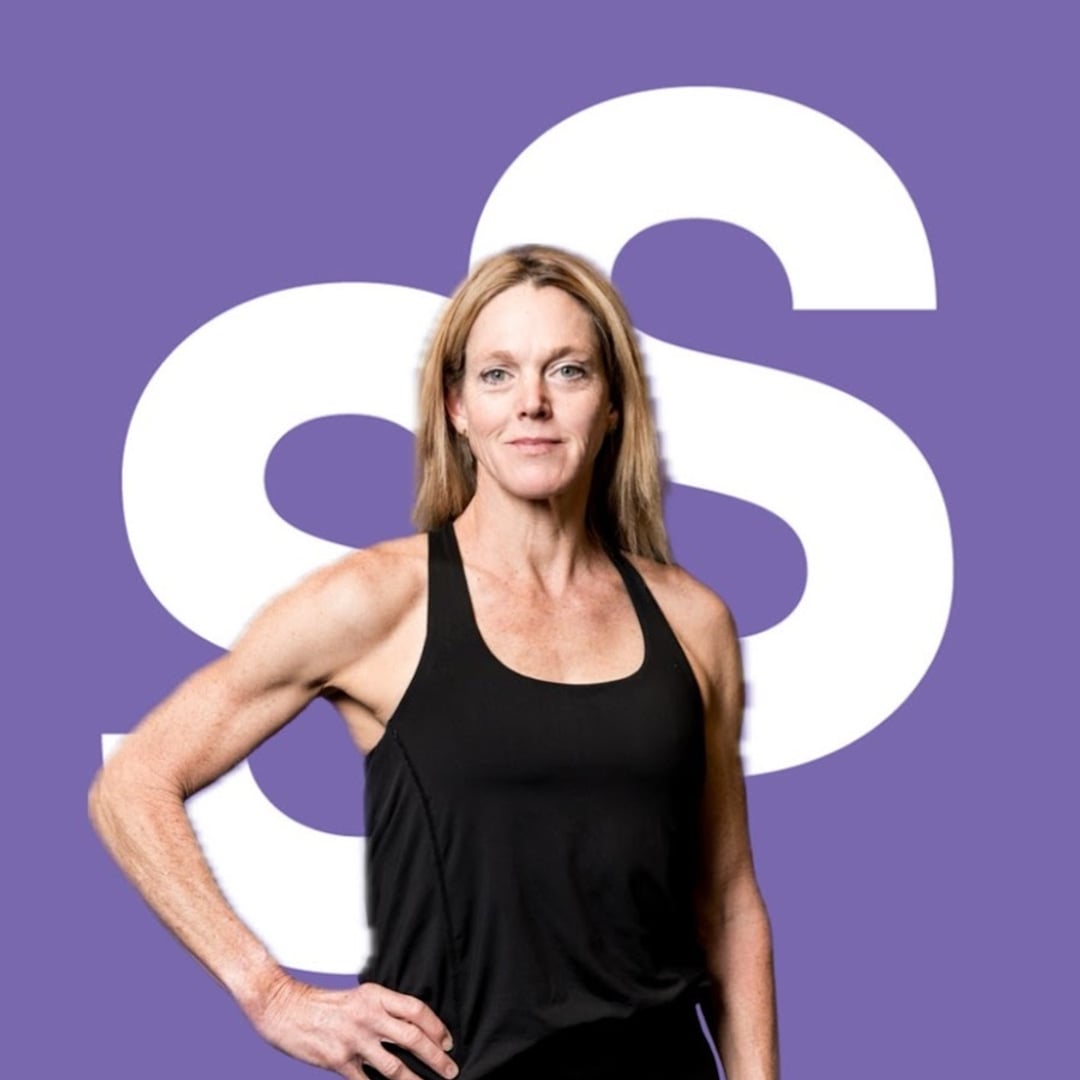
Stacy Sims
Watch on YouTube Add to chat My bookmarks← All sources

TL;DR

The four things you'd lose by not watching

4 items

TL;DR

The four things you'd lose by not watching

4 items
1

Stacy Sims recommends 3-5 grams of creatine daily as a no-loading-dose supplement that fully saturates all fast-energetic tissues (brain, muscle, heart, skin) to support cognitive function, neuroplasticity, and high-intensity training, especially for women who under-consume creatine from food.

2

To combat chronic 'tired-but-wired' sympathetic drive, she practices a weekly 'airplane mode' day and emphasizes that walking in nature (not on a treadmill) is the most powerful way to activate the parasympathetic nervous system.

3

She warns against obsessive use of wearables like the Apple Watch step goal; the number is arbitrary. Instead, use the device only as a prompt to move incidentally during the day, and reclaim body intuition around hunger and rest.

4

Modern women face a unique collision of stressors: constant screen bombardment, GLP-1 appetite suppression reducing creatine-rich food intake, and loss of natural cues—all of which compound each other.

Protocols

Concrete recipes — what, when, how much, and why

3 items

Daily 3-5 g Creatine Supplementation (No Loading)

WhatTake 3 to 5 grams of creatine monohydrate every day without a loading phase.
WhenDaily, with no specific timing mentioned; presumably with or without meals.
Dose3-5 grams daily
For whomWomen, especially those with low meat intake, using GLP-1 agonists, or engaged in high-intensity training, and anyone concerned about brain health and stress.
WhyFully saturates all fast-energetic tissues (muscle, brain, heart, lungs, skin); supports brain metabolism, neuroplasticity, and high-intensity exercise; compensates for low dietary creatine intake in women.
CaveatsAvoid the old bodybuilding loading protocol of 20+ g/day; no need to cycle. Consult with a healthcare provider if pregnant/nursing or with kidney conditions (not stated explicitly but standard).

Sims begins by distancing creatine from its bodybuilding 'loading' image, which she says turned many women away. She explains that the body's liver produces only 2-3 g per day, but modern dietary patterns—amplified by diet culture and GLP-1 appetite suppression—make it nearly impossible to get the extra needed for saturation (the equivalent of 20 chicken breasts daily). The brain's reliance on glucose over lactate due to a lack of high-intensity work creates a metabolic deficit that creatine can offset. The result is not muscle bulk but broader support for energy metabolism and cognitive function. She frames this as an essential daily practice for women, not an optional athletic supplement.

Mechanism

Creatine phosphate regenerates ATP during the ATP-CP energy cycle, which powers every rapid-energy-demanding tissue. In the brain, when lactate—the preferred fuel—is scarce due to insufficient high-intensity exercise, creatine helps maintain metabolic function and supports neuroplasticity. The small daily dose achieves steady-state saturation across tissues rather than just muscle, enhancing overall cellular energy status.

If we take a small dose of creatine, like 3 to 5 g daily, then it fully saturates all tissues of the body and just enhances their function.

Also said
“Every fast energetic of the body uses it because it's the ATP-CP cycle, right? So you were thinking about brain health, heart, lungs, every every thing, even skin.”— Explains the mechanism and why whole-body saturation matters.
“Your liver makes about two, maybe three, depending on what your body composition is and you just want to boost it.”— Quantifies the gap that the supplement fills.

Weekly Airplane Mode Day

WhatPut your phone on airplane mode for one entire day each week (e.g., Saturday) to disconnect from notifications and social media.
WhenOne full day per week; Stacy uses Saturday.
Dose24 hours
For whomAnyone experiencing 'tired-but-wired' stress, FOMO, or feeling overrun by screentime; especially women with busy, hyperconnected lives.
WhyBreaks the compulsive checking habit, reduces sympathetic overload from constant alerts, and helps reclaim control over your attention rather than being controlled by the device.
CaveatsInform close contacts that you'll be unreachable except by alternative means (e.g., a partner's phone or landline). Expect initial discomfort; the practice gets easier and more rewarding with repetition.

Stacy describes how modern life bombards us with sight and sound—billboards, alerts, social media—and notes that even asking someone to drive without music is jarring. This environment sustains a chronic sympathetic state. Her airplane mode day creates a deliberate 'off' period where the brain isn't chasing digital pings. She emphasizes the mental reframe: 'This device is controlling you. You don't have control over it.' She applies the same principle to her teenage daughter, limiting phone use and banning social media, observing how fast addiction takes hold. The practice is as much about agency as about recovery, and she reports that friends who adopt it feel significantly better.

Mechanism

Reduces intermittent dopamine-driven reward loops from notifications, thereby lowering chronic sympathetic nervous system activation. The forced silence creates space for parasympathetic recovery, which counters the allostatic load of modern constant stimulation.

Personal experience

I've implemented the airplane mode where on Saturday, I put my phone on airplane mode. People are like, 'I can't get a hold of you.' I was like, 'If you need to get a hold of me, you know, you can come over, you can do the old-fashioned way of calling the phone, that's my husband's and not mine, but I'm on airplane mode because I just need a day where I have completely disconnected.'

I've implemented the airplane mode where on Saturday, I put my phone on airplane mode ... because I just need a day where I have completely disconnected.

Also said
“I've gotten some friends to do and they're like, 'Oh my god, I feel so much better.'”— Real-world validation that the practice yields rapid subjective improvement.
“We've all gotten into this immediacy of here's a notification, I got to check it. I'm going to miss something. Everyone has FOMO. But life around you isn't going to change dramatically in an hour.”— Addresses the underlying fear that keeps people glued to notifications.

Wearable Movement Prompting Instead of Step Goals

WhatUse your fitness tracker exclusively to prompt you to get up from your desk or sedentary position and move incidentally, NOT to chase a specific daily step total.
WhenDuring work hours or long sedentary periods; check the prompt, not the cumulative count.
DoseAs needed—stand up and walk for a few minutes when prompted.
For whomWomen who own an Apple Watch or similar device and feel compelled to 'close their rings' daily; anyone whose tracker data causes stress or confusion.
WhyArbitrary step numbers (like 10,000) create anxiety and can lead to unnecessary compensatory walks late at night, overriding the natural signal to rest. The real value is breaking up sedentary time.
CaveatsDo not force a late-night walk to hit a number; if you've been active during the day according to your actual lifestyle, trust that over the device. Use the watch as a servant, not a master.

Sims relates that many women have lost body intuition, including hunger and fullness cues, partly because they eat in front of screens and rely on external data. The Apple Watch example—a woman wondering if she needed a night walk because of 5,000 missing steps after a full day of training and activity—illustrates the confusion. Sims bluntly says the number means nothing, it's arbitrary. The device's original purpose, she argues, was to nudge people out of prolonged sitting, not to set a rigid finish line. This protocol is about restoring internal calibration: you should move when your body says, not when the watch says you haven't met a manufactured quota.

No, that means nothing. It's just arbitrary. ... What you need to do is have your Apple Watch signal you to get up from your desk or whatever and move around incidentally.

Also said
“People have lost that intuition. They've also lost what it means to be full because people are eating in front of the screens and ultra-processed food.”— Expands the loss of intuition beyond movement to core self-regulation.
“I had someone email me going, 'I've done all this training and my job is pretty active, but I'm 5,000 steps away from closing my circle on my Apple Watch. Does this mean I need to go for a walk at night, too?'”— The exact scenario that makes the advice urgently relevant.

What's new

Personal practice updates, fresh positions, predictions

3 items

Low-dose daily creatine as a whole-body metabolic support, not a muscle-only bodybuilding supplement

early in the creatine discussion

Stacy Sims reframes creatine from a bodybuilding loading protocol to a daily 3-5 g dose that saturates all tissues (brain, muscle, heart, lungs, skin) and is particularly important for women given diet culture, GLP-1 appetite changes, and reduced high-intensity exercise.

Why this matters: She directly challenges the old 'loading and swole' narrative, presenting a low-dose, whole-body approach that addresses a broad range of women's health concerns—brain metabolism, stress resilience, and neuroplasticity—rather than just athletic performance.

Background

Creatine's traditional image was built on bodybuilding: loading 20 g/day (5 g x 4) to quickly increase muscle creatine stores. Mainstream awareness often associates it with water retention and bulk, scaring off many women.

Sims explains that every fast-energetic system in the body relies on the ATP-CP cycle and therefore uses creatine. A small daily dose (3-5 g) fully saturates all these tissues—not just muscle—and enhances their function. She ties this to brain health: the brain's preferred fuel is lactate, produced during high-intensity exercise, but as people avoid that intensity, the brain becomes overly dependent on glucose and its metabolism can falter. Creatine provides a metabolic boost, supporting neuroplasticity and cognitive function. The practical need is amplified by modern dietary patterns: women eat less creatine-rich food (meat) due to diet culture, and the rise of GLP-1 agonists makes them too full to consume enough. The liver manufactures only about 2-3 g/day, so supplementation is often necessary to reach the saturation threshold.

If we take a small dose of creatine, like 3 to 5 g daily, then it fully saturates all tissues of the body and just enhances their function.

Also said
“Every fast energetic of the body uses it because it's the ATP-CP cycle, right? So you were thinking about brain health, heart, lungs, every every thing, even skin.”— Emphasizes the mechanism and breadth of tissues beyond muscle.
“We're not having as much ingestion of creatine-rich foods, especially by women ... you get too full cuz we're talking about the equivalent of 20 chicken breasts in a day to get that 3 to 5 g.”— Quantifies the dietary shortfall that makes supplementation practically necessary.
“Your liver makes about two, maybe three, depending on what your body composition is and you just want to boost it.”— Shows endogenous production is low, reinforcing the need for an external source.

Weekly 'airplane mode' day to break device addiction and reset the nervous system

mid-discussion on stress and screens

Stacy Sims personally puts her phone on airplane mode every Saturday as a way to disconnect from constant notifications, reduce sympathetic overdrive, and regain control over her attention.

Why this matters: Rather than generic 'digital detox' advice, she models a concrete, repeated weekly practice and describes the pushback she gets, making it feel both practical and culturally counter-normative.

Background

Adults and children increasingly report FOMO and compulsive phone checking. Many experts suggest screen breaks, but specific time-bound rituals are rarely articulated by someone in her field.

Sims identifies a pervasive 'tired but wired' state driven by constant sensory bombardment—notifications, billboards, social media—and a societal lack of stopgaps for calm. She notes that even asking someone to drive without music or noise feels aversive. By setting aside one full day (Saturday) on airplane mode, she gives her nervous system a break from the immediacy of alerts. Friends who have adopted it report feeling dramatically better. The key, she argues, is the mindset shift from being controlled by the device to taking control over it. She extends the principle to her teenage daughter, enforcing time limits and no social media, observing how quickly addiction forms. The airplane mode day is therefore both a personal practice and a recommendation to reclaim autonomy.

Personal experience

I've implemented the airplane mode where on Saturday, I put my phone on airplane mode. People are like, 'I can't get a hold of you.' I was like, 'If you need to get a hold of me, you know, you can come over.'

I've implemented the airplane mode where on Saturday, I put my phone on airplane mode ... because I just need a day where I have completely disconnected.

Also said
“I've gotten some friends to do and they're like, 'Oh my god, I feel so much better.'”— Shows the practice spreads and has immediate positive feedback.
“This device is controlling you. You don't have control over it.”— Crystallizes the reframing she encourages.

Wearable step goals are arbitrary and erode women's intuition about their bodies

later in the stress and data segment

Stacy Sims argues that data from devices like the Apple Watch confuses women, overriding natural instincts for hunger, fullness, and movement, and that chasing an end-of-day step number is meaningless.

Why this matters: She takes a strong, counter-intuitive stance against a popular health-tech behavior, giving a concrete example of someone asking if they must walk at night to 'close a ring,' and reframes the watch's role from goal tracker to mere movement reminder.

Background

Fitness trackers have made 10,000-step goals a cultural benchmark, often leading to guilt-driven late-night walks. Many users trust the data over their own sensations.

Sims describes a broader loss of intuition: people eat in front of screens and ultra-processed foods, so they no longer register fullness; they rely on watches to tell them when to move, so they lose the internal sense of needing activity. She recounts receiving an email from a woman who had trained and worked all day but was 5,000 steps short of closing her Apple Watch ring, asking if she should go for a walk at night. Sims's reply: 'No, that means nothing. It's just arbitrary.' Instead, the watch should be used only to prompt incidental movement out of a sedentary spell—getting up from the desk—not to quantify the day's total. The underlying message is profound: women need to reclaim their body's signals over algorithm-generated targets, because the data overload is contributing to the same sympathetic stress and disconnection the device is ostensibly meant to solve.

No, that means nothing. It's just arbitrary. ... What you need to do is have your Apple Watch signal you to get up from your desk or whatever and move around incidentally.

Also said
“People have lost that intuition. They've also lost what it means to be full because people are eating in front of the screens and ultra-processed food.”— Connects the step-goal obsession to a wider erosion of bodily intelligence.
“So many people are just following in their Apple Watch ... I had someone email me going, 'I've done all this training and my job is pretty active, but I'm 5,000 steps away from closing my circle ... Does this mean I need to go for a walk at night, too?'”— Illustrates the real-world confusion that her advice addresses.

Recommendations

Products, supplements, and tools mentioned in the episode

1 item

Creatine Monohydrate (3-5 g daily)

Supplement

Stacy Sims strongly recommends a small daily dose of creatine to saturate all tissues and support brain, muscle, and metabolic health, especially for women whose diet and modern stressors create a deficit.

The recommendation is framed against the traditional bodybuilder 'loading' approach that scares women away. Sims emphasizes that this isn't about muscle bulk but about whole-body cellular energetics—brain, heart, lungs, skin—and about filling a modern nutritional gap. With GLP-1 drugs and diet culture reducing meat intake, plus the liver only making 2-3 g/day, a supplement becomes the only practical way to hit the 3-5 g threshold. She doesn't specify a brand or form, but monohydrate is the standard studied form. The practice is positioned as daily and indefinite.

vs alternatives

Unlike the old bodybuilding protocol of loading 20+ grams per day in divided doses, this low-dose approach avoids bloating and rapid water uptake, making it far more acceptable for women who 'don't want the swole.'

If we take a small dose of creatine, like 3 to 5 g daily, then it fully saturates all tissues of the body and just enhances their function.

Also said
“The equivalent of 20 chicken breasts in a day to get that 3 to 5 g. So no one's going to ingest that much.”— Demonstrates why food alone can't suffice.
“Your liver makes about two, maybe three ... and you just want to boost it.”— Reinforces that supplementation is topping up an already near-sufficient endogenous production.
Find Creatine

Notable quotes

Lines worth pulling out — contrarian, specific, or perfectly phrased

5 items
It's like let's load 5 g four times a day and really get the swole. No one wants that unless you're in the bodybuilding set.
Succinctly captures why creatine has been dismissed by women and sets up her counter-argument for low-dose daily use.
The equivalent of 20 chicken breasts in a day to get that 3 to 5 g.
A vivid, memorable quantification of the dietary impossibility that makes supplementation a practical necessity.
I've implemented the airplane mode where on Saturday, I put my phone on airplane mode. People are like, 'I can't get a hold of you.' I was like, 'If you need to get a hold of me, you know, you can come over.'
Shows her personal practice with pushback, making the advice relatable and actionable.
No, that means nothing. It's just arbitrary. ... What you need to do is have your Apple Watch signal you to get up from your desk or whatever and move around incidentally.
A blunt dismissal of a near-universal wellness habit, redirecting the user to what actually matters.
We're seeing an upsurge of let's go for a walk in nature because that's so much more powerful than going for a walk on a treadmill when we're talking about parasympathetic.
Delivers a clear health hierarchy (nature > treadmill) tied to a specific physiological state, which few experts articulate so directly.

Sign in to share feedback

Tell us if this brief hit the mark or missed it — feedback feeds back into the next iteration of the prompt.

Topics covered

creatinebrain-healthhigh-intensity-trainingsupplementationatp-cp-cyclelactateneuroplasticitydiet-cultureglp-1sympathetic-nervous-systemparasympathetic-nervous-systemnature-walksscreen-addictionairplane-modewearable-technologystep-countswomens-healthintuitionstress-management
Free account

Make this library yours

Reading is free for everyone. A free account adds the personal layer: save protocols, follow experts, and see how the other experts weigh in on this same topic.

Create a free accountSign in

Where the experts disagree — weekly

One email a week: the sharpest new disagreements and protocols from the library. No spam, unsubscribe anytime.

Educational summary of the cited expert source — not medical advice. Open the source recording linked above and consult a qualified physician before acting on any protocol.