UNFUCG
DashboardSearchChatBookmarksNotificationsActivityPremiumProfile
?
Home
Search
Chat
Saved
Profile
Episode
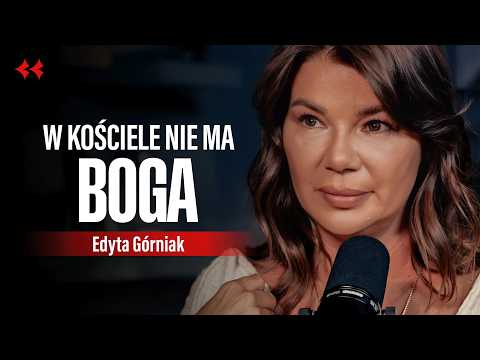
I am not who you think - Edyta Górniak on spirituality, betrayal and life after death
~103 min
Episode Brief·YouTube

I am not who you think - Edyta Górniak on spirituality, betrayal and life after death

Cyprian Majcher
Watch on YouTube Add to chat My bookmarks← All sources

TL;DR

The four things you'd lose by not watching

4 items

TL;DR

The four things you'd lose by not watching

4 items
1

Edyta Górniak claims to possess knowledge of the next 100 years and describes the present as one of the most critical tests for humanity in the history of the universe, emphasizing that energy follows attention and we co-create reality through our focus.

2

She reveals a traumatic childhood locked in a room for 9 years, which shaped her resilience, her later spiritual awakening, and her ability to find strength in silence and solitude.

3

After her ex-husband took all her assets when she left him, she rebuilt her life from zero, discovering that she could start over at any moment and that material possessions hold no real value.

4

She shares direct experiences of life after death, including a posthumous conversation with her father during a shamanic session and receiving 16 notebooks of spiritual transmissions that guide her path.

Protocols

Concrete recipes — what, when, how much, and why

6 items

Cultivate silence to access subtle truths

WhatDeliberately create periods of silence, free from distractions like phones, games, and media, to hear inner guidance and perceive the sacred subtle realms.
WhenDaily, as a consistent practice; especially when feeling scattered or overwhelmed by external stimuli.
DoseNot specified, but she implies regular, extended periods (she once did a multi-day silent retreat). She also deletes addictive apps like Tetris to protect silence.
For whomAnyone seeking deeper self-knowledge and spiritual connection, particularly those feeling addicted to scrolling or external validation.
WhyThe sacred and true knowledge reside in the subtle, quiet space within. Constant noise and distraction scatter attention and prevent access to this inner wisdom.
CaveatsSilence can be uncomfortable because it forces a confrontation with one's own fears and doubts. It requires discipline to maintain.

Górniak argues that the most profound spiritual realities are hidden in subtlety, not in loud, obvious phenomena. Society deliberately floods people with entertainment, social media, and fear-based news to keep them distracted and disconnected from their inner source. She herself noticed she was spending six hours playing Tetris on flights and immediately deleted the game, recognizing it as a form of control. She believes that only in silence can one truly meet oneself, acknowledge hidden fears, and begin the process of self-liberation. This practice is not about escapism but about reclaiming sovereignty over one's attention and energy. She contrasts it with the discomfort many feel when left alone with their thoughts, noting that this discomfort is precisely the gateway to growth.

Mechanism

Górniak explains that the modern world bombards us with stimuli designed to capture attention. When attention is dispersed, we cannot perceive the subtle frequencies where truth and divine connection exist. Silence allows the mind to settle, making it possible to receive insights, transmissions, and a direct sense of God. She frames this in terms of energy: distractions drain and scatter our electromagnetic field, while silence restores coherence.

Personal experience

She shares that as a child locked in a room for years, she learned to be with herself in silence, which later became a source of strength. During the COVID lockdowns, fans worried about her isolation, but she found two weeks alone effortless compared to nine years of childhood confinement. She also describes deleting Tetris after realizing it had power over her.

In this silence, which is very difficult to generate at this moment, it has become increasingly inaccessible and even exclusive. It is not within easy reach. Only then do I, as it were, select what I need to organize.

Also said
“It showed me that what is sacred is in the subtle space. It is hidden in the subtle space. That is why we have so many stimuli.”— Directly states the core insight: the sacred is in the subtle, and distractions are designed to hide it.
“I caught myself recently, I found some Tetris game and I can just play on a plane for 6 hours really. And then I got angry and decided, okay, I'm deleting it. It cannot be that some game has influence over me.”— Shows her applying the principle to a modern addiction, demonstrating self-discipline.

Cleanse spaces with sage and salt

WhatBurn sage (szałwia) and use salt to clear heavy or negative energy from rooms, especially hotel rooms or unfamiliar spaces.
WhenUpon entering a space that feels energetically heavy or after negative events; she does it in hotel rooms as a precaution.
DoseNot specified; use as needed until the energy feels lighter.
For whomAnyone sensitive to environmental energies or wanting to maintain a clean personal space.
WhySage and salt are natural substances that purify and neutralize dense, unwanted energies that may linger from previous occupants or events.
CaveatsNone mentioned; she presents it as a simple, accessible practice.

She mentions this practice in passing as part of her routine. When she travels, she often feels the residual energy in hotel rooms—sometimes heavy or disturbing—and uses sage to cleanse the space. She also recommends salt for the same purpose. This is not a complex ritual but a practical tool she employs to maintain her own energetic hygiene, which she considers essential given her sensitivity. She does not claim these are magical but rather natural aids that anyone can use.

Mechanism

Górniak does not delve into a detailed mechanism but implies that sage smoke and salt have inherent cleansing properties that interact with the electromagnetic or subtle energy field of a space. She uses them to 'reset' the energy to a neutral state.

Personal experience

She says she sometimes must cleanse hotel rooms because she feels the heavy energy and doesn't need to know what happened there; she just clears it.

Sometimes I have to cleanse hotel rooms I enter because I feel the energy is heavy. I don't know what happened there, I don't need to know, but I feel heavy energy. Salt really does cleanse very effectively. I recommend the same.

Trust the first emotionless impression when meeting someone

WhatWhen meeting a person, pay attention to the very first, split-second impression before the mind starts analyzing—this is the purest, most truthful information about them.
WhenUpon first meeting someone: handshake, eye contact, entering a room together.
DoseInstantaneous; the first 7 seconds or less.
For whomAnyone who wants to make better judgments about people, in business or personal life.
WhyThe initial impression is free from mental filters, biases, and social conditioning. It comes directly from your sensory and energetic perception.
CaveatsAfter that first moment, the mind kicks in with analysis, doubts, and social considerations, which can override the truth. One must learn to distinguish the pure signal from subsequent mental noise.

She elaborates that this ability is not supernatural but a natural human capacity that has been dulled by over-reliance on analytical thinking. She encourages people to practice noticing that first, wordless impression and to trust it over the subsequent mental chatter. She gives the example of a business meeting: you shake hands, sit down, and in that instant you already know whether this is a person you can trust or work with. Ignoring that signal often leads to wasted time and bad deals. This practice is part of reclaiming one's innate intuitive abilities, which she believes everyone possesses but few cultivate.

Mechanism

Górniak explains that humans are bioelectromagnetic beings. When we encounter another person, we sense their electromagnetic field before any words are exchanged. This first data is neutral and unfiltered. The mind then layers on interpretations based on appearance, status, and past experiences, which can distort the initial reading. By consciously noting that first feeling, we can access a more accurate assessment of the person's true nature and intentions.

Personal experience

She implies she uses this constantly, and it's how she navigates the entertainment industry, where people often present a false front.

Pure information is emotionless. That is, if we meet someone, we enter a room for a meeting, the first information that comes to us through a handshake, looking someone in the eye, or even just sitting down at the table with someone, is emotionless. This is the one that is the purest and most truthful.

Also said
“Then the mind kicks in, which analyzes in many ways different possibilities, circumstances. How should we understand this, and is it good? Maybe it will pay off, maybe it won't. Until we hear the mind, which is analytical and has this affliction, that first signal is what we truly feel.”— Clarifies the contrast between pure perception and mental interference.

Avoid ayahuasca and sacred plants

WhatDo not use ayahuasca or other psychoactive sacred plants due to the risk of entity attachment and loss of free will.
WhenNever, in her personal practice; she advises extreme caution for anyone considering them.
DoseN/A (avoidance).
For whomAnyone, but especially those without strong spiritual protection or who are in an unstable state.
WhyThese substances temporarily suspend the analytical mind and free will, creating a vulnerability window during which negative entities can attach, potentially causing severe psychological or spiritual harm.
CaveatsShe acknowledges that some people have healed through these plants, but she believes the risks are too high and that safer alternatives exist (therapy, prayer, inner work).

Górniak frames this warning within her broader understanding of the spiritual ecosystem. She believes there are countless non-physical beings, and not all are benevolent. The current popularity of plant medicine, in her view, often lacks adequate discernment and protection. She contrasts the plant path with the path of Christ, which she follows—a path of gradual, conscious awakening without surrendering one's will. She also warns against collective meditations and out-of-body practices for similar reasons: they can open doors to unwanted influences. Her stance is conservative, prioritizing spiritual safety over accelerated experiences.

Mechanism

The plants 'freeze' the brain's analytical functions, allowing perception to access non-ordinary realities. However, this also disables the will's protective function. In that state, various beings—both light and dark—can interact with the person. If the plant was grown or handled by someone with negative attachments, or if the setting is not pure, dark entities can attach to the individual. Once attached, these entities can influence behavior, leading to actions like suicide or violence, and may be extremely difficult to remove, even with exorcism.

Personal experience

She states she will never use ayahuasca, despite knowing people who do, because she believes she would be a prime target for demonic forces. She has heard of severe cases of harm.

I will never do this, even though they are here for us humans to use... because depending on the state one is in when taking such substances... the brain freezes for a moment and then with perception we read what is really in the universe... there is a very high risk that when our free will freezes for a moment, various entities can attach to us.

Also said
“I think I would be quite a catch for such demonic forces to take over me.”— Personalizes the risk, showing her self-awareness as a potential target.

Use the 'What would Christ do?' test for moral decisions

WhatWhen facing a moral dilemma or doubt, imagine Christ sitting with you in your kitchen, having coffee, and ask yourself what he would do or say in that situation.
WhenAnytime you are unsure about the right course of action or need to align with your highest values.
DoseA momentary mental exercise.
For whomAnyone, regardless of religious background, who resonates with the figure of Christ as an archetype of unconditional love and truth.
WhyChrist represents the purest, most loving consciousness most people can conceive of. Using him as a reference point bypasses ego and social conditioning, guiding you toward the most compassionate and truthful action.
CaveatsShe distinguishes this from religious dogma; it's about connecting with the essence of Christ's teachings, not church doctrine.

Górniak uses this method herself to stay on what she calls the path of Christ. She emphasizes that Christ did not want to be worshipped or adorned with gold; he wanted to free people from ignorance. She believes that if people genuinely asked themselves what Christ would do, they would not support corrupt institutions, judge others, or seek revenge. This practice is part of her personal devotion and her public teaching, offering a simple, accessible tool for ethical living without needing a priest or church.

Mechanism

By invoking the image of Christ, you tap into a high-vibrational archetype that exists in the collective consciousness. This raises your own frequency and aligns your decision-making with love rather than fear or ego. It's a form of intuitive moral compass calibration.

Personal experience

She says she often watches Mel Gibson's 'The Passion of the Christ' and each time understands more of Christ's words. She applies this test in her own life to ensure she acts in alignment with his example.

It is enough to invoke the figure of Christ, that we are in the kitchen, drinking coffee and think to ourselves: 'And what if this were Christ, what would he do in this situation?'

Also said
“Would Christ have gone to the mountains? No. Did Christ want to flaunt gold and command churches dripping with gold to be built for him? No.”— Illustrates the practical application: rejecting materialism and ostentation.

Speak aloud to deceased loved ones

WhatCommunicate with departed souls by speaking out loud, as they can hear spoken words more easily than thoughts or feelings.
WhenWhenever you feel the need to connect with a deceased person; she did it to release her father's spirit.
DoseAs needed; can be a one-time ritual or ongoing practice.
For whomAnyone grieving or seeking continued relationship with a deceased loved one.
WhySouls in the non-physical realm may not always perceive our unspoken thoughts and emotions, but spoken words carry a vibration they can receive. This allows for closure, forgiveness, and ongoing connection.
CaveatsShe advises doing it with proper reverence and sacred intention, not casually, to respect the boundaries between realms.

She shares a deeply personal story: after her father's death, she felt his presence and eventually, through a shamanic session, had a direct conversation with him where he apologized for her mother and promised to stay until she was safe. Years later, she consciously released him, telling him she was strong and he could move on. She emphasizes that this is not imagination but a real interaction across frequencies. She encourages others to speak to their departed loved ones, as it can bring profound healing and a sense of continued connection.

Mechanism

Górniak explains that after death, the soul changes frequency and exists in a different dimension. While they may be near, the physical senses cannot perceive them. However, sound vibration (spoken words) can bridge the gap because it carries intention and energy that transcends the physical. She contrasts this with thoughts, which may be too subtle for them to pick up. By speaking aloud, you create a clear signal they can receive.

Personal experience

She recounts the shamanic session where her father held her hand, apologized, and said he would stay until she was secure. Later, she told him she was okay and released him, feeling a deep cleansing.

I think souls do not always have the ability to hear our feelings and thoughts, but when we speak aloud, they have the ability to hear it. Only it must be done in the proper way, with the proper gravity, so that it does not violate those interspaces.

Also said
“I escorted my father and said that we can always hear each other, but simply... I am already grounded, that I am strong, that you can be at peace about me... and that I will no longer cry for you.”— Shows the practical application of releasing a soul with love and closure.

What's new

Personal practice updates, fresh positions, predictions

5 items

Knowledge of the next 100 years and the current pivotal era

Edyta Górniak states she has knowledge of what the next 100 years will look like and that the present moment is one of the most important tests for humanity in the history of the universe.

Why this matters: She claims access to a grand, specific timeline of the future while refusing to disclose the source, framing current global events as a spiritual test rather than mere political or social crises.

Background

Mainstream discourse treats the future as uncertain and shaped by material forces. Górniak counters that predetermined scenarios exist but can be altered by human free will and collective attention.

Górniak asserts that she possesses detailed knowledge of the next century, though she cannot reveal how she obtained it. She describes the current era as a critical juncture—a test for humanity to remember its divine origin and purpose. According to her, multiple potential futures exist simultaneously in the quantum field, and which one materializes depends on where humanity directs its collective attention. She warns that distractions, fear-based media, and negative emotions feed destructive timelines, while conscious focus on love, truth, and unity can activate a more harmonious reality. The key mechanism is the quantum law that energy follows attention: whatever we think, speak, and write about intensifies and eventually manifests. Thus, she urges people to stop obsessing over wars and atrocities and instead envision the world they want to create. She believes that if enough individuals understand this responsibility, the positive scenario will prevail. This perspective reframes global chaos not as random suffering but as a necessary contrast to awaken humanity to its creative power.

Personal experience

Górniak says she knew about the pandemic scenario before it unfolded and felt a strong instinct to 'save people' by speaking out, even at the cost of public ridicule. She accepted the backlash because she felt she would be betraying her purpose if she remained silent.

I have knowledge of what the next 100 years are to look like. I cannot say where I have this knowledge from, but when these times of shock and stoppage came for people, I knew that this is a thick scenario composed of many threads.

Also said
“This is one of the most important in the history of the universe. according to the records, according to the transmissions, this is one of the most important tests for man, for humanity, so that we remember what everything arises from.”— Emphasizes the cosmic scale of the current moment, beyond any earthly crisis.
“Energy, according to the law of quantum physics, on which the existence and functioning of the universe is based, always follows our attention. That is why there are so many distractions, that is why there are so many negative-fear stimuli, because when we think, talk, speak, whisper, write about it, read about it, we direct our attention there, that is, we power the materialization of the process.”— Explains the mechanism by which collective focus shapes reality, linking quantum physics to spiritual practice.

The inverted cross sign in Catholic mass

Górniak points out that the traditional sign of the cross made by priests during mass actually traces an inverted cross, and she describes the correct, esoteric way to make the sign.

Why this matters: This is a direct, public critique of a core Catholic ritual, claiming it is satanic in its current form and that most priests are either ignorant or complicit.

Background

The sign of the cross is a fundamental gesture in Catholic liturgy, typically performed from forehead to chest, then left to right shoulder. Górniak argues this motion draws an upside-down cross, a symbol associated with the Antichrist.

Górniak explains that when a priest begins mass with the sign of the cross, the movement from forehead to chest and then shoulder to shoulder creates an inverted cross if you trace the lines. She contrasts this with what she calls the correct method: starting at the third eye (forehead), moving down to below the navel (the sacred center of creation), and then across. This, she says, forms a proper upright cross. She expresses shock that so few priests perform it correctly and questions their sense of responsibility for carrying truth. This observation is part of her broader critique that the institutional Church has distorted Christ's teachings, keeping people in spiritual bondage rather than liberating them. She implies that the inverted cross is not a mistake but a deliberate inversion of sacred symbols, consistent with other forms of corruption she perceives in the Church.

Personal experience

She says she used to make the sign of the cross the way priests showed her until she learned the truth. Now she does it the 'correct' way.

When the mass begins, the priest begins with the sign of the cross. Right? Do you remember? You were probably in church some time ago and what does the priest do and shows in the name of the father and of the son and of the holy spirit, right? Now if we drew lines along this gesture an inverted cross.

Also said
“The correct way is this: here we have the third eye, then we go to the navel, that is, the place that is sacred... and only then here do we have the correct cross.”— Provides the alternative, esoteric method she endorses.
“How many priests over all these years have I seen do this? Unfortunately, the majority.”— Quantifies the prevalence of the 'error' according to her observation.

Receiving 16 notebooks of spiritual transmissions

Górniak has filled 16 thick notebooks with messages she receives from a higher source, which guide her personal evolution and sometimes contain messages for others.

Why this matters: She claims ongoing, direct revelation that produces a substantial written record, yet she keeps the content mostly private, hinting at a structured, long-term spiritual curriculum.

Background

Many spiritual teachers speak of intuition or occasional downloads. Górniak describes a systematic, voluminous reception of written material over years, which she treats as sacred and not fully shareable.

Górniak describes reaching a point where she began receiving 'transmissions'—information that would come to her, which she initially didn't understand but wrote down. Over time, she realized these were messages for her spiritual development, preparing her for upcoming stages. She now has 16 thick notebooks filled with these writings. Some messages are meant for other people, and she passes them on when appropriate, but most are for her own preparation. She emphasizes that she cannot explain the mechanism of reception, and that trying to explain it to someone who hasn't experienced it would be futile. This practice is central to her sense of purpose and her confidence in her knowledge about life, death, and the future. It also underscores her claim that she doesn't merely believe in spiritual truths—she knows them through direct experience.

Personal experience

She says she didn't understand the writings at first, but later, looking back, she saw how they prepared her for specific life stages. She treats the notebooks as sacred and does not share them publicly.

I have 16 thick notebooks filled. These are contents sometimes directed to people. then I pass them on, but most often for me, for those my next stages, next stages for which I must prepare and what I should do to prepare.

Also said
“That was the moment when I didn't understand them at first. Of course, in the sense I wrote down these contents, but I didn't understand that they were transmissions.”— Shows the gradual recognition of what was happening.

The danger of ayahuasca and sacred plants

Górniak warns against using ayahuasca and other psychoactive plants because they temporarily suspend free will, leaving the user vulnerable to possession by negative entities.

Why this matters: While many spiritual circles promote plant medicines as tools for awakening, she takes a firm stance against them, citing a specific metaphysical risk that she believes even exorcism cannot always fix.

Background

Ayahuasca and similar substances are often framed as sacred medicines that expand consciousness. Górniak acknowledges their potential for healing but argues the risks outweigh the benefits for most people.

Górniak explains that these substances work by temporarily 'freezing' the analytical mind, allowing perception to access non-physical realities. However, this also suspends free will, creating a window during which negative entities can attach to the person. She says there are many types of beings, both light and dark, and if the plant was grown in the wrong place, transported by someone with 'attachments,' or used in an unprotected setting, the risk of possession is severe. She has heard of cases where people committed suicide or violence after such experiences and had no memory of why. She personally would never use them, believing she would be a prime target for demonic forces. She contrasts this with safer paths like psychotherapy, prayer, or connecting with one's guardian angel. While she doesn't condemn those who use them for healing, she insists one must be extremely cautious and prepared.

Personal experience

She states unequivocally: 'I will never do this' (Ja tego nigdy nie zrobię), despite knowing people who have. She feels her own energy would attract dark forces.

When one takes such substances... the brain freezes for a moment and then with perception we read what is really in the universe... there is a very high risk that when our free will freezes for a moment, various entities can attach to us, for which perhaps even exorcisms are not enough.

Also said
“I think I would be quite a catch for such demonic forces to take over me.”— Reveals her personal sense of being a high-value target for negative entities.
“I have heard of such cases, that often also in such moments there are people who can commit a very forbidden act even suicide or even killing someone and really these people after time themselves don't know from what place in general this situation happened to them.”— Cites extreme real-world consequences she attributes to entity attachment during plant ceremonies.

Ability to see people's true intentions and hear their thoughts

Górniak claims she can close her eyes and see who has gossiped or wished her ill, and in face-to-face interactions she sometimes hears what the other person is thinking alongside their spoken words.

Why this matters: This goes beyond intuition into claimed clairvoyance, and she admits it is often burdensome rather than empowering.

Background

Many people speak of 'reading energy' or having strong intuition. Górniak describes a specific, visual and auditory phenomenon that gives her direct knowledge of others' hidden intentions.

She says this ability developed over time through her spiritual education. When she feels discomfort, she can close her eyes and see the person who spoke negatively about her, along with their intentions. In person, someone may speak kindly while she simultaneously hears their true, often contradictory thoughts. She finds this difficult because she cannot always confront them without jeopardizing professional relationships (e.g., with a film crew or musicians). She must then process the burden of knowing the truth while maintaining a facade. She notes that most people who have had impure intentions toward her face very difficult karmic lessons, and she now feels compassion rather than satisfaction. She attributes such behavior to fear, lack of love, or a sense of inferiority, and her response is to send them intentions of safety and love so they no longer need to attack.

Personal experience

She gives the example of someone entering her dressing room, speaking nicely, while she hears their real thoughts. She says it's 'not easy' and she sometimes can't react immediately.

I can close my eyes and I see the person who wished ill, who whispered, who gossiped, who says one thing and has other intentions. And this is, contrary to appearances, not at all comfortable.

Also said
“Someone enters the dressing room and I and he says something to me, and I hear in parallel what he is thinking. This is very, this is difficult.”— Illustrates the real-time, dual-channel perception she experiences.

Recommendations

Products, supplements, and tools mentioned in the episode

4 items

Sage (szałwia) for energy cleansing

Tool

Górniak uses sage to cleanse heavy energy from hotel rooms and recommends it as a natural purification tool.

She mentions that when she enters a hotel room and feels dense or uncomfortable energy, she burns sage to clear the space. She doesn't need to know what happened there; the sage neutralizes the energy. She also recommends salt for the same purpose. These are simple, accessible tools for maintaining energetic hygiene, especially for sensitive people.

vs alternatives

Compared to other cleansing methods like rituals or prayers, sage is quick, natural, and doesn't require special training.

Personal experience

She personally uses sage in hotel rooms and finds it effective.

Sometimes I have to cleanse hotel rooms I enter because I feel the energy is heavy. ... Salt really does cleanse very effectively. I recommend the same.

Find Sage

Salt for energy cleansing

Tool

Along with sage, Górniak recommends salt as a substance that purifies heavy energy in spaces.

She mentions salt in the same breath as sage, indicating it's another natural cleanser she uses and recommends. No further detail is given, but it's a common folk practice for absorbing negative energy.

vs alternatives

Salt is even more accessible than sage and can be placed in corners or used in cleaning.

Personal experience

She uses it herself.

Salt really does cleanse very effectively. I recommend the same.

Find Salt

Two specific churches in Częstochowa (not Jasna Góra)

Service

Górniak recommends two smaller churches in Częstochowa, about a kilometer from Jasna Góra, as places of exceptionally pure energy and genuine Holy Spirit presence.

She distinguishes these from the famous Jasna Góra monastery. In these two churches—one older, one newer—she always feels a unique purity. The priests speak with such anointing that she has no doubt the Holy Spirit is present. She describes metaphysical phenomena like extraordinary light appearing when the chalice is raised. She sometimes arranges through her friend Marcin Najman to have the church opened just for her, so she can pray alone. She presents these as rare examples of uncorrupted sacred spaces within a largely compromised institution.

vs alternatives

In contrast to most churches she finds energetically 'bloodied' and commercialized, these two retain authentic spiritual power.

Personal experience

She visits these churches when she can, sometimes alone, and has a personal connection to them. She asks Marcin Najman to arrange private access.

There are such places, for example in Częstochowa there are two churches and it's not the one on Jasna Góra, but there are two smaller ones, in which I always feel a uniqueness. There is great purity there... where the priests who speak to the people speak with such anointing that there is no doubt that the Holy Spirit is present.

Also said
“Usually something happens by the windows, some incredible light comes in, when the chalice is raised, suddenly light, well there are simply such metaphysical, beautiful encounters.”— Describes the tangible spiritual phenomena she witnesses there.
Find Two

Film 'The Passion' (The Passion of the Christ) by Mel Gibson

Book

Górniak watches this film repeatedly and finds that each viewing reveals deeper layers of meaning in Christ's words and actions.

She uses the film as a meditative tool to understand Christ's teachings more profoundly. She says that over the years, she has rewatched it many times and each time grasps something new from the same simple phrases. She recommends it as a way to internalize the essence of Christ's message, which she believes is often distorted by religious institutions. The film helps her stay connected to the purity of his example.

vs alternatives

Unlike reading scripture or attending church, the film provides an immersive, emotional experience that she finds uniquely effective for spiritual insight.

Personal experience

She watches it periodically and experiences progressive deepening of understanding. She says, 'Just last year I think, only now do I understand what he is saying.'

I sometimes watch Mel Gibson's The Passion and I have the impression that every so often I understand more from those individual same words and transmissions of Christ.

Also said
“Once it seemed to me that I understood, then after 10 years I only understood, then last year I think, only now do I understand what he is saying. And so it is every time, that is, there are very deep, simple contents there.”— Highlights the layered, timeless wisdom she extracts from repeated viewings.
Find Film

Notable quotes

Lines worth pulling out — contrarian, specific, or perfectly phrased

5 items
I have knowledge of what the next 100 years are to look like. I cannot say where I have this knowledge from.
A bold, unverifiable claim that sets the tone for her entire spiritual authority.
It is impossible to feel lonely when you understand and feel and know and see what I know and see and feel and hear.
Encapsulates her state of absolute inner fullness and connection that transcends ordinary loneliness.
The Kingdom of God is within you. You do not need an intermediary, Mr. Priest, who will take money and tell you whether you can be absolved or not.
A direct, uncompromising rejection of priestly authority, quoting Christ to dismantle the institutional Church's power.
I would die for the truth. I am, I walk in the footsteps, in the traces of Christ for the truth. I will never stand against the truth.
Declares her ultimate commitment to truth, framing her public controversies as a form of spiritual martyrdom.
If Christ came now, they would also beat him to death. And the worst thing is that 2000 years have passed, and people still have so many doubts and so much cunning in them.
A sobering assessment of humanity's spiritual stagnation, implying that the same forces that killed Christ still dominate.

Sign in to share feedback

Tell us if this brief hit the mark or missed it — feedback feeds back into the next iteration of the prompt.

Topics covered

public-image-vs-real-selfspiritual-knowledge-of-futurequantum-physics-and-manifestationfree-will-and-collective-attentionchildhood-trauma-and-resiliencefather-longing-and-afterlife-communicationbetrayal-by-ex-husbandmotherhood-and-rebuilding-lifespiritual-transmissions-and-notebooksclairvoyance-and-reading-intentionsdangers-of-ayahuasca-and-sacred-plantssilence-as-spiritual-practicecritique-of-catholic-churchinverted-cross-signchrist-consciousness-as-moral-compassreincarnation-and-immortality-of-soulnon-attachment-to-material-possessionsenergy-cleansing-with-sage-and-saltawakening-as-painful-processend-of-old-world-systems
Free account

Make this library yours

Reading is free for everyone. A free account adds the personal layer: save protocols, follow experts, and see how the other experts weigh in on this same topic.

Create a free accountSign in

Where the experts disagree — weekly

One email a week: the sharpest new disagreements and protocols from the library. No spam, unsubscribe anytime.

Educational summary of the cited expert source — not medical advice. Open the source recording linked above and consult a qualified physician before acting on any protocol.