UNFUCG
DashboardSearchChatBookmarksNotificationsActivityPremiumProfile
?
Home
Search
Chat
Saved
Profile
Episode
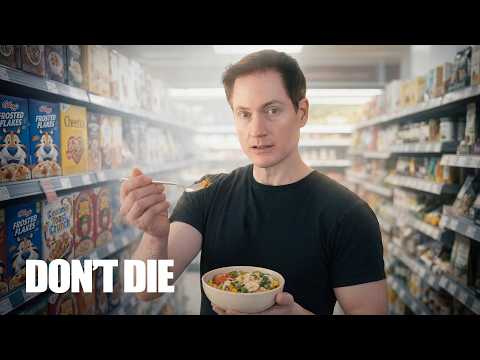
Most Food Is Toxic... So I Fixed It
~11 min
Episode Brief·YouTube

Most Food Is Toxic... So I Fixed It

Bryan Johnson
Watch on YouTube Add to chat My bookmarks← All sources

TL;DR

The four things you'd lose by not watching

4 items

TL;DR

The four things you'd lose by not watching

4 items
1

Bryan Johnson, after concluding the US food system is toxically designed to be addictive, created Blueprint to offer a complete, scientifically-optimized diet centered on two core meals: Super Veggie and Nutty Pudding.

2

Blueprint’s meals are built from a master list of the top-performing foods according to nutritional science, combining whole ingredients to cover the majority of a person’s daily nutrient needs at low cost.

3

To close the gap for the other half of daily calories that people previously sourced from supermarkets, Blueprint launched a fresh meal delivery service (Blue Apron Fresh) that sources from local restaurants while enforcing purity standards.

4

Johnson frames the venture as a long-term mission to build the infrastructure for health, prioritizing well-being over profit, and went to extreme lengths—even searching for toxin-free packaging that doesn’t yet exist.

Protocols

Concrete recipes — what, when, how much, and why

4 items

Super Veggie Meal

WhatA savory daily meal base consisting of black lentils, garlic, ginger, apple cider vinegar, cumin, shiitake mushrooms, broccoli, and cauliflower, designed to be a nutrient-dense, single-ingredient whole-food foundation.
WhenAs a core daily meal, typically eaten alone or as part of the Blueprint system.
DoseOne serving per day as the main savory dish; recipe components are single whole ingredients combined in unspecified proportions.
For whomBryan Johnson and anyone adopting the Blueprint diet.
WhyBuilt from the scientific master list of top-performing foods to deliver a combination of carbohydrates, fats, protein, dietary fiber, and micronutrients that solve for the majority of a person’s needs, while being cost-efficient.
CaveatsIntended to be part of a complete dietary system; alone it may not cover all calorie needs without the complementary Nutty Pudding and healthy fats.

The creation of Super Veggie reflects Johnson’s rejection of dietary labels like keto or vegan in favor of pure evidence. The team reviewed all available nutrition science, ranked foods by health outcomes, and then combined top performers into an edible dish. The result is a recipe that uses only real foods, no processed additives, and is easy to assemble. Johnson started eating this alongside Nutty Pudding as his sole meals, finding it both nutritionally comprehensive and cheaper than most diets because it relies on bulk ingredients like lentils and frozen vegetables. The dish is designed to be modifiable (spices can vary) while maintaining the nutritional core.

Mechanism

Black lentils provide slowly digestible protein and fiber, managing glycemic response; cruciferous vegetables (broccoli, cauliflower) supply sulforaphane and antioxidants that activate detoxification pathways; shiitake mushrooms contribute beta-glucans for immune modulation; garlic and ginger offer anti-inflammatory compounds; apple cider vinegar is often cited for improving post-meal insulin sensitivity. The synergy creates a low-calorie-density, high-satiety meal that supports stable energy and cellular health.

Personal experience

Johnson personally lived on only Super Veggie and Nutty Pudding in the early days of Blueprint, calling it ‘probably one of the most cost-efficient ways of eating.’

We looked at the scientific evidence behind the best performing foods according to all the science that's been done around nutrition, and we just said, 'Okay, let's take the top performer and then number two, number three.' And we just said, 'What are those foods?' We had a master list.

Also said
“Both super veggie and nutty pudding are designed to have a combination of carbohydrates, fats, protein, dietary fiber, and a bunch of other nutrients that basically solve for the majority of a person's needs.”— Summarizes the nutritional design intent.

Nutty Pudding

WhatA daily sweet meal or snack made from macadamia nut milk (or any nut milk), macadamia nuts, hemp seeds, flax seeds, and walnuts, crafted to be a simple whole-food blend.
WhenAs the complementary daily meal to Super Veggie, usually consumed at breakfast or as a dessert.
DoseOne serving per day; ingredient proportions not specified, intended to be flexible.
For whomBryan Johnson and anyone on the Blueprint protocol.
WhySelected from the evidence-based master list of best-performing foods to supply healthy fats, protein, fiber, and essential fatty acids (omega-3s from flax and walnuts) in a palatable, uncomplicated form.
CaveatsNut allergies would be a contraindication; otherwise no notable caveats mentioned.

Like Super Veggie, Nutty Pudding emerged from ranking foods scientifically and prioritizing those with the highest nutrient density and lowest toxicity. The recipe was designed to be so straightforward that anyone can make it at home with basic kitchen tools. Johnson’s team emphasized that no special superfoods are required—just ordinary nuts and seeds. The pudding represents the ‘sweet things’ side of the Blueprint spectrum, proving that a health-optimized diet can still include pleasurable flavors. Testimonial from users highlights that after eating Nutty Pudding, they were less hungry throughout the day, attributing this to its satiating fat and fiber content.

Mechanism

Macadamia nuts and nut milk provide monounsaturated fats that support cardiovascular health and stable energy. Hemp seeds contribute complete plant protein and gamma-linolenic acid, flax seeds are rich in lignans and alpha-linolenic acid (anti-inflammatory), and walnuts add polyphenols and omega-3s. The soft texture and mild sweetness help satisfy cravings without refined sugar, reducing the desire for hyperpalatable processed snacks.

Personal experience

Johnson began with only Nutty Pudding and Super Veggie, confirming the combination sustained him. Early adopters reported reduced snacking urges.

How can we now turn these ingredients into edible things? Sweet things here, savory things here, and that's how you get nutty pudding and super veggie.

Also said
“As far as his nutty pudding goes, we use macadamia nut milk or any type of nut milk, macadamia nuts, hemp seeds, flax seeds, walnuts. There's nothing about this. This is the easiest, most uncomplicated way of eating.”— Highlights the deliberate simplicity of the recipe.

Blueprint Fresh Meal Delivery

WhatUse the Blue Apron Fresh service to get locally-prepared meals delivered that fill the remaining half of your daily calorie needs after consuming Blueprint’s core oil, proteins, and collagen.
WhenFor the other half of daily calories, typically lunch or dinner if the core meals are already consumed.
DoseDaily as needed to meet total caloric intake; service matches preferences.
For whomAnyone already using Blueprint’s foundational products (EVOO, proteins) who wants a fully managed diet.
WhyWithout this, people would have to go to the supermarket for half their calories, re-entering the toxic food environment and undermining the benefits of the Blueprint core.
CaveatsThe food business is low-margin; the service may not be widely available or as profitable, but it is mission-driven.

The insight was that even committed Blueprint users fell back on standard grocery shopping for meals outside the main two dishes. This exposed them to all the same predatory design—colorful packaging, engineered hyperpalatability, misleading health claims. To solve this, the team partnered with local restaurants to create fresh meals meeting Blueprint’s ingredient standards (cleanest almond milk, purest protein powder, everything from scratch). They also tackled packaging, eventually settling on custom eco-friendly fiber paper trays after finding no perfect toxin-free solution. The system aims to eliminate every decision point where a user could be tempted off track, creating a seamless, end-to-end dietary environment.

Personal experience

Early users are shown receiving and enjoying the meals, with one stating ‘Today I'm feeling pretty good’ after transitioning.

We did this because people would get half their calories from our extra virgin olive oil, proteins, collagen peptides, but then the other half their calories they had to go out in the world to the supermarket. And then in doing that, you're exposed to all the same problems.

Also said
“When we were getting this dish put together, they specifically wanted us to use the best almond milk that was possible in the market. As far as the protein powder, which is the cleanest out available, make everything from scratch, and it was a hit.”— Demonstrates the ingredient standards applied to the meal delivery.

Whole-Single-Ingredient Principle

WhatBuild all meals around single, whole foods (lentils, vegetables, nuts, seeds) rather than processed composites, maximizing nutrient density and eliminating hidden additives.
WhenApplies to all meal planning and grocery shopping.
DoseOngoing dietary habit.
For whomAnyone trying to escape the toxic food environment.
WhySingle-ingredient foods are transparent, harder to manipulate, and allow accurate tracking of what enters the body, aligning with the evidence-based, trust-no-brand philosophy.
CaveatsRequires more preparation but is cost-efficient.

It's probably one of the most cost-efficient ways of eating because they're single whole ingredients that you're primarily using.

What's new

Personal practice updates, fresh positions, predictions

4 items

food-system-realization

Bryan Johnson personally concluded that the US food system is engineered to be addictive and that no existing company can be trusted, forcing him to create his own food company from scratch.

Why this matters: This frames the entire Blueprint venture as a necessary rebellion against a predatory industry, not just a wellness startup.

Background

The mainstream narrative often places responsibility on the individual consumer for healthy choices, ignoring systemic engineering of cravings. Johnson pushes back, asserting that the environment is rigged.

Johnson describes how over 40 years, Americans have been exposed to energy-dense, highly palatable, ultra-processed foods that trigger addiction signs—loss of control, intense cravings, continued use despite harm. He recounts personally walking into a grocery store, trying to find a healthy cookie, and encountering deceptive labels like “unbleached enriched wheat.” He argues that companies use science to craft the perfect fat-sugar-salt combinations, designed to exploit unconscious instincts, and that even CEOs of these companies can’t eat their own products. The realization that no brand tests adequately or tells the truth led him to the position that the only safe option was to build an alternative himself, even if it meant low margins and an uncertain future.

Personal experience

Johnson shares his own frustration of not being able to find a single trustworthy item in a supermarket, demonstrating that even an informed, motivated consumer is prey to the system.

I discovered the food system is toxic and most people feel trapped.

Also said
“The companies knowingly use science to create the most addictive products possible.”— Capsules the deliberate engineering behind food addiction.
“When you walk into a grocery store, they are predator and you are prey.”— Illustrates his view of the fundamental power imbalance.

trust-deficit-in-food-brands

Johnson states that no food company can be trusted because they do not test products properly and/or make false claims, leading him to replace all external food sources.

Why this matters: It’s a blanket indictment of the entire food industry, not a critique of a few bad actors.

Background

Typically consumers assume that labeling claims like “natural” or “healthy” are regulated and meaningful. Johnson’s position is that these are marketing ploys masking processed ingredients.

During his investigation, Johnson found that even when brands make health-oriented claims, they often fail to back them up with rigorous testing. The language on packaging is designed to deceive both conscious and unconscious decision-making—colors, fonts, words are all optimized to trigger purchase. This led him to reject the idea that any existing brand could serve as a reliable partner; instead, he would have to source ingredients himself, verify purity, and manufacture products from scratch. The consequence is a closed system where Blueprint controls the entire supply chain from ingredient selection to final packaging.

Personal experience

As he shopped the aisles, he called out products: “This is not it. Yeah, unbleached enriched wheat.” The direct experience reinforced the distrust.

No company can be trusted because they don't test and or they say things that are not true.

Also said
“Oftentimes, many of these forces you're not even aware of. The colors you see, and the design on the packaging, the words they use, it's a challenge to think consciously and unconsciously.”— Elaborates on the depth of manipulation in store environments.

packaging-toxin-search

Blueprint attempted to find packaging that contained zero toxins but discovered no manufacturer produces a completely clean product, forcing them to accept the best available option after an exhaustive search.

Why this matters: Demonstrates the extreme lengths the company goes to for purity and how even basic infrastructure is deficient.

Background

Standard food packaging often contains plastics, coatings, or inks that can leach chemicals; most consumers and companies accept this as unavoidable.

The team did a deep dive into packaging options globally, evaluating materials for any potential toxin transfer. They found that no supplier could meet an absolute zero-toxin standard. The final choice was eco-friendly fiber paper trays developed specifically for Blueprint, which they believe are the best in the world but still not perfect. This episode highlights the broader problem: even a mission-driven, well-funded effort cannot fully escape the chemical reality of modern manufacturing. Johnson frames this as a continuous improvement effort, not a solved problem.

We did a deep dive to try to find the perfect packaging that had no toxins whatsoever. We couldn't find it.

Also said
“We've gone to the ends of the earth to look at every possible option. And what you see is I think the best in the world.”— Confirms the global scope of the search and the pragmatic acceptance of ‘best available’.

health-infrastructure-mission

Johnson envisions Blueprint becoming the foundational infrastructure for health that future generations will consider indispensable, even if the business barely survives financially.

Why this matters: It’s a long-term, almost utopian vision explicitly placed above profit, which is rare for a food venture.

Background

Most food startups aim for rapid growth and exit; Blueprint is framed as a generations-spanning project.

Johnson acknowledges that food is a very low-margin business and that he could make far more money elsewhere by exploiting addiction. However, the goal is to build a system that prioritizes user well-being, creating a reference model for how to feed humans optimally. He openly admits the idea might fail and that it is “intensely complicated,” but declares it the right fight. The team sees itself as a beacon of hope in a dim world, hoping that in 100 years people will look back and wonder how we ever lived without something like Blueprint.

I wouldn't do this if it was for the money. As an entrepreneur, there's a hundred other businesses I would build if I was interested in money alone. Much easier to make money off of addictions.

Also said
“What does it mean to try to prioritize someone's well-being above making money? And so, that's the infrastructure we're trying to build.”— Contrasts the standard financial motive with the mission.
“If it's the case that people of the 25th century do point back and say we like those guys. They were a beacon of hope and a bright light in a dim world. We could be those people.”— Frames the ambition in a multi-century timeframe.
Disclosed sponsorships3speaker disclosed

Blueprint Super Veggie (recipe/kit)

Product Sponsored · disclosed

This is the savory half of the Blueprint diet, based on a scientific ranking of foods. It is intended as a core daily meal.

DisclosureBryan Johnson is the founder of Blueprint, which produces and sells the ingredients/meal kits for this dish.

The dish was created after reviewing the entire nutrition literature to pick the top performing foods. It consists only of whole foods—black lentils, broccoli, cauliflower, shiitake mushrooms, garlic, ginger, cumin, and apple cider vinegar. The recipe is designed to be easily replicated at home, using standard grocery items, and is promoted as both the healthiest and most cost-effective way to eat. Blueprint offers pre-portioned ingredients or meal delivery built around this dish.

vs alternatives

Unlike most meal kits or diet plans that rely on processed sauces or proprietary blends, this is purely whole foods with no additives. Compared to a standard American lunch (sandwich, chips, soda), it provides a dramatically higher nutrient-to-calorie ratio.

Personal experience

Bryan Johnson ate this daily during the early phase of Blueprint, saying it’s one of the most cost-efficient ways of eating.

For the super veggies, we start with a black lentil base.

Also said
“Both super veggie and nutty pudding are designed to have a combination of carbohydrates, fats, protein, dietary fiber, and a bunch of other nutrients that basically solve for the majority of a person's needs.”— Reinforces the nutritional completeness claim.
Find Blueprint

Blueprint Extra Virgin Olive Oil/Collagen/Protein

Product Sponsored · disclosed

These are the products that should supply half of daily calories, serving as the metabolic foundation before any solid meals.

DisclosureBlueprint sells these supplements as part of its foundational calorie system.

Johnson explains that people previously got half their calories from his EVOO, proteins, and collagen, and the other half from the supermarket—exposing them to the toxic food environment. To close that gap, the company now offers a meal delivery service, but the foundational products remain for those who prefer to prepare their own food. The oil is claimed to be the highest purity available, and the protein powder is described as the cleanest on the market.

vs alternatives

Compared to standard supermarket EVOO (often cut with lower-grade oils) and protein powders with fillers, Blueprint’s versions are positioned as rigorously tested and purer.

Half their calories from our extra virgin olive oil, proteins, collagen peptides.

Also said
“You're trying to find the highest purity, potency, and quality of the ingredient, and also be affordable.”— States the dual goal of purity and affordability.
Find Blueprint

Blue Apron Fresh (Blueprint meal delivery)

Service Sponsored · disclosed

A fresh meal delivery service that provides the remaining half of daily calories for Blueprint users, built to the same ingredient standards and delivered in custom low-toxin packaging.

DisclosureThis is a service offered by Blueprint to deliver fresh meals from local restaurants.

Recognizing that even committed users had to visit supermarkets, the team built a delivery service using local restaurants that follow Blueprint’s strict sourcing rules—cleanest almond milk, purest protein, meals made from scratch. They also invested heavily in finding packaging with minimal toxins, settling on eco-friendly fiber paper trays after a global search. The service is framed not as a convenience but as a necessary armor against the predatory food environment. Johnson admits it’s a low-margin, complex endeavor done purely for the mission.

Personal experience

Video shows users receiving and enjoying the meals, with one stating, ‘Today I'm feeling pretty good.’

Blue Apron Fresh is the meal delivery service. It comes straight to your door, and it's made by local restaurants in the area, and you get to choose the fresh food that you're able to get based upon your preferences for your diet.

Also said
“We've gone to the ends of the earth to look at every possible option. And what you see is I think the best in the world.”— Reinforces the extreme effort behind the packaging and overall quality.
Find Blue

Notable quotes

Lines worth pulling out — contrarian, specific, or perfectly phrased

5 items
I discovered the food system is toxic and most people feel trapped.
Concise, personal indictment of the entire food environment; the emotional core of the Blueprint origin story.
I'm not carnivore, I'm not vegan, I'm not vegetarian, I'm not paleo, I'm not keto. I don't care. I just want to look at the evidence and say, you take a given thing, you put it in the body, what happens?
Explicitly rejects all dietary labels in favor of a pure evidence-first approach, which is the philosophical backbone of the company.
We did a deep dive to try to find the perfect packaging that had no toxins whatsoever. We couldn't find it.
Reveals the practical impossibility of escaping industrial toxins, even with unlimited effort, and underscores the systemic nature of the problem.
No company can be trusted because they don't test and or they say things that are not true.
Sweeping statement that justifies building an entirely new food infrastructure from scratch.
If it's the case that people of the 25th century do point back and say we like those guys. They were a beacon of hope and a bright light in a dim world. We could be those people.
Elevates a diet company to a multi-century civilizational mission, capturing the grandiose yet sincere vision.

Sign in to share feedback

Tell us if this brief hit the mark or missed it — feedback feeds back into the next iteration of the prompt.

Topics covered

food-system-toxicityultra-processed-foodsfood-addictionevidence-based-nutritionblueprint-dietsuper-veggienutty-puddingmeal-deliverypackaging-toxinshealth-infrastructureprofit-vs-wellbeingwhole-food-dietgrocery-store-manipulationconsumer-trustlongevity
Free account

Make this library yours

Reading is free for everyone. A free account adds the personal layer: save protocols, follow experts, and see how the other experts weigh in on this same topic.

Create a free accountSign in

Where the experts disagree — weekly

One email a week: the sharpest new disagreements and protocols from the library. No spam, unsubscribe anytime.

Educational summary of the cited expert source — not medical advice. Open the source recording linked above and consult a qualified physician before acting on any protocol.