UNFUCG
DashboardSearchChatBookmarksNotificationsActivityPremiumProfile
?
Home
Search
Chat
Saved
Profile
Episode
Plant Medicine for Menopause: What Science and Ancient Healing Say Actually Works
~94 min
Episode Brief·YouTube

Plant Medicine for Menopause: What Science and Ancient Healing Say Actually Works

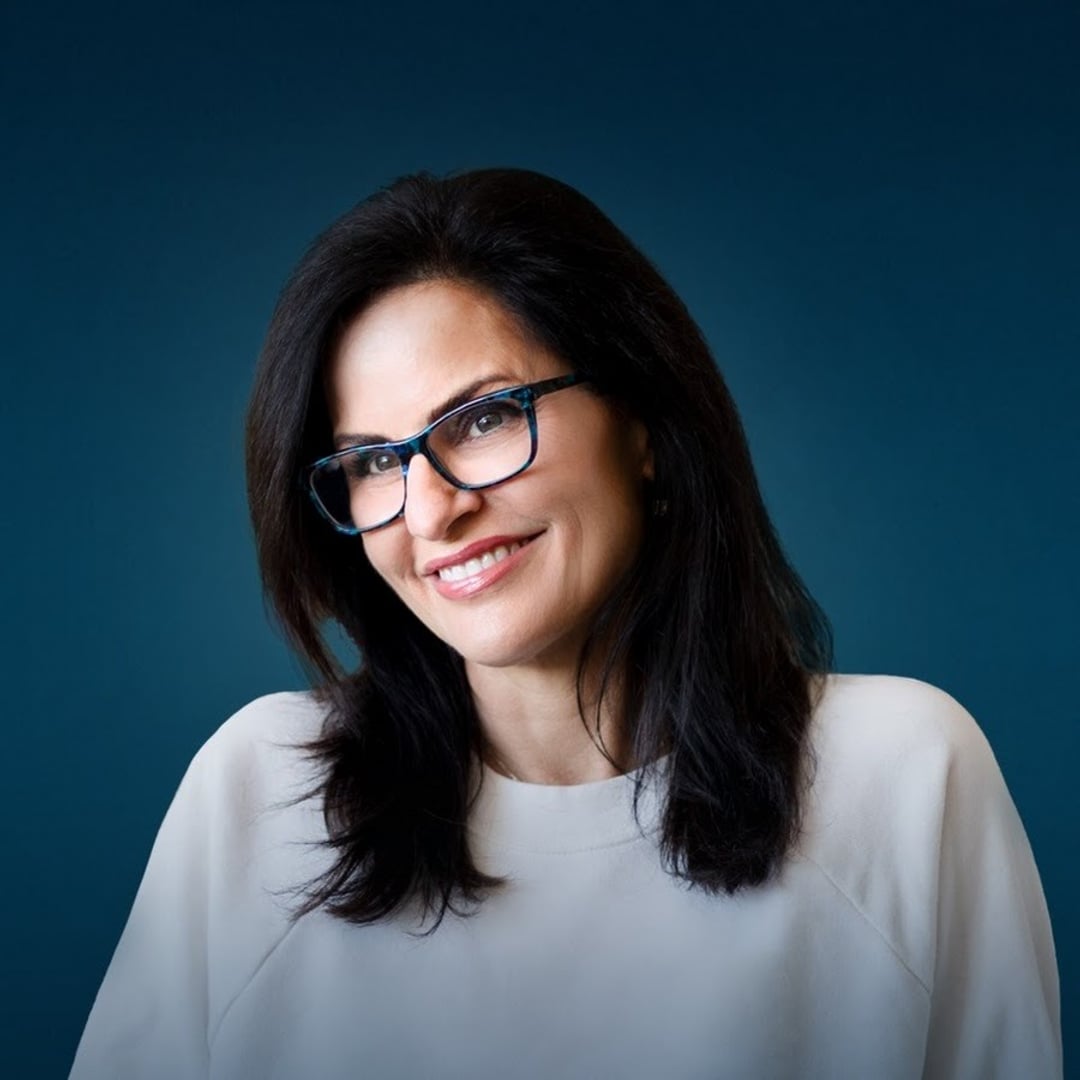
Mary Claire Haver
Watch on YouTube Add to chat My bookmarks← All sources

TL;DR

The four things you'd lose by not watching

4 items

TL;DR

The four things you'd lose by not watching

4 items
1

Host Dr. Mary Claire Haver left the fee-for-service hamster wheel to open a membership-based practice where she spends a full hour with each patient, using advanced lipid panels (ApoB, Lp(a)) and body composition scans to personalize menopause care — her upcoming book is on plant medicine.

2

She argues that the RVU-based insurance system creates moral injury for clinicians and bankrupts patients, and that the fee-for-service membership model (like Monarch, which she’s affiliated with) restores time, trust, and real diagnostics.

3

Havern emphasizes that perimenopause is a “loss of resilience” often misdiagnosed and medicated with polypharmacy; she says adding ApoB, Lp(a), and visceral fat measurement is the missing game-changer for predicting the next 30 years of a woman’s health.

4

On plant medicine, she warns that acetaminophen — not black cohosh — is the #1 liver toxin, and highlights the Flexner Report’s century-old suppression of botanical medicine; she insists any supplement must be third-party tested.

Protocols

Concrete recipes — what, when, how much, and why

4 items

advanced lipid and body-composition panel for midlife women

WhatOrder lipoprotein(a) [Lp(a)], apolipoprotein B (ApoB), and a body composition scan to measure visceral fat and muscle mass as standard labs for every perimenopausal/menopausal patient.
WhenAt the initial visit and periodically for ongoing risk assessment, especially when a woman feels she has been dismissed by conventional testing.
For whomWomen aged ~42 and older, whether they are 47 or 69, in perimenopause or postmenopause.
WhyTraditional lipid panels miss key atherogenic particles; visceral fat is an independent metabolic risk factor; together they reveal hidden cardiovascular and metabolic risk and guide personalized hormone and lifestyle decisions for the next 30 years.
CaveatsThese tests may not be covered by insurance in a traditional fee-for-service model; a membership or direct-pay practice may be required to afford the time and cost.

Haver’s practice does this because she finally has the hour-long appointments to interpret the data and integrate it into a long-term plan. She says that by adding just these two blood markers and a body composition scan, she picks up risks that send high-functioning women who had been “running all over town getting no help” back home with a clear, actionable path. She contrasts it with her old training that forbade ordering labs unless you could act on the result immediately; now she can act because she has the time and the relationship.

Mechanism

Lp(a) is a genetically determined, highly atherogenic lipoprotein that standard lipid panels ignore. ApoB is a count of all atherogenic particles, giving a better estimate of cardiovascular risk than LDL-C. Visceral adipose tissue is metabolically active and linked to insulin resistance, inflammation, and cardiovascular disease — its accumulation accelerates with estrogen loss.

Personal experience

In her first year of independent practice, she saw women come in with gratitude saying these labs and the time to discuss them changed their lives, because they finally had a personalized plan rather than just a prescription.

I do a deeper dive into lipid pro. I mean just by adding lipo little a and apo B I cannot tell you between that and body composition looking at their fat their visceral fat and their muscle — it is a game changer in helping someone plan the next 30 years of their life.

Also said
“I have all the time in the world. They get on the body composition. I do their labs. I do a deeper dive… it is a game changer.”— Emphasizes the link between time and diagnostic power.

full-hour patient visits in a membership or direct-pay model

WhatSchedule 45- to 60-minute appointments without per-visit insurance billing; use the time to listen deeply, take a full history, and uncover hidden issues.
WhenAt every visit, with the initial visit especially important to build trust and gather data.
Dose45 minutes to an hour per visit.
For whomPrimarily for clinicians who are leaving the insurance-based system; also a model for patients to seek out.
WhyRestores the clinician’s bandwidth to think, connect, and detect patterns; allows patients to disclose sensitive history (abuse, eating disorders, substance use) that would never emerge in a rushed encounter; eliminates the moral distress of having to choose between rushing a crying patient and staying on schedule.
CaveatsRequires the clinician to build a business (incorporation, marketing, staff) without insurance reimbursement; patients must pay out of pocket or through a membership fee, which may exclude those who cannot afford it.

Haver details how she left a 20-year career in a high-volume Beverly Hills practice, hired a start-up (Monarch) for operational support, and opened a fee-for-service practice where she charges an annual membership and spends a full hour with each patient. She was initially terrified she couldn’t fill the time, but quickly realized it was never a problem — sitting back and listening brought out all the information she needed and more. She contrasts the constant fracture of the old system, where she was running late, afraid of harming someone from time pressure, and always choosing between her patients and her family. In the new model, she feels she can finally do the real work of medicine.

Personal experience

“I had a whole hour to spend with a patient and really get to know her and really understand her goals, her needs, her wants, and I just within the first month of practice, I’ve I just realized I never felt that good consistently.” She also describes her pregnancy story of hiding pain to avoid being labeled a drug-seeker, which illustrates how the system trains both patients and clinicians to minimize real needs.

I had a whole hour to spend with a patient and really get to know her and really understand her goals, her needs, her wants, and I just within the first month of practice, I've I just realized I never felt that good consistently.

Also said
“You spend a couple hours with people, they feel safe. To open up to you can do the real work.”— Highlights the trust-building that time enables.
“It is so not hard to fill 45 minutes. You just sit back and listen and you get all the information you need and more.”— Dispels the anxiety that long visits are inefficient.

heavy weightlifting for osteoporosis prevention in at-risk women

WhatEngage in heavy resistance training as a core strategy to maintain bone density, especially for small-framed women or those with risk factors like breast cancer history.
WhenThroughout midlife and beyond, ideally starting before menopause but never too late to begin.
DoseNot specified; presumably progressive overload multiple times per week.
For whomWomen at elevated osteoporosis risk: small body frame, history of breast cancer, early menopause.
WhyBuilding and maintaining bone mineral density through mechanical loading can counteract the bone loss accelerated by menopause and other risk factors.
CaveatsShould be done under guidance if unfamiliar; not a replacement for medical evaluation including DXA scans and possibly medication.

Haver acknowledges that maximum bone density is reached by age 30, so preventive messaging ideally targets younger women, but she insists it is never too late. She uses her own situation as a breast cancer survivor with a small frame to illustrate that doubling down on heavy weights, even years after diagnosis, is a concrete way to improve health span. She contrasts this with the tendency to medicalize osteoporosis risk only with pharmaceuticals, pointing out that lifting is a powerful non-pharmacologic tool.

Mechanism

Osteogenic loading — weight-bearing exercise stimulates osteoblast activity and increases bone mineral density over time.

Personal experience

“I doubled down in the last year on really getting to the heavy weights and like not just talking the talk, but walking the walk.” She has been on hormones for two years and is a breast cancer survivor.

I doubled down in the last year on really getting to the heavy weights and like not just talking the talk, but walking the walk.

using the hardware store analogy to find the right clinician

WhatIf you are not getting answers from your current doctor on perimenopause, recognize that you might be consulting the wrong specialist — just as you would stop going to a hardware store for milk.
WhenWhen symptoms persist despite multiple treatments and the clinician dismisses or does not understand perimenopause/menopause.
For whomWomen who feel unheard or are on multiple medications for symptoms that started in their 40s.
WhyMany clinicians lack training in perimenopause and will reflexively medicate symptoms with antidepressants, sleep aids, and pain medications instead of treating the hormonal root cause; it is the patient’s responsibility to seek a knowledgeable provider.
CaveatsChanging doctors can be logistically and financially difficult; not all geographical areas have menopause specialists.

Haver describes the typical perimenopausal woman who has been put on a sleeping pill, an anti-anxiety medication, an antidepressant, something for fibromyalgia, and something for irritable bowel — a state of polypharmacy that she says is really “musculoskeletal syndrome of menopause.” She argues that even if you go back to the same “hardware store,” you will never get milk. This is not blaming the patient but empowering them to understand that a clinician who doesn’t know the physiology cannot help, and moving on is necessary.

If you go to the hardware store looking for milk, you can keep going back to the hardware store and you are never going to find milk there. So you might be going to a clinician who just does not understand it.

Also said
“It is not unusual to have a woman in pmenopause who's been given sleeping pills for her insomnia. She's been giving anti-anxiety meds. She's been giving anti-depressants. She's on something for her fibromyalgia — which I'm going to go ahead and say is just pmenopause, muscularkeeletal syndrome of menopause.”— Concrete example of polypharmacy that the analogy addresses.

What's new

Personal practice updates, fresh positions, predictions

5 items

leaving the traditional insurance-based medical system

After 20 years in a high-volume fee-for-service OB/GYN practice, Haver hit a moral breaking point and opened her own membership-based practice where she sees patients for a full hour.

Why this matters: She frames her departure not as burnout but as moral injury — the distress of knowing how to care for patients but being structurally prevented from doing so — and describes her new model as a way to finally practice unhurried, patient-centered medicine.

Background

She was a tenured faculty surgeon at an academic medical center where she was forced to turn away uninsured women with curable cancers because the hospital demanded insurance coverage for non-emergencies.

Haver describes a slow implosion of U.S. healthcare: reimbursement is based on RVUs (relative value units) set by “a room full of crusty dusty, mostly male, mostly surgeons,” which devalues the cognitive work of listening and diagnosis. Physicians are paid per encounter, not for time spent thinking, calling back, or reviewing labs. This led her to a moment where, as faculty, she had to sign off on charts denying care to a stage-one endometrial cancer patient because she lacked insurance. She says, “I wanted to die as faculty signing off on that chart.” After leaving, she had no business experience but started a direct-pay practice, and within the first month realized she had never felt that level of professional satisfaction consistently. Her new model lets her unearth hidden histories — abuse, eating disorders, substance issues — simply because patients feel safe enough to disclose them during unhurried visits.

Personal experience

She recounts being so terrified of being labeled a “drug seeker” during pregnancy that she hid a broken foot bone and preterm labor from her ER colleagues. She also recalls being a pregnant resident assigned to push a huge ultrasound machine across the hospital, too afraid to ask for accommodation because she didn’t want to be seen as slacking.

I wanted to die as faculty signing off on that chart.

Also said
“The system is not set up for people to experience each other and for your doctor to experience you. Like we just don't even have time.”— Capsule summary of the time-crunch that drove her out.
“Moral injury is the choices you're being asked to make are in conflict with your own ethical and moral guidelines. And that is really injurious. That's that's PTSD.”— Her personal definition of what she was experiencing, not just burnout.

the Flexner Report’s century-old suppression of botanical and holistic medicine

Haver recently deep-dived into the 1910 Flexner Report, which she says shut down 80–90% of medical schools that taught women, minorities, and homeopathy, creating a doctor-as-technician culture that still marginalizes plant medicine.

Why this matters: She connects this historical event to current biases against herbal medicine and to the broader depersonalization of care, framing the report as the origin of the exclusion of whole-person, plant-based approaches.

Background

Before Flexner, many U.S. medical schools were part-time, included homeopathy and natural medicine, and were open to women and Black students; there were seven Black medical colleges.

Haver explains that in 1910, the early AMA, funded by Rockefeller and Carnegie, commissioned educator Abraham Flexner to evaluate medical schools. His report labeled any school teaching homeopathy, naturopathy, or accepting women and non-white students as substandard. The result: all but two Black medical schools were closed; part-time women’s medical schools disappeared, and botanical medicine was branded as dangerous. This created the “doctor as technician, patient as pathology” model that persists today. She argues that this history explains why even now, herbal medicine is dismissed as unscientific, and why the medical establishment is hostile to anything outside pharmaceuticals. She insists she’s not anti-pharma but wants to widen the toolkit.

Personal experience

She says she mentioned the Flexner Report in her first book but when she researched it more for her upcoming plant medicine book, she was shocked: “It hurts my heart so much to talk about it because it’s so… when I looked into it even more deeply, I was like, whoa.”

It turned out all indigenous medicines were communal… there were seven Black medical colleges at the time — they shut down all but two of the Black medical colleges, they shut down like 80 or 90% of the part-time for-profit colleges which is where women went.

Also said
“There is a long history in this country of marginalizing anything that is not standard of care. And who is setting the standards?”— She poses the question that the Flexner history answers.

advanced cardiovascular lipid panel and body composition as a midlife game-changer

Once she had time to practice, Haver started routinely ordering ApoB, Lp(a), and visceral fat measurements and calls it “a game changer” in forecasting long-term health for women at any age after 40.

Why this matters: She’s pushing back against the old-school teaching to only order labs you can act on immediately; now she feels free to uncover hidden risk that traditional panels miss.

Background

She was trained to avoid ordering tests that might generate unexpected results she couldn’t address in a 7-minute visit.

In her new practice, Haver does a deeper dive with every menopausal patient: a lipid panel that includes Lp(a) and ApoB, plus body composition analysis to measure visceral fat and muscle mass. She says that even in her first year, high-functioning women who had been dismissed by other doctors were shocked to discover hidden cardiovascular risk. This data, combined with an unhurried history, allows her to help women plan the next three decades. She notes that many of these markers are not reimbursed in a standard insurance model, but in a membership model she can order them without pushback. She believes this diagnostic approach is so powerful that “every woman who comes to me, whether 47 or 69, there is something we can do” that they hadn’t been offered before.

Personal experience

She had been nervous about filling a 45-minute appointment, but a year in she saw patients return with gratitude because the time and labs had uncovered things no one else had the bandwidth to address.

I cannot tell you between that and body composition looking at their fat their visceral fat and their muscle — it is a game changer in helping someone plan the next 30 years of their life.

Also said
“I was taught very old school, don't do labs that you can't act on results with. … I just didn't have the time. I have all the time in the world. They get on the body composition. I do their labs. I do a deeper dive into lipid pro. I mean just by adding lipo little a and apo B.”— Shows her evolution from constrained to liberated diagnostic practice.

breaking the silence on post-40 postpartum transitioning straight into perimenopause

Haver admits she owes an apology to her patients because she — like most OBs — failed to recognize that women delivering after 40 were often simultaneously entering perimenopause, amplifying their postpartum struggles.

Why this matters: She publicly acknowledges her own clinical blind spot and calls out the near-complete absence of research on this intersection.

Background

She notes that for the first time in history, more women over 40 are having babies than under 20, yet the medical literature ignores the perimenopausal-postpartum overlap.

Haver explains that when she was in full OB practice, she and her colleagues would tell a 42-year-old with a 2-year-old “of course you’re tired” because parenting is hard, missing that the real driver was the hormonal chaos of perimenopause crashing into postpartum endocrine shifts. She says the estrogen and progesterone plunge after delivery drops a woman straight into a decade of unpredictable highs and lows, making sleep disruption, severe mood disorders, and anxiety far worse. She laments that these women are being medicated for postpartum anxiety or depression when the root is untreated perimenopause. She now believes it’s a massive failure of the medical system that no guidelines or academic papers address this population.

Personal experience

“I owe an apology to many of my patients. … Because I didn’t really get it myself.” She says she was aging along with her patients and didn’t know enough about perimenopause to recognize it then.

Why is nobody talking about this? This is enormously important because it’s affecting not only people’s fertility, but it’s affecting their postpartum experience.

Also said
“It’s a confluence of a lot of unpredictable hormonal fluctuations … it’s like on steroids if you’ve just had a baby.”— Vivid description of the biological collision.

plant medicine book in progress

Haver is writing a book on plant medicine that covers both evidence-based botanical remedies and the history of how humans have used plants to heal, aiming to re-integrate ancient knowledge with modern science.

Why this matters: It signals her pivot toward legitimizing herbal medicine for her largely mainstream, evidence-oriented audience, bridging the gap between pharma and plants.

She describes the upcoming book as the one she has always wanted to write. It will include recipes for simple preparations, the ethnobotanical and bench science behind common herbs, and the Flexner history of medical exclusion. She wants to reach anyone interested in healing themselves, not just women, and to push back against the idea that there is no science supporting botanical use. She emphasizes that over 30% of pharmaceuticals are plant-derived, and that this is the “great-great-great-grandchild” of traditional medicines. She’s working on it during her first year of her new practice and while on tour for her previous book.

Personal experience

“I’m working on another book on on plant medicine. Yes. … I’m having the best time working on it and I’m so excited to share it with the world.”

Plant medicine is really where medicine comes from plants — over 30% of our pharmaceuticals today are plant-derived.

Disclosed sponsorships7speaker disclosed

The New Perry Menopause

Book Sponsored · disclosed

Haver’s own book on perimenopause science and hormone therapy; she is on a live tour promoting it.

DisclosureAuthor; the book is promoted on the show and linked in the episode description.

My new book, The New Perry Menopause, is available on Amazon.

Find The

Midi Health

Service Sponsored · disclosed

A virtual menopause clinic that provides hormone therapy and menopause care covered by insurance in all 50 states.

DisclosurePaid sponsor of the podcast episode.

Midi Health is promoted multiple times as a sponsor. Haver emphasizes that it was built to fill the gap of access to clinicians who understand menopause science, noting that education is only half the battle and women need coverage and trained providers.

For too long, women have been told to just deal with permenopause and menopause symptoms. Your labs are normal. This is just a part of aging. Eat less, work out more. That approach failed us.

Also said
“Midi is focused on health span, not just lifespan. That means looking at your metabolic health, bone density, cardiovascular risk, and cognitive function.”— Highlights the clinical philosophy that matches Haver’s own.
Find Midi

Alloy Health (M4 skin line)

Product Sponsored · disclosed

Prescription-strength estriol-based face cream, serum, and eye cream for menopausal skin changes, delivered via telemedicine.

DisclosurePaid sponsor of the episode.

These are prescription strength formulas made with estriol, the gold standard hormone your body stops producing naturally.

Find Alloy

Primally Pure (Blue Tansy soothing collection)

Product Sponsored · disclosed

Clean skincare line with blue tansy antioxidant to calm inflammation and redness, beneficial for sensitive skin in midlife.

DisclosurePaid sponsor; promo code ‘unpaused’ for 15% off.

Blue tanzy is a calming blue antioxidant that helps soothe inflammation, redness, and irritation.

Find Primally

Quince (spring wardrobe, especially stretch silk blouses)

Product Sponsored · disclosed

Premium materials (European linen, organic cotton, Italian leather) at lower prices by cutting out middlemen.

DisclosurePaid sponsor; free shipping and 365-day returns with code.

What I really appreciate is that Quince works directly with ethical factories and cuts out the middleman. So you're paying for quality materials and craftsmanship, not just a label.

Find Quince

Jenny Bird (jewelry for Mother’s Day)

Product Sponsored · disclosed

Earrings, bracelets, monogram necklaces; Haver says her silver linen hoop earrings are effortless.

DisclosurePaid sponsor; 20% off first order with code ‘unpaused’.

I have a pair of their silver linen hoop earrings, and I love how easily they go with everything, effortless and polished.

Find Jenny

Daily Look (personal styling service)

Service Sponsored · disclosed

Premium personal styling where a dedicated stylist curates 12 pieces based on body shape and preferences; shipping and returns are free.

DisclosurePaid sponsor; 50% off first styling fee with code ‘unpaused’.

Everything is delivered right to your door. Try on what you love. Return the rest with free shipping both ways.

Find Daily

Notable quotes

Lines worth pulling out — contrarian, specific, or perfectly phrased

6 items
The system is not set up for people to experience each other and for your doctor to experience you. Like we just don't even have time.
A piercing summary of how the payment model destroys the human relationship at the core of medicine.
I wanted to die as faculty signing off on that chart.
The rawest expression of moral injury — being forced to deny a curable cancer patient because of insurance.
Number one liver toxin is acetaminophen.
A provocative correction to the myth that black cohosh is uniquely dangerous, redirecting concern to an over-the-counter drug everyone assumes is safe.
It is a game changer in helping someone plan the next 30 years of their life.
Distills why the combination of advanced lipids, body composition, and time matters more than the standard hormone conversation alone.
If you go to the hardware store looking for milk, you can keep going back to the hardware store and you are never going to find milk there.
A memorable, practical analogy urging women to fire clinicians who don’t understand perimenopause rather than keep returning hoping for different results.
Moral injury is the choices you're being asked to make are in conflict with your own ethical and moral guidelines. And that is really injurious. That's that's PTSD.
She names the distress that drives clinicians out of medicine, distinguishing it from burnout and linking it to trauma.

Sign in to share feedback

Tell us if this brief hit the mark or missed it — feedback feeds back into the next iteration of the prompt.

Topics covered

health-spanperimenopausepostpartum-perimenopause-overlapmoral-injuryburnout-vs-moral-injuryrvu-systemfee-for-servicemembership-medicineinsurance-cartelmedical-bankruptcyadvanced-lipid-testingapoblp(a)body-compositionvisceral-fatheavy-weightliftingosteoporosisbreast-cancer-survivorhormone-therapy-after-breast-cancerpolypharmacy-in-menopause
Free account

Make this library yours

Reading is free for everyone. A free account adds the personal layer: save protocols, follow experts, and see how the other experts weigh in on this same topic.

Create a free accountSign in

Where the experts disagree — weekly

One email a week: the sharpest new disagreements and protocols from the library. No spam, unsubscribe anytime.

Educational summary of the cited expert source — not medical advice. Open the source recording linked above and consult a qualified physician before acting on any protocol.