UNFUCG
DashboardSearchChatBookmarksNotificationsActivityPremiumProfile
?
Home
Search
Chat
Saved
Profile
Episode
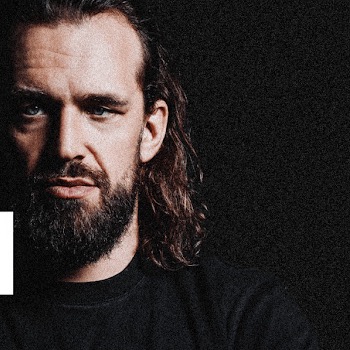
I visualize my nose being broken - Jakub Wikłacz on the monk mentality in the UFC
~72 min
Episode Brief·YouTube

I visualize my nose being broken - Jakub Wikłacz on the monk mentality in the UFC

Cyprian Majcher
Watch on YouTube Add to chat My bookmarks← All sources

TL;DR

The four things you'd lose by not watching

4 items

TL;DR

The four things you'd lose by not watching

4 items
1

Jakub Wikłacz describes his departure from KSW for the UFC not as a career upgrade but as a moral imperative; he felt he could not live with himself if he did not attempt to fight at the highest level, even though staying offered far greater financial comfort and fame in Poland.

2

He openly credits Joanna Jędrzejczyk as the decisive factor in his UFC entry, stating that without her, the UFC would not have been interested in him, and her managerial work was the breakthrough moment.

3

Wikłacz details a rigorous mental training system that goes beyond visualizing victory: he rehearses the hardest moments of a fight—cuts, broken nose, being dominated—so he remains calm and finds solutions under real adversity.

4

His absolute trust in his Poznań-based corner team 'Czerwony Smok' proved decisive in his last fight with Sebastian Przybysz, where a composed instruction after severe facial damage led to a finish, underscoring that a bad corner could easily lose a fight.

Protocols

Concrete recipes — what, when, how much, and why

8 items

Adversity-specific fight visualization

WhatMentally rehearse not just winning but the most difficult fight moments—cuts, broken nose, exhaustion, being dominated—and practice calm, problem-solving responses.
WhenConstantly before a fight, during training camp, and even during fight week. He does it 'a million ways' for every opponent.
DoseOngoing mental habit, not timed. He visualizes multiple scenarios daily.
For whomHimself, but applicable to any fighter or athlete facing high-stress competitive situations.
WhySo that when real adversity hits, the reaction is automatic and composed; one doesn't panic because the situation has already been 'experienced' mentally.
CaveatsMust include genuine worst-case scenarios, not just uplifting images. Mere positive visualization is insufficient.

Wikłacz contrasts his approach with common sports psychology that focuses on visualization of success (raising a hand, celebrating). He argues that anyone can do that, but the true test of a fighter is handling the hardest moments. He believes that visualizing the worst situations—being cut, having a broken nose, losing rounds—and rehearsing exactly how he will keep looking for a finish or a solution is the real preparation. He says he has already 'lived' the fight hundreds of ways, so when something bad happens, it's not a surprise. This protocol is embedded in his overall mental training with sports psychologists and is something he believes every fighter must do to reach the top.

Mechanism

Psychological: By repeatedly imagining stressful scenarios in a controlled mental state, the brain builds neural patterns that can be triggered later, reducing the shock and emotional flood when the real event occurs. This allows the prefrontal cortex to stay engaged for tactical decision-making rather than defaulting to fight-or-flight reactions.

Personal experience

In his final fight with Sebastian Przybysz, he was cut above both eyes and had his nose broken and displaced in the first round. Because he had visualized such scenarios, he was able to stay calm, listen to his corner, and suddenly find a finish. He attributes the win directly to this preparation.

You have to visualize that there will be tough moments and you have to know how to behave in them.

Also said
“I have this fight worked through in a million ways. ... for those easy moments we are prepared. What kind of problem is that? Raise your hand, hit someone and celebrate it.”— Reinforces the inadequacy of only visualizing easy victories.
“I am prepared for all those situations and I visualize those situations. ... visualization of those situations also leads me on that path to the top.”— Links the practice directly to career progression.

Wim Hof breathing with adaptive intensity

WhatUse Wim Hof breathing method periodically, but stop when it feels forced or overly taxing.
WhenDuring training periods, but not fixed daily; he cycles it and ceases when he feels it 'starts to tire him too much'.
DoseAs needed; no set duration. He stops when it becomes a forced chore.
For whomHimself, and by extension athletes who benefit from breathwork but need to avoid rigid over-application.
WhyTo manage stress and support recovery, but he recognizes that overdoing it can increase strain on the body and nervous system.
CaveatsIf you wake up and feel you 'must' do it on autopilot or it feels like a burden, it's counterproductive; stop and rest instead.

Wikłacz emphasizes that everything has an impact, and the key is awareness of what your body truly needs. He uses Wim Hof breathing as one tool among many, but he is not dogmatic. If he feels that the practice is depleting him rather than restoring him, he stops. This reflects his broader philosophy of not blindly following a protocol just because it's popular or recommended; he listens to his internal state and adjusts accordingly. This approach also applies to running or other light activities that may be theoretically good but could hinder deeper rest.

Mechanism

While Wim Hof breathing can activate the sympathetic nervous system and subsequently induce a parasympathetic rebound, excessive or forced use may over-elevate cortisol and drain the nervous system. He tunes it to his perceived recovery needs.

Personal experience

He notes that sometimes he wakes up and feels he has to do the breathing out of habit, but if it no longer feels good, he will skip it. He has learned to distinguish between beneficial stress and unnecessary strain.

Naturally sometimes I have to stop, because I see that it sometimes tires me too much already. If I feel that I wake up in the morning and I have to do it by force, well then I don't do it.

Also said
“There are periods of time in which I use it and naturally sometimes I have to stop.”— Confirms it's not a permanent daily fixture but periodized.

Box breathing for calming

WhatPerform a 4-second inhale, 4-second hold, 4-second exhale, 4-second hold cycle to induce calm.
WhenWhen needing to calm down, either before fight, after intense sessions, or during daily life.
DoseNo fixed duration; done as needed.
For whomHimself.
WhyTo shift the nervous system toward parasympathetic dominance and reduce acute stress.
CaveatsNone mentioned; it's a standard technique but he finds it effective as part of his toolbox.

He mentions that besides Wim Hof, he uses 'more calming' techniques, specifically the 4-4-4-4 box breathing. He doesn't elaborate deeply but positions it as a go-to for settling his mind. It's part of a larger set of breathing methods he tests and integrates based on his current needs. He also experiments with other unnamed techniques that he finds online or through sport psychology, testing them and keeping what works.

Mechanism

The extended exhale and breath holds increase CO2 tolerance and stimulate the vagus nerve, slowing heart rate and inducing a relaxation response.

Personal experience

He describes using box breathing alongside other methods; it's not a primary tool but a consistent one for calming purposes.

Those more calming ones, that square breathing, or whatever. ... I simply test a lot of such breathing techniques and most often I use Wim Hof and that breathing 4 seconds inhale, four hold exhale, four hold inhale.

Also said
“That is something more for calming down.”— Clarifies its specific purpose in his regulation toolkit.

Informal meditation through stillness and passive rest

WhatPractice meditation in multiple non-rigid forms: lying down after a workout to quiet the mind, sitting on the couch doing nothing after hard sparring, or going for a run while clearing the mind of thoughts.
WhenAfter training, after sparring, or whenever the mind needs resetting. Also before fights during downtime.
DoseNo set duration; until the mind feels quiet.
For whomHimself and any athlete who finds traditional seated meditation difficult.
WhyTo release mental tension, process the training load, and prevent mental burnout.
CaveatsHe avoids a strict definition of meditation; for some, a ritual sit-down works, but for him, it can be as simple as resting quietly after exhaustion.

Wikłacz explains that meditation is important but hard to define. For one person it's a seated ritual; for him, it often happens organically when he finishes a heavy sparring session, is completely exhausted, and sits down and does nothing. That moment of stillness, without distraction, becomes meditation. He also uses running as a form of active meditation where he throws away all thoughts. This flexible approach prevents meditation from becoming another chore and integrates seamlessly into his recovery. It aligns with his overall philosophy of listening to his body and not forcing protocols.

Mechanism

The goal is to quiet the default mode network and reduce mental chatter, which can accumulate from intense physical and psychological stress. By allowing the mind to rest without forcing a specific technique, he achieves a meditative state tailored to his disposition.

Personal experience

He recounts moments after sparring where things didn't go well, he sits on the couch, does nothing, and that is his meditation. It's not a formal sit-down but a natural pause that clears his head.

Sometimes meditation for me will be that, when I come back after sparring. I am totally wrecked, I had hard sparring, maybe it didn't go as I imagined. I'll sit on the couch, I do nothing and then that is a moment of meditation.

Also said
“There are many kinds of meditation, but certainly somewhere it's about quieting that head and finding peace.”— Distills the core purpose of his meditation practice regardless of form.

Pre-fight emotional balance routine

WhatAbout 30 minutes before the fight, begin warm-up while mentally ramping up intensity, but maintain a baseline of relaxation and calmness. Upon entering the cage, say an internal phrase like 'dobra, elegancko, jedziemy' (alright, nicely, let's go) with genuine calmness.
WhenThe final 30 minutes before a fight and the moment of stepping into the cage.
DoseContinuous mental management during that period.
For whomHimself, but the principle applies to any fighter seeking the ideal performance state.
WhyTo avoid both over-excitement and flatness, achieving an optimal arousal level where focus and execution are maximal.
CaveatsThe exact mix is highly individual; what works for him may not work for others. He emphasizes the need to discover one's own optimal emotional blend.

Wikłacz describes that entering a fight with the right emotional cocktail is essential. He cannot be too hyped up or too relaxed; he strives for a precise midpoint. He has developed a personal ritual where, about half an hour out, he begins his warm-up and gradually increases his aggressive focus, but always retains an undercurrent of relaxation. At the moment he steps into the cage, he deliberately tells himself a calm, almost casual phrase that signals to his brain that this is a normal, controlled situation. He used this at his UFC debut and knew that if he could reach that inner state, he would perform well. This protocol was developed with sports psychologists and is reinforced by his trust in his corner.

Mechanism

Performance psychology suggests an inverted-U relationship between arousal and performance. His routine aims to hit the peak of the curve—enough adrenaline for speed and aggression, but enough parasympathetic tone to stay cognitively sharp.

Personal experience

He shares that at his debut, he was able to reach this exact mental state, confirming to himself that 'this is just like KSW, you got this.' The phrase 'alright, nicely, let's go' helped him lock in.

I must have great calm there, I must have focus and in me that calm and focus very strongly break through. ... I say to myself 'alright, nicely, let's go', but I say it with such great calm.

Also said
“You can't be too wound up, you can't be totally calm. You have to enter there at the ideal moment, at the ideal point, with the ideal mix of emotions.”— States the core principle of the optimal emotional blend he targets.

Strategic full rest weekends during training

WhatTake an entire weekend (2 days) of complete recovery, doing nothing physically strenuous, watching Netflix or resting on the couch, to allow the nervous system to regenerate.
WhenAfter heavy training blocks or when feeling accumulated fatigue, and especially before intense training weeks.
Dose2 days of full rest.
For whomHimself; applicable to any high-performance athlete who tends to overwork.
WhyTo lower cortisol, prevent burnout, and enable higher performance in the following week; sometimes doing less is more beneficial than light activity.
CaveatsHe knows that for some athletes, the mental comfort of doing a light run or workout is necessary, even if physically suboptimal. One must weigh the psychological benefit against physiological need.

Wikłacz explains that he is highly aware of the trade-offs. If he goes for a run instead of resting, he knows it might provide marginal aerobic benefit but cost him more significant recovery for the next week. He consciously chooses full rest when his body needs it. He contrasts this with other athletes who might feel anxious if they don't do something physical; for them, that light activity reduces mental stress, so it's still beneficial. The key is self-awareness. His own practice leans toward prioritizing deep nerve system rest on weekends as a planned part of his training cycle, not an afterthought.

Mechanism

Intense training chronically elevates cortisol and depletes the central nervous system. Complete rest, with no physical demands, allows the HPA axis to down-regulate and neurotransmitter levels to replenish, leading to supercompensation.

Personal experience

He describes knowing that lying on the couch for a full weekend and watching Netflix will make him more capable in the upcoming week than if he forced extra runs. He has implemented this consciously after learning about cortisol's effects.

I will be aware of that and it will be better for me to rest those two days. And there is a fighter who mentally, if he doesn't do that running ... it will turn out badly for him, so he has to do it, even though in theory it's not entirely good.

Also said
“The detail is that I have to rest after a fight, that I have to let myself regenerate for my nervous system and I simply have to go somewhere or give myself a break for a few days.”— Extends the principle beyond weekends to post-fight recovery as a detailed protocol.

Pre-fight family isolation

WhatIn the weeks leading up to a fight, drastically reduce contact with family, sometimes calling only once a month, to stay focused in a mental cocoon.
WhenDuring the entire fight camp, especially the final days.
DoseVaries; can be almost total radio silence except for essentials.
For whomHimself.
WhyTo eliminate emotional distractions and maintain a singular focus on the fight, preventing external worries or conversations from interfering with his mental preparation.
CaveatsRequires a family that understands and supports this need; otherwise it can create stress. His family is fully on board.

Wikłacz explains that his family has grown accustomed to his pre-fight routine: they know that if he calls once a month, that's good. He doesn't completely disappear, but he reduces his availability to near zero. This isolation allows him to live in his own world where only the fight exists. He is aware that if he had a wife and children, he would still find a way to create this bubble in the final days. This is part of his 'monk mentality'—the ability to temporarily detach from normal life.

Mechanism

Limiting social and emotional interactions reduces cognitive load and keeps stress hormones from spiking due to relationship dynamics. It helps maintain a narrowed focus, shielding the fighter from potential conflicts or emotional swings.

Personal experience

He says his family tells him, 'It's nice when you call once a month before a fight,' meaning they fully accept his withdrawal. He has done this since early in his career and it's an established pattern.

Family got used to it, that when I am before a fight, it's nice when I call once a month, or when I even call back at all.

Also said
“Sometimes I simply close myself in my own world, but I feel, I try to sense what is needed for me.”— Shows that he tunes the degree of isolation to his internal needs.

No opponent refusal policy

WhatAccept every fight offered by the UFC without strategizing or checking the opponent's record; simply tell his manager to send the contract directly.
WhenCurrent career phase, as an unranked newcomer building his place in the division.
DoseEvery fight offer; he expects this may change once he climbs the rankings.
For whomHimself in his current UFC position; likely applicable to any fighter trying to break into the top ranks.
WhyTo build his reputation as a 'badass' who will fight anyone, and because refusing fights could negatively impact how matchmakers view him. Also, to be champion, you can't avoid anyone.
CaveatsHe acknowledges this is specific to his low ranking; once he is higher, he may need to be more selective to optimize his path to the belt.

Wikłacz explains that currently, when the UFC offers a fight, he doesn't even want to see the opponent's name first; he wants the contract with just the date. He briefly checks the opponent later, but his default is yes. He contrasts his situation with someone like Bogdan Guskow, who is ranked and can afford to be more strategic. For him, refusing any fight would be counterproductive to his goal of reaching the top. He believes that to be champion, he must be ready to beat anyone, so there is no point in picking and choosing now. This is part of his all-in mentality.

Mechanism

Organizational: In UFC, accepting all short-notice or tough matchups makes a fighter valuable to the promotion, increasing their chances of being given opportunities. Psychologically, it also removes doubt and overthinking.

Honestly speaking I could probably write to Asia, to not send me that offer at all, just wait right away until they send the contract, just the date.

Also said
“I don't want to enter the top, I want to be champion, so I can't refuse any fight now.”— Directly links the policy to his championship ambition.

What's new

Personal practice updates, fresh positions, predictions

5 items

UFC move as existential necessity, not career logic

Wikłacz explains that staying in KSW would have been an unbearable compromise with his conscience; he had to try for the UFC even if he failed, or he would regret it for the rest of his life.

Why this matters: Most athletes frame UFC moves in terms of competition or money; he frames it as an identity-level decision tied to self-respect, not external reward.

Background

In Polish MMA, KSW offers top domestic pay and fame; many champions remain there. Wikłacz won the KSW belt and had leverage to negotiate a lucrative stay.

He acknowledges that KSW could have provided very good financial conditions and major media exposure in Poland. However, he describes a persistent inner voice that he 'couldn't live with myself' if he did not take the risk to compete against the world's best. He emphasizes that this is a personal trait, not a judgment of others who stayed. The decision was made instantly after winning the belt: he told himself he must go to the UFC. Even if the UFC experiment fails, the mere fact of having tried is already worth more to him than any local success. He sees it as a question of conscience and ambition, saying that even if things went wrong, he would not be able to bear the thought of never having tried.

Personal experience

After becoming KSW champion, he immediately felt 'ok, I have to go to the UFC, now is the time'. He negotiated his release by being honest with the organization, and he remains grateful they understood and let him out of his contract early. He recounts that if he had not done this, 'I really couldn't live with myself'.

If I hadn't done that, I really couldn't live with myself. It wouldn't be in line with me and I think it would torment me for the rest of my life.

Also said
“I simply have something like that and I think that it's such my private thing, that I had to risk simply and I had to try it.”— Reinforces that this is an internal, non-negotiable drive, not a strategic career move.
“If I hadn't tried it, then whatever would be, no matter how my life turned out, whether I had it better or worse, in the end I really think I couldn't stand myself.”— Expands on the severity: the regret would be lifelong, independent of any external success.

Visualization of hard moments, not just victory

He insists that true visualization isn't about picturing yourself with a raised hand, but about mentally rehearsing the most difficult situations in a fight so you know how to react.

Why this matters: Contrasts sharply with mainstream sports psychology advice that often focuses on positive outcomes; his approach embraces adversity rehearsal as a core training tool.

Background

Many fighters talk about 'visualizing success'; Wikłacz says this is superficial and insufficient for real combat.

Wikłacz describes his constant internal process: he visualizes steps forward, two steps forward, different fight scenarios, especially the hardest moments. He argues that easy moments require no preparation—anyone can celebrate a knockout. The true test is when you are cut, have a broken nose, are exhausted, and the opponent is winning. He wants to have already 'lived' those moments in his head so that in the cage he can stay calm, task-oriented, and find the finish. This practice, combined with work with sports psychologists, allows him to remain composed and execute the right moves even when physically compromised. The goal is to transform panic into problem-solving.

Personal experience

He applies this method by replaying fights in thousands of ways. In his last fight against Przybysz, he had visualized difficult injury scenarios, which helped him listen to his corner and produce a sudden finish despite two cuts and a broken nose.

Visualization is not just that, how we raise our hand up and I will be champion. ... You have to visualize that there will be tough moments and you have to know how to behave in them.

Also said
“I have this fight worked through in a million ways. I always have to analyze everything, I always have to visualize everything. Even those moments that happen in a fight, above all those hardest moments.”— Reveals the sheer volume of mental rehearsal he performs for each fight.
“What kind of problem is that? Raise your hand, hit someone and celebrate it. You have to visualize that, when it's hardest, when you have to prove yourself the most.”— Dismisses simplistic positive visualization and highlights the real mental work.

Corner chemistry as the ultimate trust exercise

He places absolute trust in his local coaching team, arguing that a poor corner can ruin a fight and that his coach's calm during a bloody round saved him and led to victory.

Why this matters: While many UFC fighters relocate to major camps, Wikłacz defends staying with a local Polish team, insisting that the personal chemistry he has cannot be replaced by a bigger name gym.

Background

The trend in Polish MMA has seen fighters like Mateusz Gamrot move to American Top Team to gain an edge. Wikłacz was offered a similar path but chose to stick with his coaches in Poznań.

He explains that the corner dynamic is about deep familiarity: his coaches know him, have been in his corner for many fights, and understand what he needs to hear. During the minute between rounds, the communication must be precise and trustworthy because a fighter is flooded with emotions and may not fully process everything. A coach who panics or gives confusing instructions can lose the fight. In his last fight with Przybysz, he suffered two cuts and a broken nose in round one. His coach, Bartas, came in and calmly told him the reality: 'You have two cuts, a broken nose, you have to work now—the doctor may stop this soon, so go for a takedown or find a finish.' That clear, unpanicked direction allowed Wikłacz to stay focused and produce a finish from nowhere. He would not change this corner for any other team because this trust is built over years.

Personal experience

He describes the exact moment: after a grueling round, tired and injured, he heard the coach's short message and internalized it as 'Ok, I'm looking for the finish, nothing else matters.' That led to the victory.

My corner is responsible for that, that I won that last fight with Seba.

Also said
“Coach Bartas ... says: 'Listen, you have two cuts, a broken nose, you have to start working now. Maybe the doctor will stop the fight soon, so you go for a takedown or look for a finish and that's it.'”— Provides the exact corner instruction that turned the fight.
“Many coaches could have introduced panic there in the corner, and here when I trust someone, I simply hear them, I know their tips, I simply execute it.”— Explains the danger of a panicked corner and the power of trust-based communication.

Family gave freedom, not pressure

His parents never questioned his choice of MMA, never imposed decisions or training schedules, and always provided quiet support, which he credits for his mental strength.

Why this matters: In a sport often associated with overbearing sports parents, Wikłacz presents a model of support through trust and non-interference, which he believes built his character.

Background

Many parents discourage combat sports or push their children too hard. Wikłacz started when MMA was seen as brutal street fighting.

He emphasizes that never once did he hear criticism like 'this is stupid' or 'why are you doing this.' Both his mother and father fully supported him since his early days in judo and MMA. This support was practical—buying equipment, attending fights—but never invasive. They never told him 'you have training today' or pressured him to perform. He was given freedom, which forced him to develop internal discipline and a drive to succeed. He contrasts this with young athletes who might hear discouraging remarks and have their path altered. This foundation of unconditional backing without pressure instilled a sense of security that allows him to take big risks now, knowing his family is always behind him. He also describes how they accept his pre-fight isolation: they know that if he calls once a month before a fight, that's fine.

Personal experience

He recalls his first training sessions: his father spent money on equipment for him and his brother, and always traveled to his fights without interfering in tactics. He says this built a deep-seated confidence that whatever he needs, the family is there, which gives him peace of mind.

Family got used to it, that when I am before a fight, it's nice when I call once a month.

Also said
“They never questioned what I do. ... I never heard something like that. I always heard support.”— Highlights the consistent positive reinforcement without any doubt cast on his path.
“Dad always supported me, but also never for example judged. Never I know. You have to give the kid slack.”— Shows the deliberate parental choice to allow autonomy, not criticism.

Anti-doping conviction held since career start

He resisted multiple suggestions to use performance-enhancing drugs, even when it might have helped him match physically superior opponents, because he always aimed for the UFC and its testing standards.

Why this matters: Many fighters face this dilemma in untested organizations; his refusal wasn't moralistic but driven by a strategic career vision, which he calls a form of 'fairness' from day one.

Background

In Polish MMA and European circuits without USADA-like testing, doping is common. He was told to 'go up a weight class or get on the bomb' to compete.

Wikłacz explains that from the beginning, his sole target was the UFC, which has strict anti-doping rules. He knew that if he ever used PEDs, he would jeopardize that goal. People around him suggested he try something to level the playing field, but he never considered it seriously. He felt a sense of injustice fighting potentially doped opponents in KSW, which is why he pushed for testing there. Clean sport is important to him because he wants everyone treated equally. He connects this to his broader philosophy of doing things in line with his own values.

Personal experience

He recounts being 'many times convinced to maybe try to go on the so-called bomb,' with the rationale that he needed to look better physically. He always had the mental block and never entertained it.

From the beginning I had one goal set UFC and I knew that I couldn't go through this game on cheats, so to speak.

Also said
“I had such suggestions, ok, so I don't know, go up a weight class or get on the bomb and fight in your category, because physically you have to look better.”— Shares the specific pressure he faced to dope.
“I think that sport should be clean from doping, that everyone should be treated equally and that I like, when it comes to the UFC.”— Expands his reasoning beyond personal strategy to a principle of fairness.

Notable quotes

Lines worth pulling out — contrarian, specific, or perfectly phrased

6 items
I want to win and I can't have a barrier to hurt someone. I can't have a brake to hurt someone.
A brutally honest description of the necessary mindset for cage fighting—removing all internal brakes to win, while acknowledging that harming the opponent is a byproduct, not the goal.
Visualization is not just that, how we raise our hand up and I will be champion. ... You have to visualize that there will be tough moments and you have to know how to behave in them.
A radical reframe of visualization that directly challenges the popular 'picture success' mantra.
If I hadn't done that, really I couldn't live with myself. It wouldn't be in line with me and I think it would torment me for the rest of my life.
Captures the existential stakes he attached to the UFC move—it's not about career but about self-consistency and lifelong regret.
I had a debut with the Bellator champion ... and suddenly the guy loses two fights and gets cut from the UFC. He doesn't handle it there at all, and he was announced as a guy who absolutely will crush the division.
Illustrates the unpredictability and mental pressure of UFC, where a highly touted champ from another organization can fail utterly.
I have full trust in the coaches at my place in Poznań in Czerwony Smok. ... it may not be an ideal corner for another fighter, but for me I think it is ideal.
A firm rejection of the popular narrative that fighters must move to elite US gyms to succeed, emphasizing personal fit over brand.
I can awaken in them such pride and that, how their support I turned into my success. That is what they can be proud of. And that gives me very, very, very great happiness.
A rare emotional moment where he reveals that making his family proud is a core driver of his happiness.

Sign in to share feedback

Tell us if this brief hit the mark or missed it — feedback feeds back into the next iteration of the prompt.

Topics covered

ufc-transitionksw-vs-ufcmentalityvisualizationfamily-supportanti-dopingbreathworkcorner-trustpre-fight-routinepolish-mmajoanna-jedrzejczykauthenticitybmf-beltcareer-longevityrecoveryopponent-selectionmeditationsports-psychology
Free account

Make this library yours

Reading is free for everyone. A free account adds the personal layer: save protocols, follow experts, and see how the other experts weigh in on this same topic.

Create a free accountSign in

Where the experts disagree — weekly

One email a week: the sharpest new disagreements and protocols from the library. No spam, unsubscribe anytime.

Educational summary of the cited expert source — not medical advice. Open the source recording linked above and consult a qualified physician before acting on any protocol.