UNFUCG
DashboardSearchChatBookmarksNotificationsActivityPremiumProfile
?
Home
Search
Chat
Saved
Profile
Episode
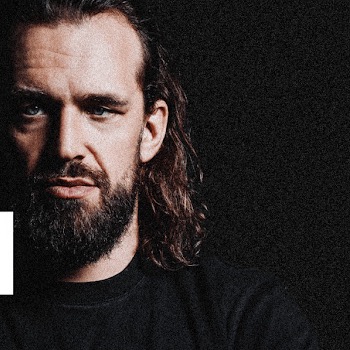
Why don't we return to Earth after death? Poland's most famous medium - Marek Szwedowski
~91 min
Episode Brief·YouTube

Why don't we return to Earth after death? Poland's most famous medium - Marek Szwedowski

Cyprian Majcher
Watch on YouTube Add to chat My bookmarks← All sources

TL;DR

The four things you'd lose by not watching

4 items

TL;DR

The four things you'd lose by not watching

4 items
1

Marek Szwedowski, a medium with 40 years of experience, asserts that reincarnation back to Earth does not exist; souls move on to other levels after death, and only those who desperately want to return may do so.

2

The key to a good afterlife is not church attendance or rituals, but being a good person, understanding you are not alone, and sharing your life with others; love and good deeds matter more than religious affiliation.

3

Suffering, including that of innocent children, serves to teach love and compassion to the living, and God does not cause it but allows free will; suicides are not condemned but are judged individually based on circumstances.

4

He describes the afterlife as a realm with many levels where souls self-assess their lives, feel the consequences of their actions, and continue to develop; mediumship provides closure and hope, not entertainment.

Protocols

Concrete recipes — what, when, how much, and why

4 items

How to live a good life to ensure a better afterlife

WhatUnderstand that you are not alone on Earth; share your life with others, be open, helpful, and loving. Focus on being a good person rather than on religious rituals.
WhenThroughout daily life.
DoseContinuous practice.
For whomEveryone, regardless of religious belief.
WhyThe 'passport to heaven' is the realization that you are not alone and that your life should extend beyond your own table—helping others, being kind, and living with love.
CaveatsHe clarifies that church attendance and prayer are not bad, but they are only a supplement to a good life, not a substitute.

Szwedowski argues that modern society has become alienated; people don't even say hello on the street. He contrasts this with his youth when neighbors lived together, played cards, and knew each other. He says we have closed ourselves off, and the key to a good afterlife is to break that isolation. He emphasizes that even an atheist who does good deeds may have a better afterlife than a churchgoer who is a bad person. He personally goes to church only for communion, because he needs Christ, but he leaves before the sermon if it doesn't align with love. He says the whole week matters, not just Sunday.

Personal experience

I remember when I was growing up, after all, let's not hide it, I was 60 years old and I remember those courtyards, those benches, where everyone lived together, even played cards, and today I've lived in some block with my mom for three years, we know each other a bit, mom is dead. After a year a friend says, the neighbor across the way, please give your mom my regards. I say, well maybe we'll give our regards together, because I'm upstairs. Ah. she's dead. Well, she's dead.

The passport to heaven, besides being a good person, is also understanding that you are not alone on this earth. And what does that mean? It means try to share yourself with others and with your life. Find your life for others.

Also said
“A person who is an atheist but does good things in life may have a better afterlife than a person who is in church every week but is simply a bad person. But of course, yes.”— Reinforces that deeds outweigh religious affiliation.

How to talk to children about death

WhatGive children a sense of security by telling them you love them and will always be with them. Explain that after death they will exist, have their toys and dreams, and can watch over their parents. Assure them that you will meet again in your own time.
WhenWhen children ask about death or when a loved one dies.
DoseAs needed, in age-appropriate language.
For whomParents, caregivers, anyone speaking to children about death.
WhyChildren need hope and reassurance, not fear. They are naturally open and can sense truth; a gentle, hopeful narrative helps them cope.
CaveatsHe admits it sounds infantile, but it's tailored to a child's understanding. He also notes that children are often more perceptive than adults give them credit for.

Szwedowski describes his approach when he visited a hospice to talk to dying children. He would tell them not to be afraid, that there is a grandma waiting on the other side, and that they will have their favorite things. He says the children were curious and asked sincere questions. He was eventually banned by staff who thought he was feeding illusions, but he argues that if something can help and doesn't harm, why not offer it? He contrasts his approach with a clown who tells fairy tales; he believes his message is more substantial. He also shares an anecdote about a child who knew his grandmother had died without being told, saying 'I can feel it,' showing children's innate sensitivity.

Personal experience

I went to a hospice for the first time and saw the humility of those children, and I was sick for two weeks. (...) They accept it all as it comes. (...) Their meaning is to show (...) that love and the fact that we are facing something terrible did not turn us into, pardon the expression, bastards.

First, you need to give them a sense of security from yourselves, meaning whatever happens, remember that I am with you, says the mother. Remember that I love you. Says the father. I want to tell you that when you die, although it may not be the best word, but that's how we say it, so you know that on the other side you will exist, that you will have your toys, just like he says, a skateboard, yes that's good, that you will have your dreams, you will fulfill desires, and that you will be able to watch over mommy and daddy.

Also said
“An American group of psychologists talked to children in a kindergarten about death and asked if you have someone on the other side, a grandpa, then when you die remember to call him in a way—I said it in shorthand again—it wouldn't pass here, because here it wouldn't, but there they said it, so I think to give these children a bit, meaning to give hope, and most importantly to tell them that you love them and that you are with them.”— References a psychological approach to reinforce his method.

How to approach mediumship ethically

WhatTreat mediumship as a serious responsibility, not entertainment. Deliver messages truthfully but with care to avoid causing harm. Verify information through the recipients. Do not embellish or create false hope.
WhenWhen acting as a medium or seeking a medium.
DoseN/A
For whomPracticing mediums and those considering a reading.
WhyThe purpose is to provide closure and healing; playing with it disrespects the dead and can harm the living.
CaveatsHe warns that not all mediums are ethical; some seek fame or money. He also cautions that suicide to join a loved one will not result in reunion because the soul must live out its natural time.

Szwedowski explains that he receives thoughts telepathically, not voices, and he often doesn't distinguish them from his own thoughts until the recipient verifies them. He gives an example of a man who was a nurse in life; Szwedowski described him helping the sick in the afterlife, and the widow confirmed he had been a nurse called 'Angel.' He says he sometimes adds stylistic flourishes to make sentences flow, but the core message is verified. He stresses that even hard truths must be told, like a mother learning her son was murdered, not died peacefully. He recounts a case where a mother discovered her son was murdered and, through his descriptions, found the perpetrators. He also shares his frustration with police who dismissed his visions, and his decision to step back from criminal cases because of the emotional toll and systemic resistance.

Personal experience

I hear thoughts, but these thoughts are quite fast, so I start talking. (...) I don't hear in my head 'say that Martynka is fine.' No, no, I have thoughts that I can't fully specify.

This is not a game. (...) People who come need a final goodbye, understanding, relief from pain, suffering.

Also said
“Sometimes I even behave like those people who have passed, because there is a situation, we talk, we talk, and I say enough. Well, maybe he always used to bang three times and say enough, you can leave. I say, I don't do that, but suddenly I made such a gesture.”— Shows how the medium can physically channel mannerisms.

How to handle grief and the desire to join the deceased

WhatUnderstand that taking your own life to join a loved one will not result in meeting them; you must live out your natural time. Seek closure through healthy means, possibly a reputable medium, but not as a game.
WhenWhen grieving and contemplating suicide.
DoseN/A
For whomThose in deep grief, especially after losing a child or spouse.
WhyThe afterlife operates on a natural timeline; premature death by suicide places the soul in a different state where reunion is not possible.
CaveatsHe emphasizes that he never promotes suicide and that each person must reach their own time. He also warns against mediums who exploit grief.

Szwedowski recounts a couple who lost their son and planned to drive off a bridge. Through a message, the son told them that if they did that, they would not see him. They changed their minds and later adopted a child. He also tells of a woman whose husband died; she wanted to join him, but the husband's spirit said she must stay. He explains that suicide does not lead to the same place as natural death, and the soul will have to face the pain they caused others. He says he has many clients who thank him for saving their lives.

Personal experience

I had a couple who lost their son and they came to me, the only one, and said they no longer wanted to live and were going to drive their car and jump off a bridge. I said: 'Go right ahead, except that.' And here was a message from that son and so on. They came back after half a year, saying they are adopting a child, they want to live.

If you want to move in with me, you won't see me. It doesn't work that way. You have to live on.

Also said
“Very often these deceased, through me, say: don't do this, because we won't meet, because it doesn't work that way. We have to reach that. Yes. Time.”— Reinforces the message from the deceased.

What's new

Personal practice updates, fresh positions, predictions

5 items

Reincarnation does not exist (except for souls that insist on returning)

early in the conversation

Marek Szwedowski rejects reincarnation back to Earth, arguing it would negate Christ's sacrifice and that the Church would have kept it if true because it could be monetized. He cites regression experiments where subjects gave contradictory past lives, suggesting they tap into a morphogenetic field rather than actual past lives.

Why this matters: Contradicts popular New Age and some regression therapy claims, and offers a theological argument from a Christian-leaning medium.

Background

Many mediums and regression therapists (e.g., Michael Newton, Robert Bernatowicz) claim that souls reincarnate multiple times to learn lessons. Szwedowski challenges this, aligning more with a Christian view that Christ already redeemed humanity, making repeated returns unnecessary.

Szwedowski argues that if reincarnation were real, the Church would have embraced it as another tool for control and income ('Pray and pay more, and you will have a wonderful reincarnation'). He finds it illogical that the Church would remove reincarnation from doctrine, as it could have been profitable. He also points to an American experiment where students under regression gave completely different past-life stories in separate sessions, indicating the mind may draw from a collective morphogenetic field rather than actual memories. He does not entirely deny that some souls may choose to return, but insists it is not God's plan for humanity. He references Robert Monroe's book 'Life After Life' which states there is no reincarnation, though some souls want to come back.

There is no reincarnation, but some souls want to return and then let them return. However, generally there is no such thing.

Also said
“If we are to return to Earth and redeem ourselves anew, yes, to change anew, then Christ has already done that for us. He took all the sins. So reincarnation condemns Christ's death, as if it eliminates him, and he has already given us a good path.”— Provides the theological rationale against reincarnation.
“Certain experiments were done in America. They took students, there were four of them, who were put into regression and each of them—well, let's take one example, one said he is in the year 1920 and works in a library, like 1920, right? 1920, and these experiments are done in the 80s. Well, he works in a library and so on. They bring him out of it, without telling him what happened. Meaning, so he doesn't remember. A month later they take him back. At the same time he says he is a German pilot.”— Cites experimental evidence that regression memories are inconsistent.

Church attendance and rituals are not the ticket to heaven

mid-conversation

Szwedowski states that being a good person and understanding you are not alone on Earth is more important for the afterlife than the number of masses attended, rosaries recited, or pilgrimages made. An atheist who does good deeds may fare better than a weekly churchgoer who is a bad person.

Why this matters: A direct challenge to institutional religious practice, coming from a self-described Christian who still values communion.

Background

Traditional Catholic teaching often emphasizes sacraments and church attendance as necessary for salvation. Szwedowski separates the institution from the essence of faith.

He argues that the 'passport to heaven' is the realization that you are not alone on this earth—meaning you should share your life with others, be open, and help. He criticizes the hypocrisy of people who sit in the front pew but would refuse a glass of water to someone in need. He personally goes to church only to receive communion and then leaves, because he cannot stand hearing sermons that don't align with love. He insists that what matters is how you live during the week, not just Sunday. He acknowledges that his view will attract criticism from 'hordes of the possessed,' but he dismisses Vatican councils and 'possessed nuns' if they are not based on love, happiness, and deep faith.

Personal experience

I go to church, but I always repeat that it's not that by going to church, when I die, virgins will carry me in their arms. Absolutely impossible. (...) I need to receive Holy Communion. (...) I only go when they give communion and I leave.

It's not the number of times in church, not the number of rosaries rattled off, not the number of penances done to Jasna Góra and back. The passport to heaven is understanding that you are not alone on this earth.

Also said
“Of course, the hordes of various possessed people will now attack me. I cannot understand this. I am not interested in any Vatican councils, some possessed sisters, novices, none of it interests me if it is not based on love, happiness, and that deep faith, because all the rest is hypocrisy to me.”— Shows his contempt for institutional dogma divorced from love.

Suffering teaches love and unity, not karmic debt

after discussion of reincarnation

Szwedowski rejects the idea that suffering is a result of past-life karma or a lesson the soul chose. Instead, he says suffering exists because of human free will, and its purpose is to awaken love and compassion in others. The death of an innocent child, while tragic, can inspire the living to become more loving and united.

Why this matters: Offers a theodicy that avoids blaming victims while still finding meaning in suffering, contrasting with reincarnation-based explanations.

Background

Many spiritual teachers claim that souls choose difficult lives to learn lessons. Szwedowski finds this morally repugnant, especially in cases like a child raped and murdered. He argues that God does not will such evil but gave humans free will, and the resulting suffering can serve to teach love.

He uses the example of a child who is molested and killed: if someone says the child chose that life to learn a lesson, he asks what lesson could possibly be learned. He finds the answer 'only he knows' unsatisfactory. Instead, he says the child's death is not in vain because others witness it, feel compassion, and begin to look inward and integrate. He points to post-WWII solidarity as an example of suffering bringing people together, though he laments that this unity fades. He also says that sick people exist to pour love and action into us. He admits that without his faith in God, he would have gone mad seeing so much tragedy, but he trusts that God knows the reason, so he doesn't need to.

Personal experience

I have been in many tragic places, yes, in various situations and I will say that if not for my faith in God, I would have gone mad long ago, they would have carried me out long ago, because I wouldn't have understood all of this either, but I know that God knows, and if he knows, then I no longer have to.

Suffering teaches us love. (...) In order to pour into us, as they say, love, help, action.

Also said
“A child raped by their own father, an alcoholic mother, finally the child kills themselves. Why did the child come to experience this? Only they know. But what lesson can be drawn from this? Only they know. I am not convinced by the fact that only they know.”— Illustrates his rejection of the 'soul chose its suffering' narrative.

Abortion is a difficult topic; souls of aborted children exist on the other side

after suicide discussion

Szwedowski is not in favor of abortion but acknowledges situations where it may be necessary, such as when the child would be born with severe disabilities and no support. He says the souls of aborted children are already formed and exist in the afterlife. He criticizes the hypocrisy of a society that bans abortion but fails to provide for disabled children.

Why this matters: A nuanced stance from a spiritual medium that neither fully condemns nor endorses abortion, highlighting societal failures.

Background

The abortion debate is polarized. Szwedowski tries to hold both the sanctity of life and the reality of suffering. He references cases where doctors tell mothers that a disabled child will cost 100,000 a month and ask 'why did you do this?'—a form of economic euthanasia.

He shares that he has received messages from aborted children, indicating their souls are already shaped but didn't emerge into the world. He questions the slogan 'my body, my choice' when it leads to casual abortion after promiscuity. However, he also understands pregnancies resulting from rape and the fear that the child might inherit the rapist's traits. He suggests that instead of abortion, the child could be given up for adoption, as many couples wait for children. Yet he acknowledges the systemic failure: the state won't support a severely disabled child, forcing parents into endless fundraising. He tells a story of a friend whose doctor said the child would cost 100,000 monthly and asked 'who will cover it?'—leaving her in an impossible moral dilemma. He refuses to give a definitive answer on what a mother should do, calling it an existential question each must answer and be accountable for.

Personal experience

I have had messages from such children and they are on the other side, meaning the soul has already formed but did not emerge to the surface.

I am not in favor of abortion, to be clear, but I know there are moments when you have to say enough, because something will be born that should not be born.

Also said
“On one hand, conscience says let's not kill, on the other hand, state euthanasia. And who will feed it? Yes, or provide for it? We are reaching absurdity in our world, where one thing starts to exclude another and this morality begins to stretch for us.”— Highlights the societal contradiction that complicates the moral stance.

Mediumship is for closure and hope, not entertainment

later part of conversation

Szwedowski emphasizes that contacting the dead is not a game; it serves to provide final goodbyes, understanding, and relief from pain. He shares stories of people who decided not to commit suicide after a reading, and a couple who adopted a child after losing their son. He criticizes those who treat it as a spectacle.

Why this matters: Sets a serious, ethical boundary for mediumship, contrasting with sensationalist portrayals.

Background

Mediums are often seen as entertainers or frauds. Szwedowski insists the purpose is therapeutic and spiritual, not to 'see what grandpa says' for fun.

He recounts a couple who lost their son and planned to drive off a bridge. Through a message from the son, they were told that if they took their own lives, they would not meet him. They later returned, saying they wanted to live and were going to adopt a child. He wept at that. He also tells of a woman whose husband died; she wanted to join him, but the husband's spirit said she must live out her time. He stresses that he never promotes suicide, despite accusations, because each person must reach their own time. He says many people thank him for saving their lives.

Personal experience

I had a couple who lost their son and they came to me, the only one, and said they no longer wanted to live and were going to drive their car and jump off a bridge. I said: 'Go right ahead, except that.' And here was a message from that son and so on. They came back after half a year, saying they are adopting a child, they want to live. Sir, I wept then.

Contact with them is not a game. People who come need a final goodbye, understanding, relief from pain, suffering.

Also said
“Many people thank me for their lives. I answer, how after my brother's death I wanted to kill myself. When the Lord told me all this, I will not kill myself, I will live long.”— Shows the life-saving impact of his work.

Recommendations

Products, supplements, and tools mentioned in the episode

1 item

Robert Monroe's 'Life After Life'

Book

Szwedowski cites Monroe's book as a source that states there is no reincarnation, though some souls want to return.

He uses Monroe's account to support his own view that reincarnation is not the norm. Monroe is a well-known figure in out-of-body experience literature.

Even Monroe in his book, which talks about life after life, says there is no reincarnation, but some after death, returning, say that some souls want to return and then let them return.

Find Robert
Disclosed sponsorships1speaker disclosed

Marek Szwedowski's first book (title not explicitly stated, referred to as 'the book')

Book Sponsored · disclosed

The host mentions the book opens with the thesis that earthly life is the beginning of an eternal journey. Szwedowski discusses its content throughout.

DisclosureAuthor is the speaker himself.

The book contains his views on the afterlife, reincarnation, and mediumship. He references it when explaining his stance on reincarnation and the purpose of life. He also mentions a second book 'In the Ether' where he describes a case of a mother finding her son's murderers.

The book begins with a quote that this is the first journey, the most wonderful, but to the next one even more wonderful.

Also said
“I describe this in that second book, In the Ether, when a mother came because her son died in his fiancée's arms. (...) And he says he was murdered and after everything I do, she finds the perpetrators and brings the whole situation to an end.”— References his second book with a specific case.
Find Marek

Notable quotes

Lines worth pulling out — contrarian, specific, or perfectly phrased

6 items
There is no reincarnation, but some souls want to return and then let them return. However, generally there is no such thing.
Succinctly states his core controversial position.
The passport to heaven, besides being a good person, is also understanding that you are not alone on this earth.
Redefines salvation in terms of human connection rather than religious observance.
God condemns no one. God settles accounts.
A compassionate reframing of divine judgment.
Suffering teaches us love.
A concise theodicy that finds purpose in pain.
I need Christ, so I take him, I leave and so on. Okay, but you have the whole week now and in that whole week you have to find yourself and it's about what you did in that week.
Illustrates his personal, non-institutional faith.
Contact with them is not a game. People who come need a final goodbye, understanding, relief from pain, suffering.
Sets a serious ethical boundary for mediumship.

Sign in to share feedback

Tell us if this brief hit the mark or missed it — feedback feeds back into the next iteration of the prompt.

Topics covered

reincarnationafterlife-levelslove-and-good-deedschurch-hypocrisysuffering-purposefree-willsuicide-judgmentabortion-ethicsmediumship-ethicschildren-and-deathpolice-casespersonal-faithmorphogenetic-fieldregression-therapy
Free account

Make this library yours

Reading is free for everyone. A free account adds the personal layer: save protocols, follow experts, and see how the other experts weigh in on this same topic.

Create a free accountSign in

Where the experts disagree — weekly

One email a week: the sharpest new disagreements and protocols from the library. No spam, unsubscribe anytime.

Educational summary of the cited expert source — not medical advice. Open the source recording linked above and consult a qualified physician before acting on any protocol.