
UNFUCG
DashboardSearchChatBookmarksNotificationsActivityPremiumProfile
?
Home
Search
Chat
Saved
Profile
Episode
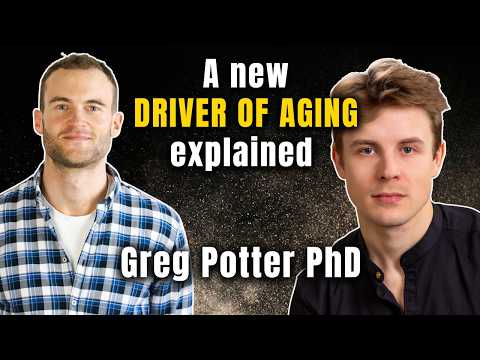
Your Broken Circadian Rhythm Is Accelerating Aging
~228 min
Episode Brief·YouTube

Your Broken Circadian Rhythm Is Accelerating Aging

Siim Land
Watch on YouTube Add to chat My bookmarks← All sources

TL;DR

The four things you'd lose by not watching

4 items

TL;DR

The four things you'd lose by not watching

4 items
1

Circadian clock dysfunction is on track to be recognized as a new hallmark of aging, underpinning many age-related diseases.

2

Caloric restriction’s lifespan extension is largely amplified by time-restricted eating: when mice ate only during their active phase, lifespan increased by 35% (vs. 10% for CR alone).

3

Simple daily habits — 1+ hour of outdoor daylight, 6–12 h eating window finishing ≥3 h before bed, and keeping evenings dim and warm — are the most potent ways to preserve circadian health as you age.

4

Melatonin is a remarkably safe candidate for ‘melatonin replacement therapy’ in older adults, but optimal dosing (microgram-range) and long-term effects are still unknown.

Protocols

Concrete recipes — what, when, how much, and why

9 items

Outdoor daylight exposure

WhatSpend at least one hour outdoors in daylight every day, without getting sunburned.
WhenDuring daylight hours, preferably early in the day for those trying to advance their clock.
For whomEveryone, with timing adjustments based on desired clock shift (earlier = more morning light; later = more afternoon/early evening light for the elderly).
WhyDaylight is the dominant time cue for the master circadian clock; bright full-spectrum light synchronises rhythms, improves mood, and has benefits beyond any single wavelength.

Greg Potter stresses that this is not about a specific wavelength — the full-spectrum outdoor experience also promotes mental restoration, physical activity, and time away from screens. He explicitly prefers a walk in a park over using a red light or photobiomodulation device, citing cost-effectiveness and broader health benefits.

Mechanism

Light hits intrinsically photosensitive retinal ganglion cells (ipRGCs) that project to the SCN, entraining the master clock. Additionally, outdoor light is orders of magnitude brighter than indoor lighting and contains a broader spectrum, providing stronger entrainment signals.

Spend at least an hour outdoors in daylight and don't get burned.

Also said
“I would rather personally suggest that someone go and take a walk in the park or the forest recognizing that they're getting a bunch of other additional health-promoting exposure at the same time than using a device with very specific parameters.”— Direct comparison showing his preference for natural light over devices.

Evening light reduction

WhatReduce exposure to bright overhead light in the 3 hours before bed; keep lighting low and warm-toned (romantic lighting).
When3 hours before bedtime
For whomEveryone, especially those trying to advance their sleep phase or improve sleep quality.
WhyBright, short-wavelength-rich light in the evening suppresses melatonin and delays the circadian clock, impairing sleep.

Greg Potter recommends buying amber lamps for the evening as a practical step, and keeping the overall light environment low. For shift workers trying to maintain internal alignment, he suggests consistent daytime meals rather than relying on light timing, because the master clock is less responsive to nocturnal light shifts.

Mechanism

Melanopsin-containing retinal cells are most sensitive to blue light (~480 nm); their activation inhibits melatonin secretion from the pineal gland. Keeping lighting dim and warm at night preserves the natural melatonin onset signal.

At that time of day, I would encourage people to keep their lighting romantic. should be relatively low in the environment. The color tones should be quite warm.

Morning meal delay

WhatWait at least one hour after natural wake-up before consuming any calories (plain coffee, tea, or water are fine).
WhenFirst hour after waking
For whomMost people, unless they have medical conditions requiring immediate energy.
WhyAllows the body’s early-morning hormonal profile (e.g., cortisol, insulin sensitivity) to stabilise before food intake.

This is part of a broader recommendation: finish the last meal at least 3 hours before bed, creating an eating window of 6–12 hours. A shorter window (6–8 h) is favoured for weight loss or weight management, while a longer window (10–12 h) suits those trying to gain mass or with very high energy expenditure. He cautions against shorter windows for individuals with a history of eating disorders or low energy availability.

Mechanism

Not explicitly detailed by Potter, but he frames it as aligning feeding with a later point in the circadian cycle when metabolic processes are more primed.

Probably want to wait at least an hour after your natural wake up time before your first calories.

Evening meal cutoff

WhatFinish the last meal or calorie-containing intake at least 3 hours before bedtime.
WhenAt least 3 hours before sleep onset
For whomEveryone who can implement it safely; those with high energy needs may eat slightly later but still aim for a minimum 3-hour gap.
WhyAllows digestion to complete and core body temperature to drop before sleep, improving sleep quality and circadian alignment of peripheral clocks.

A longer gap may be beneficial for weight loss, while those trying to gain muscle or with high energy demands may push it closer to 3 hours. Potter also notes that for older adults who tend to become extremely early, pushing the eating window later in the day can help prevent their clock from advancing too much.

Finish your final meal or your final calorie intake at least 3 hours before bed.

Eating window of 6–12 hours

WhatConfine all caloric intake to a 6- to 12-hour window each day.
WhenDuring the biological day; the exact window depends on goals.
For whomMost adults; favour the low end (6–8 h) for weight loss, the high end (10–12 h) for muscle gain or very high physical activity.
WhyA 12-hour window maintains metabolic flexibility; a shorter 6- to 8-hour window amplifies fat loss and may improve circadian function further.
CaveatsContraindicated in those with a history of eating disorders or low energy availability leading to reproductive dysfunction.

Greg Potter leans toward the low end for weight management but explicitly says the upper end is better when energy needs are high. This recommendation is designed to be flexible, not rigid. He emphasizes that the quality and regularity of the eating window matter more than chasing an extreme number.

For most people a 6 to 12 hour eating window is going to work well.

Daily step target

WhatAim for at least 8,000 steps per day, building up gradually.
WhenThroughout the day, ideally mostly in daylight hours.
For whomMost people, with incremental progression from current baseline.
WhyNon-exercise physical activity is a potent Zeitgeber (time cue) for peripheral clocks in muscle and bone, and supports metabolic health.

Aiming to get at least 8,000 steps a day is a good target for a lot of people.

Strenuous exercise timing

WhatFinish strenuous exercise at least 4 hours before bedtime.
WhenAt least 4 hours before sleep onset
For whomAnyone doing high-volume or high-load training; if not possible, early morning exercisers should allow extra warm-up time.
WhyHigh-intensity exercise raises core body temperature and sympathetic drive; allowing a 4-hour window permits temperature drop and autonomic calming necessary for sleep.

If early morning is the only option, Potter recommends a longer warm-up because core temperature is still low, increasing injury risk and reducing power output. Over time, the clocks in muscle and bone learn to anticipate the timing, so performance improves.

Mechanism

Core body temperature peaks late in the day; exercise-induced temperature increase and cortisol/noradrenaline spikes can delay sleep onset if too close to bed. Clocks in skeletal muscle and bone adapt to habitual training times, so performance will eventually align.

Finishing that at least 4 hours before bedtime is going to give your body enough time to wind down from the stress.

Also said
“If you can only work out early in the day, and I mean within a couple of hours of waking, I would give yourself longer to warm up because your core body temperature is still quite low.”— Practical detail for morning exercisers.

Daytime restricted eating for shift workers

WhatEven when working night shifts, consume all meals during the biological daytime (the same clock hours as on non-working days).
WhenDuring the daytime on both work and non-work days
For whomShift workers, especially those rotating schedules or permanent night shift.
WhyThe master clock in the brain typically does not fully adapt to night shift schedules; eating at a consistent biological daytime preserves internal alignment and improves metabolic and cardiovascular outcomes.

Citing Frank Scheer's work, Greg Potter explains that in experimental circadian misalignment, daytime restricted eating prevented the deterioration of glucose tolerance and cardiovascular risk markers. Because shift workers' central clocks usually remain similar to non-shift workers', timing meals to the body's internal day keeps peripheral clocks synchronised and reduces the metabolic harm of shift work.

If they can for instance maintain consistent meal timing across their shift cycle … probably largely confined to the daytime … then they're likely to benefit because their internal alignment … is bound to be better.

Caffeine timing and dose

WhatFinish all caffeine at least 9 hours before bedtime (12 hours if trying to advance sleep phase), and keep total intake to ≤3 mg/kg body weight per day.
WhenNo later than 9–12 hours before bed
For whomCaffeine consumers; early-shift advocates should use the 12-hour rule.
WhyCaffeine has a long half-life and can delay sleep onset, reduce slow-wave sleep, and disrupt circadian clock entrainment.

For most people I'd say on average finishing it at least 9 hours before bedtime provided that your intake is no higher than about 3 milligrams of caffeine per kilogram of body weight per day.

What's new

Personal practice updates, fresh positions, predictions

1 item

Circadian dysfunction as an emerging hallmark of aging

early in the conversation

Loss of circadian clock function is gaining traction as a potential hallmark of aging, supported by genetic, epidemiological, and experimental evidence linking clock disruption to accelerated aging and age-related diseases.

Why this matters: Moves circadian biology from a lifestyle footnote to a central pillar of the aging process, reframing many existing anti-aging interventions.

Background

The hallmarks of aging were originally proposed in a 2013 narrative review and have been expanded since, but the process was not systematic and some hallmarks are vague. Despite this, they have shaped grant funding and research priorities.

Greg Potter argues that loss of clock function meets the criteria for a hallmark because (1) tampering with the clock (e.g., Bmal1 knockout) shortens lifespan and produces age-related phenotypes like sarcopenia and hair loss, (2) circadian disruption from shift work, jet lag, or artificial light at night is epidemiologically linked to higher rates of cancer, cardiovascular disease, metabolic syndrome, and mood disorders, (3) experimental misalignment in humans rapidly induces pre-diabetic states and hormone dysregulation, and (4) improving clock function — as seen with spermidine, caloric restriction with time restriction, and potentially NAD boosters — seems to normalize age-related changes. He cautions that many hallmarks are not independent drivers but network nodes, and that circadian disruption may actually underlie several of the existing hallmarks like altered intercellular communication and inflammation.

I suggested that loss of clock function is a hallmark of aging based on various different premises.

Also said
“If you tamper with the clock then it affects the rate at which organisms seem to age.”— States the core causal criterion for a hallmark.
“When you amplify them you should be able to accelerate aging if you dial them down you should be able to slow aging.”— Explains the operational definition of a hallmark.

Recommendations

Products, supplements, and tools mentioned in the episode

1 item

Low-dose melatonin for older adults (conceptual recommendation)

Supplement

Greg Potter proposes that physiological ‘melatonin replacement therapy’ — supplementing microgram-range melatonin to restore youthful nighttime levels — may benefit older adults, though long-term data are lacking.

Potter notes that melatonin levels decline sharply with age and that exogenous melatonin does not suppress endogenous production, is extremely safe, and has pleiotropic effects (antioxidant, metabolic, bone health). He suggests starting with doses around 100–300 micrograms, far below the 3–10 mg used in clinical studies, and potentially increasing dose with advancing age. He stresses that this is an interesting hypothesis, not a firm prescription, and that more lifespan research is needed. He cites ongoing investigation of melatonin in PCOS, diabetes, and bone health as suggestive evidence.

vs alternatives

Unlike exogenous testosterone, which suppresses endogenous production, melatonin does not appear to cause tolerance or withdrawal even at high doses, making it a uniquely safe hormone for replacement.

Melatonin is a very very safe substance and you don't seem to see the same type of tolerance and withdrawal effects … It's not like taking exogenous testosterone where you basically very quickly shut down your own internal production.

Also said
“If we're speaking about the general population and melatonin replacement therapy, then the amount that would be needed to mimic endogenous levels being produced by a young adult is really very small. We're talking about tens of micrograms, not hundreds of micrograms.”— Clarifies the proposed dosing strategy.
“Could melatonin use for many years late in life benefit lots of people? I'm very open to that idea.”— Summarizes his cautiously optimistic stance.
Find Low-dose
Disclosed sponsorships1speaker disclosed

Greg Potter’s podcast ‘Reason Wellbeing’ and social media

Service Sponsored · disclosed

At the close of the interview, Greg Potter directs listeners to his podcast, Reason Wellbeing, where host Siim Land recently appeared, and to his social media handle @greypotterphd.

DisclosureDr. Greg Potter promotes his own podcast and social handle at the end of the episode.

I'm Greg Potter PhD and I've got a podcast which called Reason Wellbeing … my handle on social media is also @greypotterphd.

Find Greg

Notable quotes

Lines worth pulling out — contrarian, specific, or perfectly phrased

3 items
I think improvement in circadian function actually underlies many of the benefits that we've seen from some of the better accepted anti-aging interventions.
A sweeping, paradigm-shifting claim that reinterprets decades of geroscience.
Many people who appear to be night owls, at least superficially, they're not really night owls. It's just because they don't have particularly healthy lifestyles.
Challenges a common self-identification and puts responsibility back on daily light and behavior habits.
Melatonin is a very very safe substance and you don't seem to see the same type of tolerance and withdrawal effects that you see with many other medications.
Emphasis on melatonin’s exceptional safety profile, making a case for wider consideration.

Sign in to share feedback

Tell us if this brief hit the mark or missed it — feedback feeds back into the next iteration of the prompt.

Topics covered

circadian-dysfunction-hallmarkhallmarks-of-agingtime-restricted-eatingcalorie-restrictionspermidinenad-metabolismmelatonin-supplementationchronotypeshift-workcircadian-misalignmentlight-exposureoutdoor-light-benefitsmeal-timingexercise-timingcaffeine-timingvision-loss-circadian-dementiaphotobiomodulationnobiletinmedication-timingcore-body-temperature
Free account

Make this library yours

Reading is free for everyone. A free account adds the personal layer: save protocols, follow experts, and see how the other experts weigh in on this same topic.

Create a free accountSign in

Where the experts disagree — weekly

One email a week: the sharpest new disagreements and protocols from the library. No spam, unsubscribe anytime.

Educational summary of the cited expert source — not medical advice. Open the source recording linked above and consult a qualified physician before acting on any protocol.