
UNFUCG
DashboardSearchChatBookmarksNotificationsActivityPremiumProfile
?
Home
Search
Chat
Saved
Profile
Episode
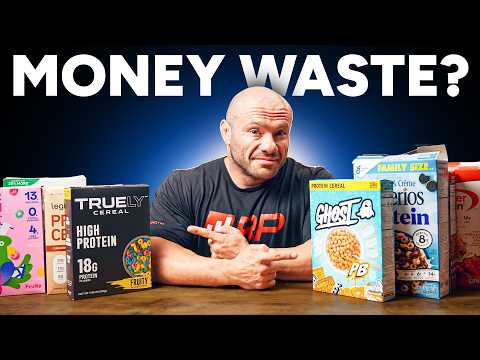
We Tried the New Protein Cereal Craze (Worth Buying?)
~27 min
Episode Brief·YouTube

We Tried the New Protein Cereal Craze (Worth Buying?)

Mike Israetel
Watch on YouTube Add to chat My bookmarks← All sources

TL;DR

The four things you'd lose by not watching

4 items

TL;DR

The four things you'd lose by not watching

4 items
1

Truly fruity cereal ranked #1 for its great taste, high-quality protein (casein and whey), and excellent protein-to-calorie ratio, making it a viable standalone protein snack.

2

Protein quality varies wildly across high-protein cereals; milk protein concentrate and casein are top tier, while wheat gluten, wheat protein isolate, and pea protein are inferior for muscle building.

3

When tracking macros, discount the listed protein from low-quality sources by 50–67% and count the remainder as carbohydrates, otherwise you’ll overestimate your usable protein intake.

4

Fairlife skim milk is a recommended companion to boost total protein with minimal extra calories, and setting low expectations—treating the cereal as protein medicine—greatly improves satisfaction.

Protocols

Concrete recipes — what, when, how much, and why

4 items

Selecting a high-quality protein cereal

WhatCheck the ingredients list for milk protein concentrate, casein, or whey as the first item; aim for at least 30% of calories from protein, and avoid cereals relying on wheat gluten or pea protein as primary protein sources.
WhenWhen purchasing any protein-fortified cereal or evaluating a new product.
DoseOne serving as defined on the label; use the 'protein per 100 calories' mental math to compare.
For whomAnyone looking to use cereal as a meaningful protein contributor, especially those tracking macros for muscle gain or fat loss.
WhyMilk-derived proteins provide a complete amino acid profile ideal for muscle protein synthesis, while wheat/pea proteins are incomplete and yield lower usable protein per gram.
CaveatsEven low-quality protein cereals can be enjoyable and contribute some protein, but don't rely on them as a primary source. Taste and texture may still be excellent (e.g., Three Wishes).

Mike spent significant time scanning the ingredient lists of each cereal. He immediately noted that Premier Protein's top ingredient was wheat gluten, followed by wheat protein isolate, both inferior. He then contrasted this with Truly and Legion, which led with casein or milk protein bites. He explained that even if a cereal's protein percentage is high, the quality of those proteins determines how much actually counts. He gave the example of Three Wishes, which had only 8 g of protein from chickpea and pea protein—low both in quantity and quality. He emphasized that consumers can't just read the '20 g of protein!' claim; they need to check the ingredient order.

Mechanism

Milk protein concentrate, casein, and whey contain all essential amino acids in ratios similar to human muscle, making them highly bioavailable. In contrast, wheat gluten and pea protein are limiting in lysine and methionine respectively, which caps their ability to stimulate muscle repair unless paired with complementary proteins.

Number one ingredient is milk protein blend, which is made of casein and whey protein concentrate. So again, the 13 g of protein in here, them's is real grams and that's real protein.

Also said
“Milk protein concentrate is exactly what you want to see as rank one ingredient in a technically high protein food.”— Condenses the core criteria.

Discounting low-quality protein for macro tracking

WhatWhen you eat a cereal whose primary protein is from wheat, pea, or chickpea, divide the listed protein by 2 or 3 and count only that amount toward your daily protein target; count the remainder as carbohydrates.
WhenWhenever you log a meal containing predominantly incomplete plant proteins, especially if you don't pair them with complementary proteins in that same meal.
DoseUse 50% of listed protein for pea/chickpea blends; use as low as 33% if the source is exclusively wheat-based. Adjust based on how conservative you want to be.
For whomIndividuals strictly tracking macros, particularly those using the RP Diet Coach app or similar tools.
WhyIncomplete proteins lack sufficient amounts of one or more essential amino acids, reducing the body's ability to use them for muscle repair. Overcounting leads to false confidence in meeting protein goals.
CaveatsIf you consume other foods with complementary amino acid profiles (e.g., grains + legumes) throughout the day, the discount may be unnecessary. This is a quick heuristic, not a metabolic law.

Mike explained this rule while reviewing Cheerios Protein, which contains pea protein and whole grain oats. He acknowledged that tracking apps give full credit for the 8 g of protein, but that's misleading. He suggested taking half or even a third of the listed value as 'real' protein and counting the rest as carbs. He extended the logic to other cereals like Premier Protein (wheat gluten) and Three Wishes (chickpea/pea). The rule is designed to be simple and conservative, preventing macro mismanagement. He did not claim this is scientifically exact but called it a 'really good idea' for those who want precision.

Mechanism

Muscle protein synthesis requires all nine essential amino acids simultaneously. Plant proteins like wheat are low in lysine; pea protein is low in methionine. Without those building blocks, the body cannot fully incorporate the ingested amino acids into new tissue, effectively wasting a portion of the protein calories as energy or urea production.

Personal experience

Mike applies this mental adjustment himself when he eats these cereals, and he would recommend his RP Diet Coach users do the same.

I would say dividing their protein contribution by half or even just taking a third of it and then using that for protein and then taking the other half or two-thirds of that protein and counting it towards carbs is probably a really good idea for these cereals if you're going to get persnickety.

Also said
“And because of the chickpea pea protein situation, the protein quality is also not going to be so high. And … as far as protein you can actually use to build muscle, it's going to be on the low end.”— Underpins the rationale that low-quality protein doesn't contribute fully to muscle.

Using high-protein cereal as a portable protein snack

WhatPour a serving of a cereal with high-quality, complete protein (like Truly) into a small bag and eat it dry as an on-the-go high-protein meal.
WhenWhen you need a quick protein boost without preparation—travel, office, post-workout.
DoseOne standard serving (as per packaging); typically 170–180 calories with 17–18 g of protein.
For whomAnyone who struggles to hit protein targets during busy days.
WhyIt meets protein requirements with minimal effort, no refrigeration, and tastes good even without milk, making it a convenient alternative to bars or shakes.
CaveatsOnly works with cereals that have high-quality, dense protein and acceptable taste dry. Cereals with low-quality protein or poor flavor won't serve this purpose effectively.

Mike highlighted this use case when reviewing Truly, noting that because its protein is casein and whey, you're getting real, usable grams. He contrasted this with cereals that fall apart nutritionally when eaten alone. The convenience factor multiplies the value of a cereal that already tastes good. He also implied that this makes the cereal a legitimate meal replacement in a pinch, particularly when combined with a protein shake or milk.

Personal experience

Mike explicitly described putting Truly in a baggie and taking it as a snack, framing it as a practical life hack.

You can put Truly's fruity cereal in a little baggie, take it for a snack, and just by itself it is a high protein meal. That's huge.

Pairing cereal with Fairlife high-protein milk

WhatAlways use Fairlife skim milk instead of regular milk when eating protein cereal to significantly increase the total protein content of the meal.
WhenWhenever you eat cereal as a protein-focused meal or snack.
DoseEnough milk to cover the cereal; one cup of Fairlife skim adds 13 g protein for ~80 calories.
For whomAnyone trying to increase protein intake while enjoying cereal.
WhyFairlife milk is ultra-filtered to be high protein, low fat, and low carb, amplifying the anabolic value of the meal without adding excessive calories.
CaveatsThe taste is slightly different from standard milk, and Mike joked about the artificial processing ('nothing natural enters this body'), but he strongly endorses it.

Mike poured Fairlife milk from a height over every cereal, calling it an 'unbelievable high protein, low fat, low carb milk product.' He used it as a baseline to test the cereals, but also as a deliberate strategy to boost the overall protein of the meal. Even cereals with mediocre protein (like Three Wishes) became more viable because the milk contributed additional complete protein. This is a simple, actionable tactic that doesn't require changing the cereal you like.

Mechanism

Ultra-filtration concentrates casein and whey while removing lactose and fat, yielding a milk with 50% more protein and 50% less sugar than conventional milk. The high-quality dairy proteins complement whatever cereal you choose.

Personal experience

Mike used Fairlife for all tastings and says he's a big fan, using humor to underscore his love for it.

And we're using Fairlife because it is itself an unbelievable high protein, low fat, low carb milk product.

What's new

Personal practice updates, fresh positions, predictions

2 items

Practical macro-tracking rule for incomplete-protein cereals

Mike introduced a simple on-the-spot rule: for cereals with low-quality protein (wheat gluten, pea protein), count only 33–50% of the listed protein toward your daily goal and treat the rest as carbs.

Why this matters: This is a concrete, actionable heuristic that bridges the gap between nutrition label tricks and real-world muscle-building needs, especially relevant for the protein-cereal craze.

Background

Many high-protein cereals use cheap plant proteins that lack a full amino acid profile, yet labels still display the full gram number. Standard tracking apps like RP Diet Coach don't automatically adjust for protein quality, so users could unknowingly fall short on usable protein.

Mike made this note while reviewing Cheerios Protein and earlier cereals with pea protein. He emphasized that the listed grams are misleading because the body cannot utilize incomplete proteins for muscle repair as efficiently as complete sources. He suggested that if you're 'persnickety' about tracking, cut the protein number in half or even down to a third. This rule is meant to be conservative; if you consume complementary proteins throughout the day the discount might be less necessary, but for a quick cereal-only snack it prevents overcounting. He also hinted that this approach can be used for any packaged food with dominant low-quality protein sources, not just cereal.

Personal experience

Mike used this mindset during the taste test, noting that he wouldn’t count the full 8 g from Three Wishes or Cheerios Protein toward his daily protein target. He applies this skepticism in his own meal planning.

I would say dividing their protein contribution by half or even just taking a third of it and then using that for protein and then taking the other half or two-thirds of that protein and counting it towards carbs is probably a really good idea for these cereals if you're going to get persnickety.

Also said
“And because of the chickpea pea protein situation, the protein quality is also not going to be so high. And … as far as protein you can actually use to build muscle, it's going to be on the low end.”— Explains why the listed protein number overstates usable muscle-building protein.

Truly cereal emerges as the supreme protein cereal

After tasting eight brands, Mike declared Truly fruity cereal the clear winner, praising its taste, crunch, milk-protein-based high-quality protein, and superb macro ratio.

Why this matters: It’s a definitive top pick from a trusted fitness voice, giving consumers a shortcut in a crowded market.

Truly achieved a 42.5% protein-to-calorie ratio with 18 g of protein per 170 calories. Its first two ingredients are casein and whey protein concentrate—both gold-standard complete proteins. Mike also noted it contains avocado oil and MCTs, adding a health halo. He compared it favorably to every other cereal, saying it tasted like bubble gum in a fun, nostalgic way, with maximum crunch and color-changing milk. His ranking placed it above Legion (which had a sandy texture) and Three Wishes (which lacked protein density). He stressed that Truly can function as a primary protein source, not just a treat.

Personal experience

Mike said 'I would just eat this all the time' and kept raving about the smell and texture. He found it the only cereal with no significant downside.

Truly cereal has no equal. I would just eat this all the time.

Also said
“Maximum crunch factor. It makes your milk ridiculous colors and tastes amazing.”— Highlights the sensory experience that set it apart.
“So yes, you can put Truly's fruity cereal in a little baggie, take it for a snack, and just by itself it is a high protein meal. That's huge.”— Shows its practical utility as a portable, complete protein source.

Recommendations

Products, supplements, and tools mentioned in the episode

6 items

Truly Fruity Cereal

Product

Ranked #1 out of eight high-protein cereals tested. Mike called it 'rank one in my book' and 'has no equal'.

Truly delivers 18 g of protein in 170 calories (42.5% protein by calories) with casein and whey concentrate as the first ingredients, plus avocado oil and MCTs. Mike praised its exceptional crunch, bubble-gum-like sweetness, and the way it turned milk brilliant colors. He emphasized that the protein quality is outstanding, making it a legitimate standalone protein source that can be carried in a baggie. The only downside he hinted at was the chocolate peanut butter flavor not being as good, but the fruity flavor was flawless in his view. He described the cereal as 'slaughtering' its competition, a hyperbolic testament to how far ahead it is.

vs alternatives

Beats Legion (second place) on texture—Legion became sandy when chewed. Beats Magic Spoon on intensity of fruit flavor, and trounces Three Wishes on protein quantity/quality while still tasting great.

Personal experience

Mike repeatedly said he would eat it all the time, loved the smell ('smells like happiness'), and was visibly delighted while eating it.

Truly cereal has no equal. I would just eat this all the time.

Also said
“Maximum crunch factor. It makes your milk ridiculous colors and tastes amazing.”— Captures the multisensory appeal.
“It came, it saw, and literally person by person, villager, farmer, child, slaughtered its competitors intimately with a Roman short sword so it could feel the blood gargling.”— Illustrates Mike’s over-the-top endorsement and how strongly he felt it won.
Find Truly

Legion Protein Cereal Cinnamon Crunch

Product

Ranked #2. Mike said he could keep eating it and called it 'damn good,' but noted a sandy texture issue.

Legion has 17 g protein per 170 calories (40% protein by calories) using milk protein bites (milk protein concentrate) as the sole protein source, ensuring high quality. Taste was described as cinnamon-maple, sweet, and well-executed. The major drawback was the mouthfeel: the cereal rapidly dissolved into a gritty, sand-like paste in milk and saliva. Mike said this was the only thing keeping it from the top spot. He appreciated the brand's serious, no-nonsense positioning and confirmed it counts as a primary protein source.

vs alternatives

Loses to Truly on texture and fun factor; wins against Ghost on taste and against Magic Spoon on protein density and flavor clarity.

Personal experience

Mike genuinely enjoyed the flavor, saying 'That's really good, man,' and kept eating. He noted the texture issue firsthand.

The only reason that it did not rank first was because the mouthfeel is a little prickly and it really rapidly in milk and saliva just goes down to like you're drinking sand.

Also said
“I can just keep eating this. It's that good.”— Shows how close the taste contest was.
Find Legion

Three Wishes Cocoa Cereal

Product

Ranked #3. Mike praised its exceptional taste and crunch despite low protein quantity and quality.

Three Wishes has only 8 g protein per 130 calories (24.5% protein) from chickpea and pea protein, so it's not a meaningful protein source. However, Mike was blown away by the chocolate flavor, calling it one of the most 'cocoaiest' things he's had, and the texture of big, Cheerio-like pieces was a standout. He said he would eat it even if it had zero protein. This makes it ideal for people who want a delicious cereal with a tiny protein boost, especially those with grain sensitivities (it's grain-free). He ranked it high because of pure taste enjoyment, not for protein utility, and recommended it with Fairlife milk to supplement.

vs alternatives

Beats Ghost and Magic Spoon on pure flavor and texture, but far behind on protein value. For taste alone, it's top-tier; as a protein product, it's near the bottom.

Personal experience

Mike loved the crunch and cocoa intensity, using the term 'giblets' for the pieces. His facial expression showed surprise delight.

I would eat this if it had no protein at all. And because it doesn't have much protein, no problem.

Also said
“Exceptionally crunchy, amazing mouthfeel, and maybe one of the most cocoaiest things I've tasted in a long time.”— Emphasizes why it ranked so high on taste.
Find Three

Magic Spoon Fruity Cereal

Product

Ranked #4. Mike called it a solid cereal with high-quality milk protein but slightly disappointing flavor compared to Froot Loops.

Magic Spoon provides 13 g protein in 150 calories (34.5% protein) from a milk protein blend (casein and whey), so the protein quality is excellent and the grams are real. The fruity flavor smelled exactly like Froot Loops but fell a little short on taste, which Mike likened to Toucan Sam showing up hungover—still working, but not at peak performance. He gave it his stamp of approval, especially because of the protein quality, and suggested it's a good option for those who want a healthier breakfast cereal that still scratches the childhood itch.

vs alternatives

Better protein quality than Three Wishes and Ghost; worse taste than Three Wishes; comparable protein-to-calorie ratio to Legion but less satisfying texture.

Personal experience

Mike grew up without breakfast cereals in the Soviet Union, so he has no deep nostalgia, but he recognized the scent and said it was 'pretty damn good' despite the slight off-notes.

Toucan Sam shows up for work, but he's hungover. ... And then sometimes that's enough. That's what that cereal would be.

Also said
“The smell is excellent. The texture is good. It's crunchy. It's a little slimy. ... However, Froot Loops are a high water mark. This is still a god damn good cereal.”— Grades on a curve, acknowledging it's good by protein-cereal standards.
Find Magic

Ghost Protein Cereal (Peanut Butter)

Product

Ranked #5. Mike found the protein quality excellent but the smell off-putting and the taste only 'pretty god damn good.'

Ghost packs 18 g protein in 170 calories (42.5% protein) using milk protein concentrate, sodium caseinate, and soy protein isolate—all high-quality. The peanut butter flavor was authentic and reminded Mike of Reese's Puffs when squinted at through a protein shaker. However, the cereal had an intense, almost rancid smell that he warned viewers to avoid smelling, and the texture was less crunchy due to the type of protein used. He respected Ghost as a brand and encouraged people to try it for themselves because his taste buds might be off. The macros make it a top-tier choice for those who can get past the aroma.

vs alternatives

Similar protein specs to Truly, but inferior taste and smell. On par with Legion for protein quality but falls short on enjoyment. Smell is uniquely bad among the group.

Personal experience

Mike was taken aback by the smell ('Oh gosh') but found the taste grew on him. He was slightly disappointed compared to other Ghost products.

For protein quality and quantity, amazing. For taste, pretty good. For smell, just don't smell it and you'll be fine.

Also said
“That cereal kind of reminded me of if you squinted like Reese's Puffs cereal. If you squinted at Reese's Puffs cereal through a protein shaker, this would be it.”— A memorable, relatable comparison that captures the taste accurately.
Find Ghost

Fairlife Skim Milk

Product

Used as the milk base for all cereal tastings. Mike called it an 'unbelievable high protein, low fat, low carb milk product.'

Mike poured Fairlife milk from a great height as a joke, but seriously endorsed it as the perfect companion to protein cereals. Its ultra-filtration process reduces lactose and fat while doubling the protein compared to regular milk, making it a strategic addition to any cereal meal. Even a mediocre cereal benefits from the extra 13 g of complete protein per cup. Mike’s humorous 'nothing natural enters this body' line acknowledged that Fairlife is processed, but he sees that as a feature, not a bug, for fitness goals.

vs alternatives

Versus standard skim milk: 50% more protein, less sugar. Versus almond milk: far more protein. Versus whole milk: less fat and calories while more protein.

Personal experience

He used it for every bowl and clearly considers it a staple.

And we're using Fairlife because it is itself an unbelievable high protein, low fat, low carb milk product.

Find Fairlife
Disclosed sponsorships1speaker disclosed

RP Diet Coach App

Tool Sponsored · disclosed

Mentioned when discussing how to track protein from cereals with low-quality protein, implying the app can help but users need to manually adjust.

DisclosureMike is a co-founder of RP Strength and the app is his own product. He mentions it in context of tracking macros.

Mike noted that even with a good tracking app like RP Diet Coach, the user must be aware of protein quality issues because the app will count all listed grams equally. He seemed to suggest that his app is a powerful tool but that smart rules like the 50% discount must be applied by the user. This was a light plug within a relevant educational moment.

If you're using the RP Diet Coach app, using any other kind of diet tracker, I would say dividing their protein contribution by half or even just taking a third of it … is probably a really good idea.

Find RP

Notable quotes

Lines worth pulling out — contrarian, specific, or perfectly phrased

5 items
If you expect protein cereal to taste like high protein medicine that helps you get jacked, you're going to have an amazing time and be super pleasantly surprised.
Frames the entire tasting with a humorous, realistic expectation that makes the product category enjoyable.
Nothing natural enters this body.
A funny, self-deprecating line about his willingness to consume processed fitness foods.
This is what I would describe as an adult taste. Do your taxes, argue with your significant other about picking up the kids from school, then have yourself some Kashi Go cereal.
Perfectly captures the wholesome-but-unexciting vibe of high-fiber healthy cereal.
I quit. They don't pay me enough for this.
His reaction after tasting a particularly bad flavor, showing the genuine trial-and-error of the test.
Ghost is still scary.
A recurring pun that ties the brand's name to the creepy smell and his playful terror.

Sign in to share feedback

Tell us if this brief hit the mark or missed it — feedback feeds back into the next iteration of the prompt.

Topics covered

high-protein-cerealprotein-qualitymacro-trackingfairlife-milktaste-testtruly-cereallegion-cerealmagic-spoon-cerealthree-wishes-cerealghost-cerealpremier-protein-cerealcheerios-proteinkashi-go-cerealincomplete-protein-discountcereal-ranking
Free account

Make this library yours

Reading is free for everyone. A free account adds the personal layer: save protocols, follow experts, and see how the other experts weigh in on this same topic.

Create a free accountSign in

Where the experts disagree — weekly

One email a week: the sharpest new disagreements and protocols from the library. No spam, unsubscribe anytime.

Educational summary of the cited expert source — not medical advice. Open the source recording linked above and consult a qualified physician before acting on any protocol.